Blaming and punishing others are superficial expressions of anger. — Marshall B. Rosenberg Copy Share Image
A difficult message to hear is an opportunity to enrich someone's life. — Marshall B. Rosenberg Copy Share Image
As long as I think I 'should' do it, I'll resist it, even if I want very much to do it. — Marshall B. Rosenberg Copy Share Image
What all the basic religions are saying is this: Don't do anything that isn't play. — Marshall B. Rosenberg Copy Share Image
I never have to worry about another person's response, only how I react to what they say. — Marshall B. Rosenberg Copy Share Image
With every choice you make, be conscious of what need it serves. — Marshall B. Rosenberg Copy Share Image
Empathy: Emptying our mind and listening with our whole being — Marshall B. Rosenberg Copy Share Image
Interpretations, criticisms, diagnoses, and judgments of others are actually alienated expressions of our unmet needs. — Marshall B. Rosenberg Copy Share Image
In NVC, no matter what words others may use to express themselves, we simply listen for their observations, feelings, needs, and requests. — Marshall B. Rosenberg Copy Share Image
Once you can clearly describe what you are reacting to, free of your interpretation or evaluation of it, other people are less… — Marshall B. Rosenberg Copy Share Image
Most of us live in a Jackal world where we take turns using the other person as a waste basket for our… — Marshall B. Rosenberg Copy Share Image
Love cannot remain by itself - it has no meaning. Love has to be put into action and that action is service. — Mother Teresa Copy Share Image
NVC is interested in learning that is motivated by reverence for life, by a desire to learn skills, to contribute better to… — Marshall B. Rosenberg Copy Share Image
Nonviolent Communication by Marshall Rosenberg is a great book teaching a compassionate way to talk to people even if you (or they)… — Joe Vitale Copy Share Image
We want to take action out of the desire to contribute to life rather than out of fear, guilt, shame, or obligation. — Marshall B. Rosenberg Copy Share Image
Needs are never conflicting. When we say that, we are only saying that at the moment we aren't seeing how both needs… — Marshall B. Rosenberg Copy Share Image
As NVC replaces our old patterns of defending, withdrawing or attacking in the face of judgment and criticism. We come to perceive… — Marshall B. Rosenberg Copy Share Image
Some people use NVC to respond compassionately to themselves, some to create greater depth in their personal relationships, and still others to… — Marshall B. Rosenberg Copy Share Image
The number one reason that we don't get our needs met, we don't express them. We express judgments. If we do express… — Marshall B. Rosenberg Copy Share Image
The principles of Nonviolent Communication taught by Dr. Rosenberg are instrumental in creating an extraordinary and fulfilling quality of life. His compassionate… — Tony Robbins Copy Share Image
We know that when people learn to communicate effectively with each other, their lives and their relationships can be truly transformed. This… — Thomas Gordon Copy Share Image
Schools in which students and teachers relate as partners-where Rosenberg's Nonviolent Communication is part of every interaction are communities of learning, rather… — Riane Eisler Copy Share Image
Nonviolent Communication is a powerful tool for peace and partnership. It shows us how to listen empathically and also communicate our authentic… — Riane Eisler Copy Share Image
We are never angry because of what others say or do. It is our thinking that makes us angry. — Marshall B. Rosenberg Copy Share Image
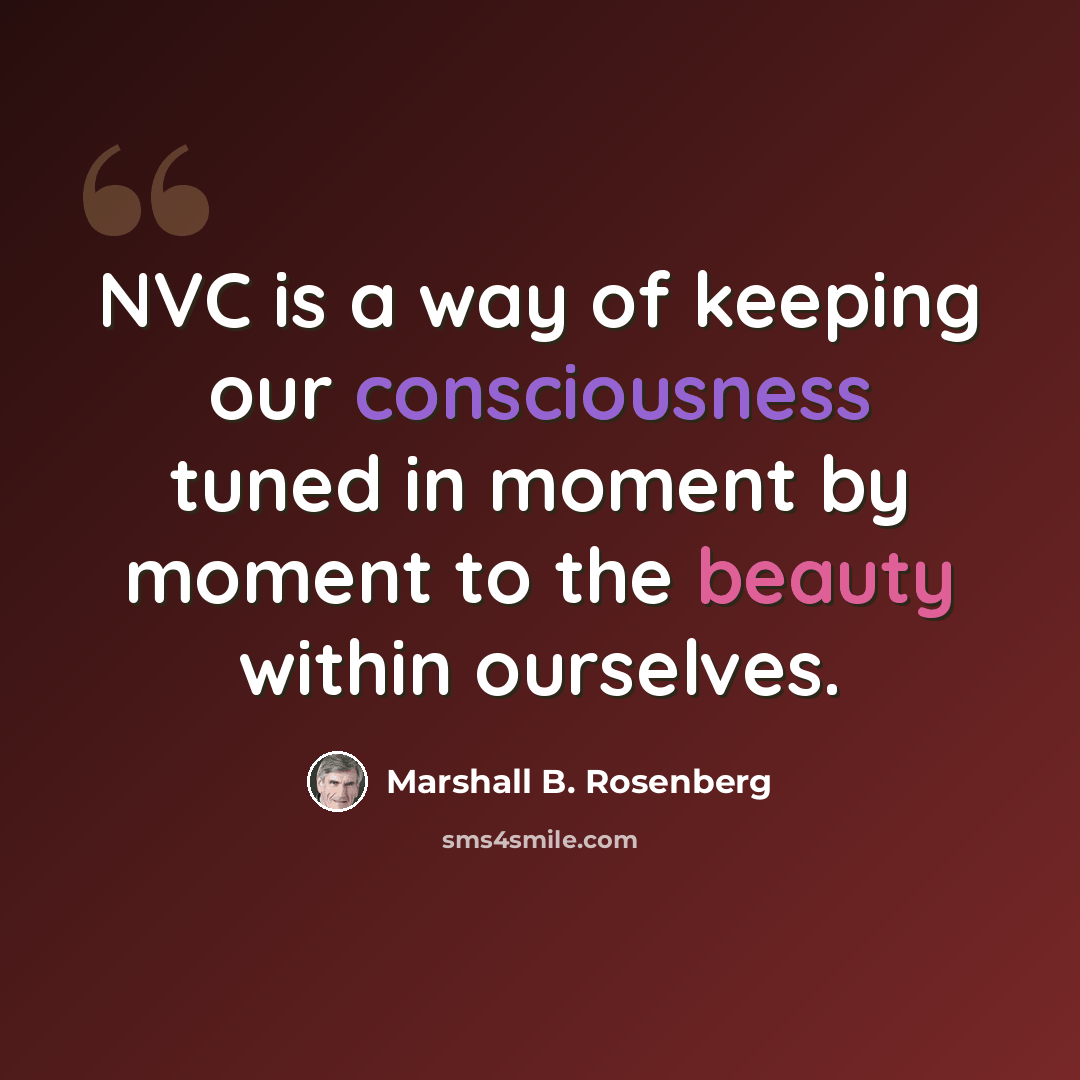
NVC is a way of keeping our consciousness tuned in moment by moment to the beauty within ourselves. — Marshall B. Rosenberg Copy Share Image
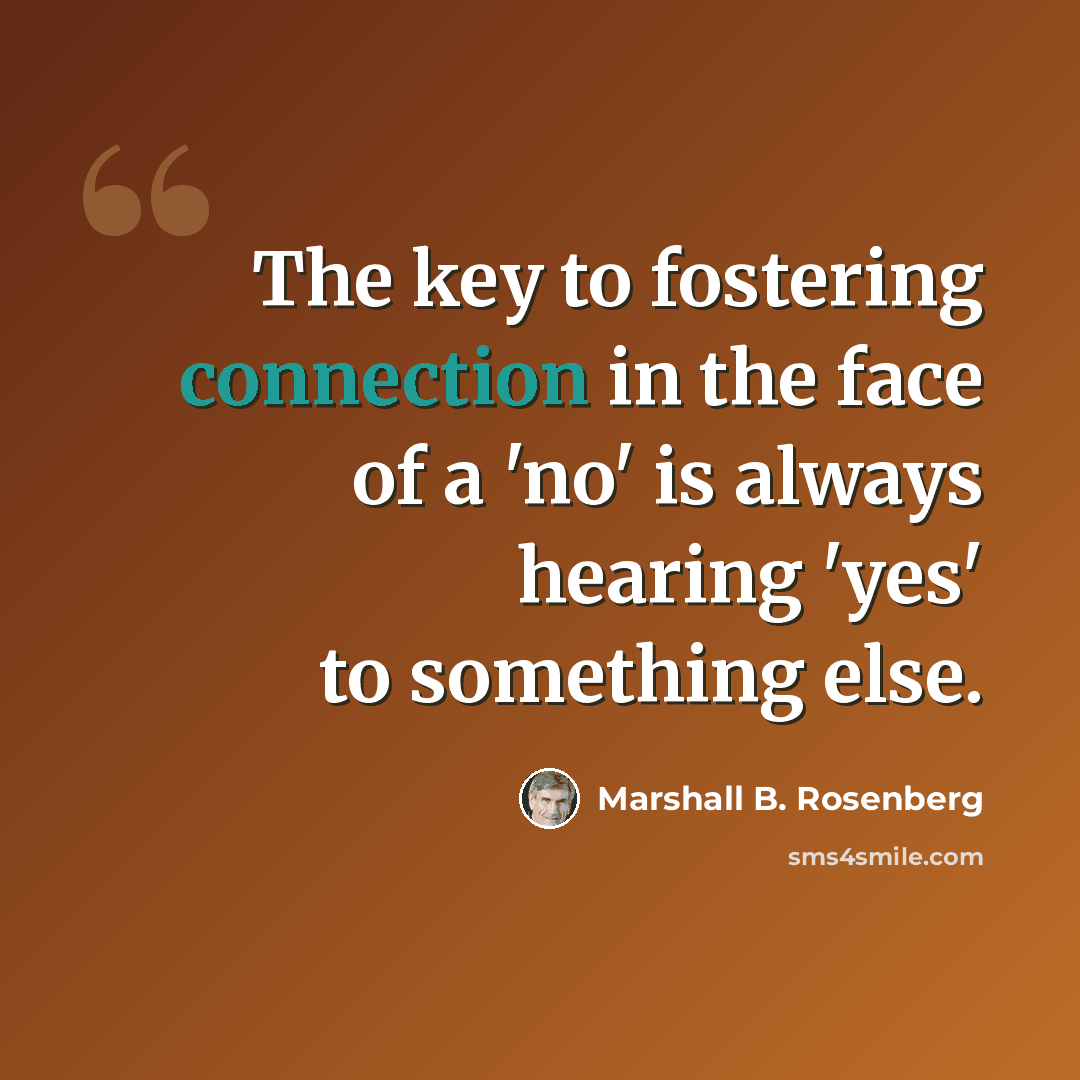
The key to fostering connection in the face of a 'no' is always hearing 'yes' to something else. — Marshall B. Rosenberg Copy Share Image