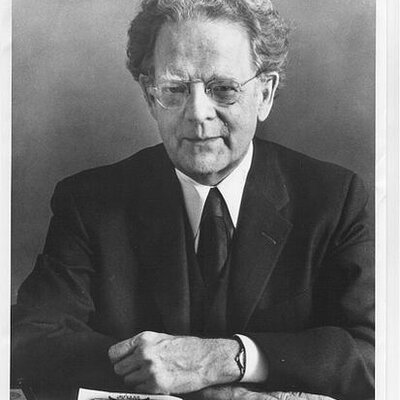
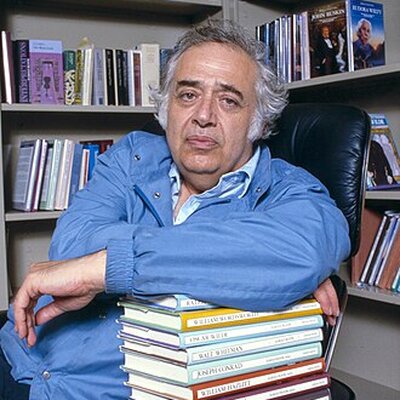
“Life, of course, never gets anyone's entire attention. Death always remains interesting, pulls us, draws us. As sleep is necessary to our… — Janet Malcolm Copy Share Image
“Novels, says Sartre, are not life, but they owe our power upon us, as upon himself as an infant, to the fact… — Frank Kermode Copy Share Image
“The novel, then, provides a reduction of the world different from that of the treatise. It has to lie. Words, thoughts, patterns… — Frank Kermode Copy Share Image
Literary criticism can be no more than a reasoned account of the feeling produced upon the critic by the book he is… — DH Lawrence Copy Share Image
“A turning point in the criticism of Hardy’s poetry came in his centenary year, in which W. H. Auden (1940) recorded his… — Geoffrey Harvey Copy Share Image
“The 1950s and 1960s: philosophy, psychology, myth There was considerable critical interest in Woolf ’s life and work in this period, fuelled… — Jane Goldman Copy Share Image
“John Milton has, since his own lifetime, always been one of the major figures in English literature, but his reputation has changed… — Ronald Carter Copy Share Image
“I often have the feeling that even at the best of times literary criticism is fraudulent, since in the absence of any… — George Orwell Copy Share Image
“As Solomon himself had remarked, 'We can be sure of talent, we can only pray for genius.' But it was a reasonable… — Arthur C. Clarke Copy Share Image
“For more than half a century I have tried to confront greatness directly, hardly a fashionable stance, but I see no other… — Harold Bloom Copy Share Image
“An important dimension of Tess of the d’Urbervilles is its debt to the oral tradition; to stories about wronged milkmaids, tales of… — Geoffrey Harvey Copy Share Image
“But that there is a simple relation between literary and other fictions seems, if one attends to it, more obvious than has… — Frank Kermode Copy Share Image
“What Kant took to be the necessary schemata of reality,' says a modern Freudian, 'are really only the necessary schemata of repression.'… — Frank Kermode Copy Share Image
“A sixteenth-century poet, especially one who knew that he ought to be a curious and universal scholar, would possess some notions, perhaps… — Frank Kermode Copy Share Image
“The double consequence of artifice--to project sentience out onto the made world and in turn to make sentience itself into a complex… — Anonymous Copy Share Image
“The formerly absolute distinction between time and eternity in Christian thought--between nunc movens with its beginning and end, and nunc stans, the… — Frank Kermode Copy Share Image
“How to explain the sheer tingling joy one experiences when two interesting, complex, and occasionally aggravating characters have at last settled their… — Margaret C. Sullivan Copy Share Image
“There is a vast expanse of time before the Norman Conquest in 1066, from which fragments of literary texts remain, although these… — Ronald Carter Copy Share Image
“The 1990s to the present: feminism, historicism, postcolonialism, ethics There has never been a better time to study Virginia Woolf. Woolf studies,… — Jane Goldman Copy Share Image
“I want to give just a slight indication of the influence the book has had. I knew that George Orwell , in… — Christopher Hitchens Copy Share Image
“The ruinous deeds of the ravaging foe (Beowulf) The best-known long text in Old English is the epic poem Beowulf. Beowulf himself… — Ronald Carter Copy Share Image
“Revolution was the great nightmare of eighteenth-century British society, and when first the American Revolution of 1776, then the French Revolution of… — Ronald Carter Copy Share Image
“At the end of the 1400s, the world changed. Two key dates can mark the beginning of modern times. In 1485, the… — Ronald Carter Copy Share Image
“I’ve seen middle grade books criticized by adult readers for leaving things for the reader to figure out, for not having perfect… — Anne Ursu Copy Share Image
“This is why, when we have been particularly impressed by a book, we feel the need to talk about it; we do… — Wolfgang Iser Copy Share Image
“The notion of literature as only one of several avenues to a single type of propositional knowledge is, of course, hardly the… — Peter Swirski Copy Share Image
“The 1980s witnessed radical advances in the theorisation of the study of literature in the universities. It had begun in France in… — Geoffrey Harvey Copy Share Image
“He writes the worst English that I have ever encountered. It reminds me of a string of wet sponges; it reminds me… — H.L. Mencken Copy Share Image
“I had not particularly liked the way in which he wrote about literature in Beginnings , and I was always on my… — Christopher Hitchens Copy Share Image
“Literature before the Renaissance had frequently offered ideal patterns for living which were dominated by the ethos of the church, but after… — Ronald Carter Copy Share Image
“The first phase of modernism, which so far as the English language goes we associate with Pound and Yeats, Wyndham Lewis and… — Frank Kermode Copy Share Image
“There is a larger lesson here, because the book encompasses not just the lives of prisoners in a Soviet prison camp, but… — Eric Bogosian Copy Share Image
“There are numerous biographies of Woolf. Biography has been highly influential in shaping the reception ofWoolf ’s work, and her life has… — Jane Goldman Copy Share Image
“It is already the fashion to diminish Eliot by calling him derivative, the mouthpiece of Pound, and so forth; and yet if… — Frank Kermode Copy Share Image
“The decline of sustained close reading of Eliot is also related, ironically, to the emergence of historical scholarship regarding sources and allusions.… — Jewel Spears Brooker Copy Share Image
“In the eighteenth century, the Scottish Enlightenment focused attention on Glasgow and Edinburgh as centres of intellectual activity. The Scottish Enlightenment was… — Ronald Carter Copy Share Image
“Milton argued, in 1649, after the execution of Charles I, that a people 'free by nature' had a right to overthrow a… — Ronald Carter Copy Share Image
“All Renaissance drama, especially the works of Marlowe and Shakespeare, is profoundly concerned with shifting power relations within society. The individual was… — Ronald Carter Copy Share Image
“The great majority of interpretations of Apocalypse assume that the End is pretty near. Consequently the historical allegory is always having to… — Frank Kermode Copy Share Image
“Nowhere is the sense of medium felt more strongly, even by the casual reader, than in a story about to end. For… — Ian Gregor Copy Share Image