When people hear needs, it provokes compassion. When people hear diagnoses, it provokes defensiveness and attack. — Marshall B. Rosenberg Copy Share Image
Interpretations, criticisms, diagnoses, and judgments of others are actually alienated expressions of our unmet needs. — Marshall B. Rosenberg Copy Share Image
Nonviolent Communication shows us a way of being very honest, but without any criticism, without any insults, without any put-downs, without any… — Marshall B. Rosenberg Copy Share Image
Labeling and diagnosis is a catastrophic way to communicate. Telling other people what's wrong with them greatly reduces, almost to zero, the… — Marshall B. Rosenberg Copy Share Image
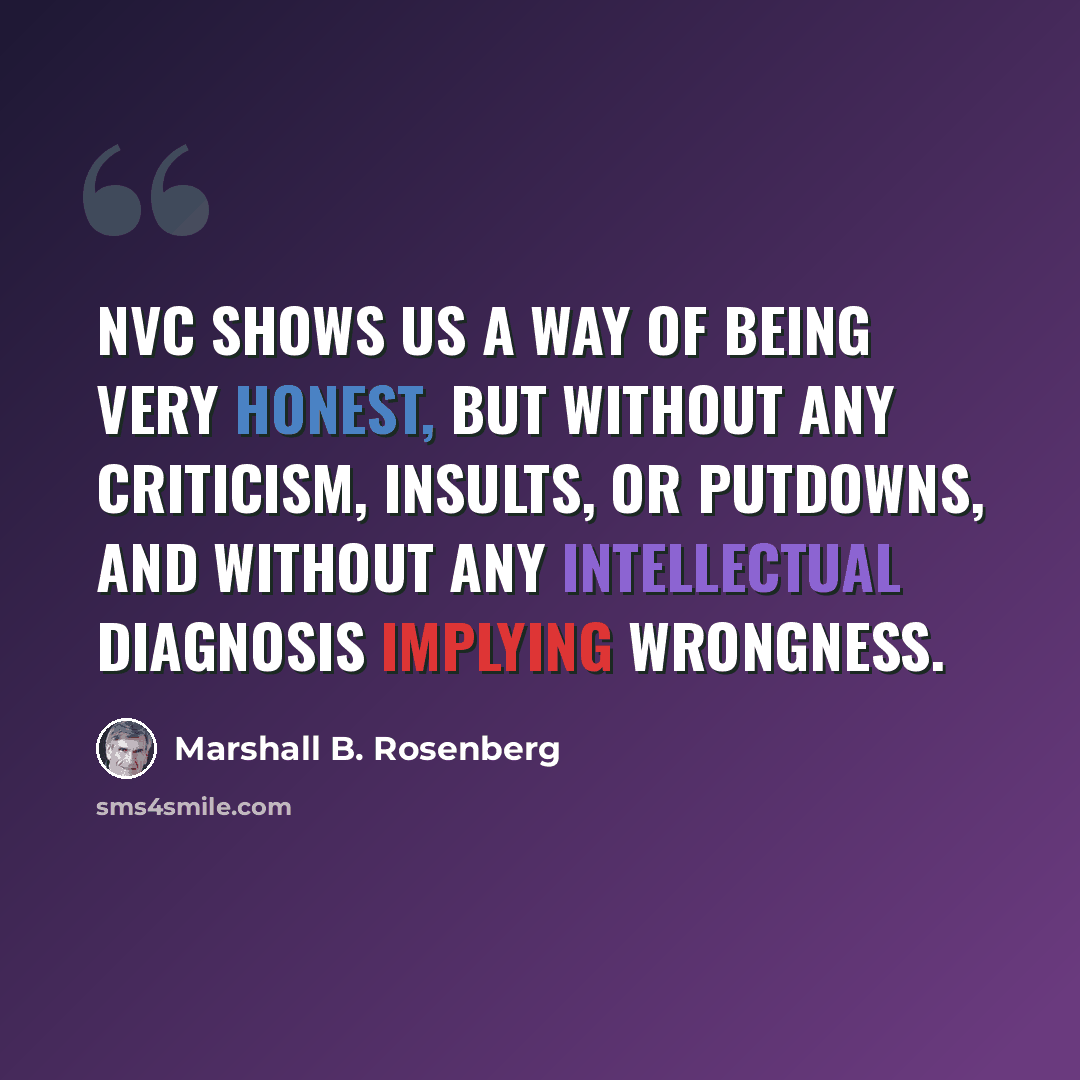
NVC shows us a way of being very honest, but without any criticism, insults, or putdowns, and without any intellectual diagnosis implying… — Marshall B. Rosenberg Copy Share Image
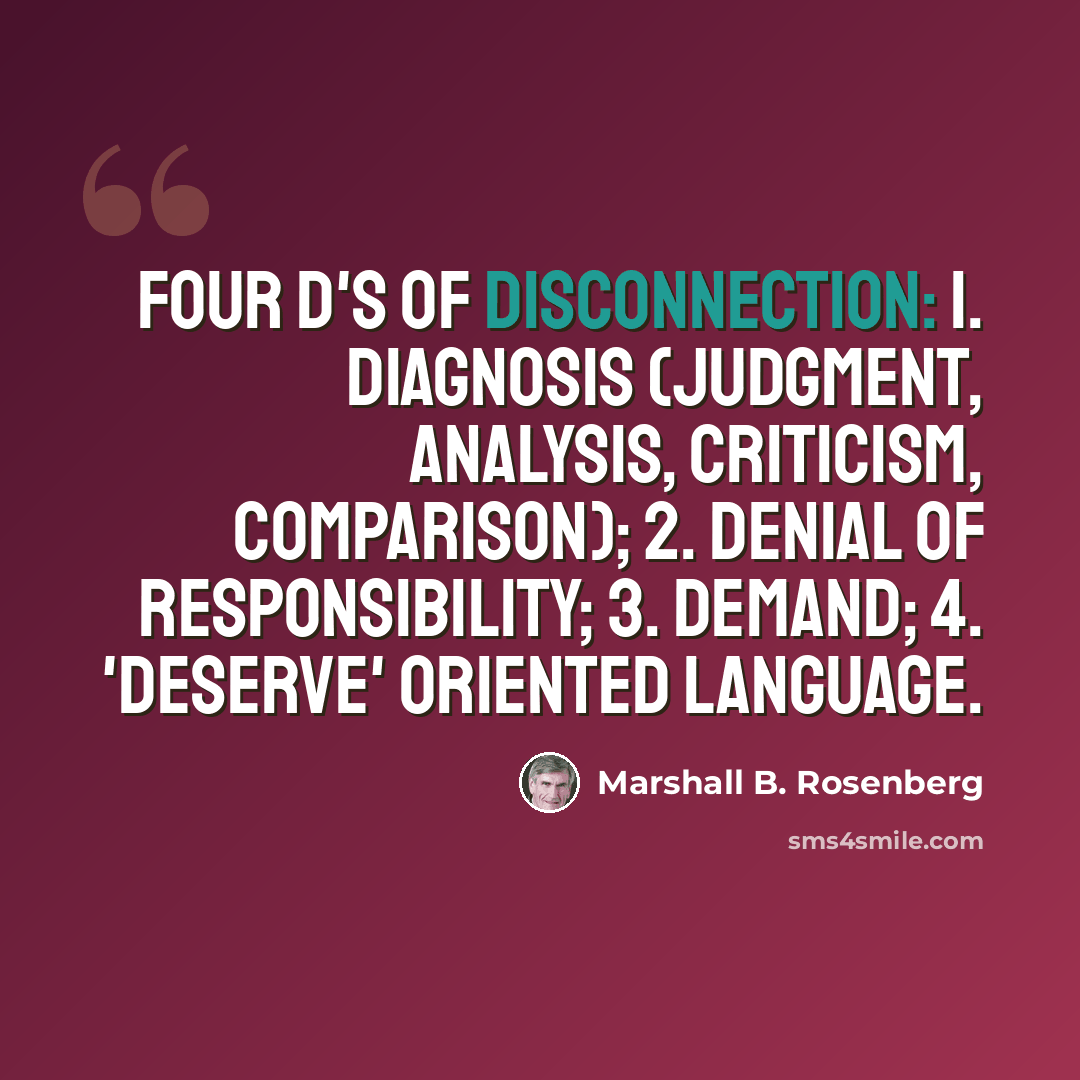
Four D's of Disconnection: 1. Diagnosis (judgment, analysis, criticism, comparison); 2. Denial of Responsibility; 3. Demand; 4. 'Deserve' oriented language. — Marshall B. Rosenberg Copy Share Image
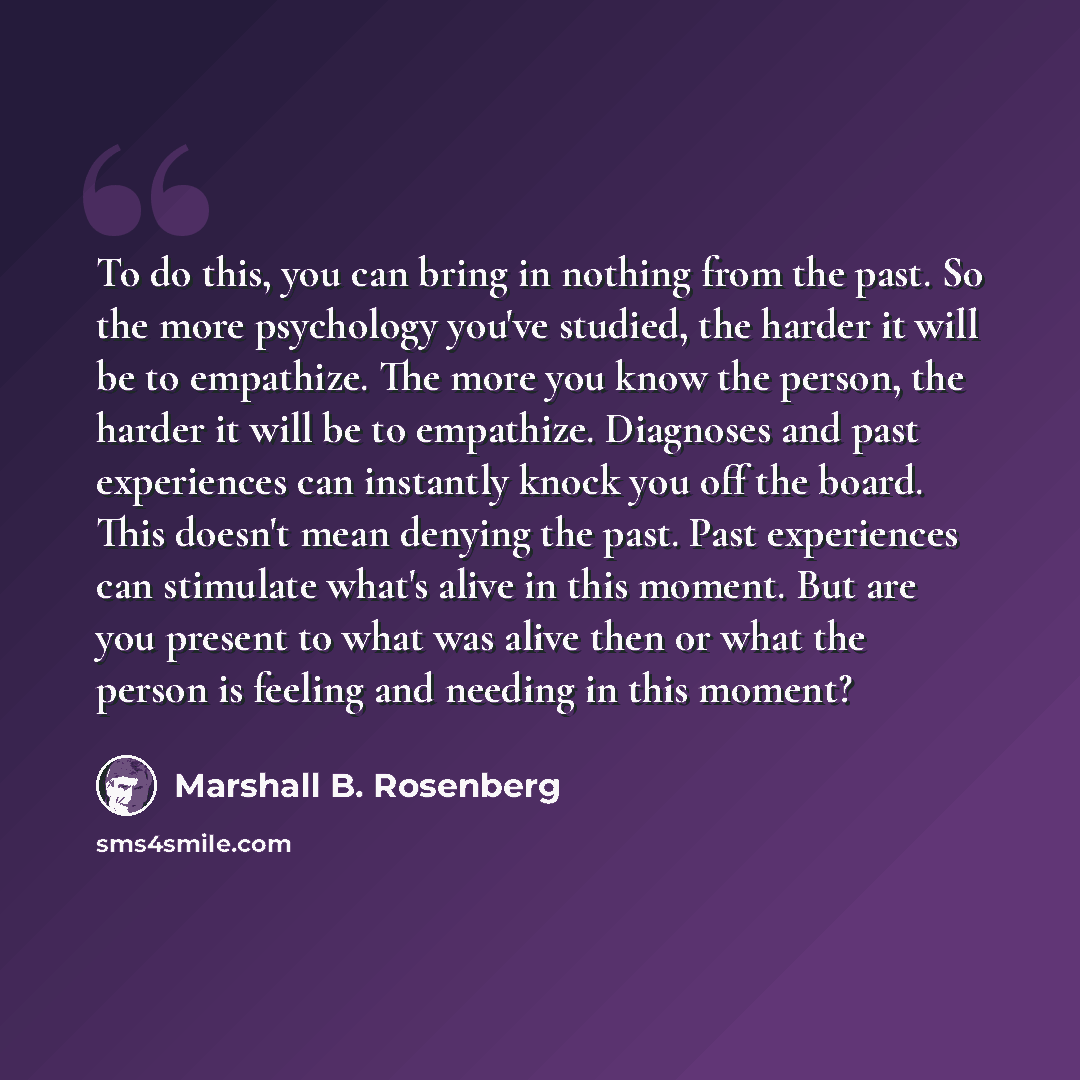
To do this, you can bring in nothing from the past. So the more psychology you've studied, the harder it will be… — Marshall B. Rosenberg Copy Share Image
Understanding the other persons' needs does not mean you have to give up on your own needs. — Marshall B. Rosenberg Copy Share
NVC gives us tools and understanding to create a more peaceful state of mind. — Marshall B. Rosenberg Copy Share
What I want in my life is compassion a flow between myself and others based on mutual giving from the heart. — Marshall B. Rosenberg Copy Share
Analyses of others are actually expressions of our own needs and values — Marshall B. Rosenberg Copy Share
Staying with empathy we allow speakers to touch deeper levels of themselves. — Marshall B. Rosenberg Copy Share
Often, instead of offering empathy, we have a strong urge to give advice or reassurance and to explain our own position or feeling. — Marshall B. Rosenberg Copy Share
NVC is founded on language and communication skills that strengthen our ability to remain human, even under trying conditions. — Marshall B. Rosenberg Copy Share
If you think ahead to what to say next - like how to fix it or make the person feel better - BOOM! Off… — Marshall B. Rosenberg Copy Share
Two questions help us see why we are unlikely to get what we want by using punishment... The first question is: What do I… — Marshall B. Rosenberg Copy Share
Praise and reward create a system of extrinsic motivations for behavior. Children (and adults) end up taking action in order to receive the praise… — Marshall B. Rosenberg Copy Share
Everything we do is in service of our needs. When this one concept is applied to our view of others, we'll see that we… — Marshall B. Rosenberg Copy Share