He knew that he, Millat, was a Paki no matter where he…
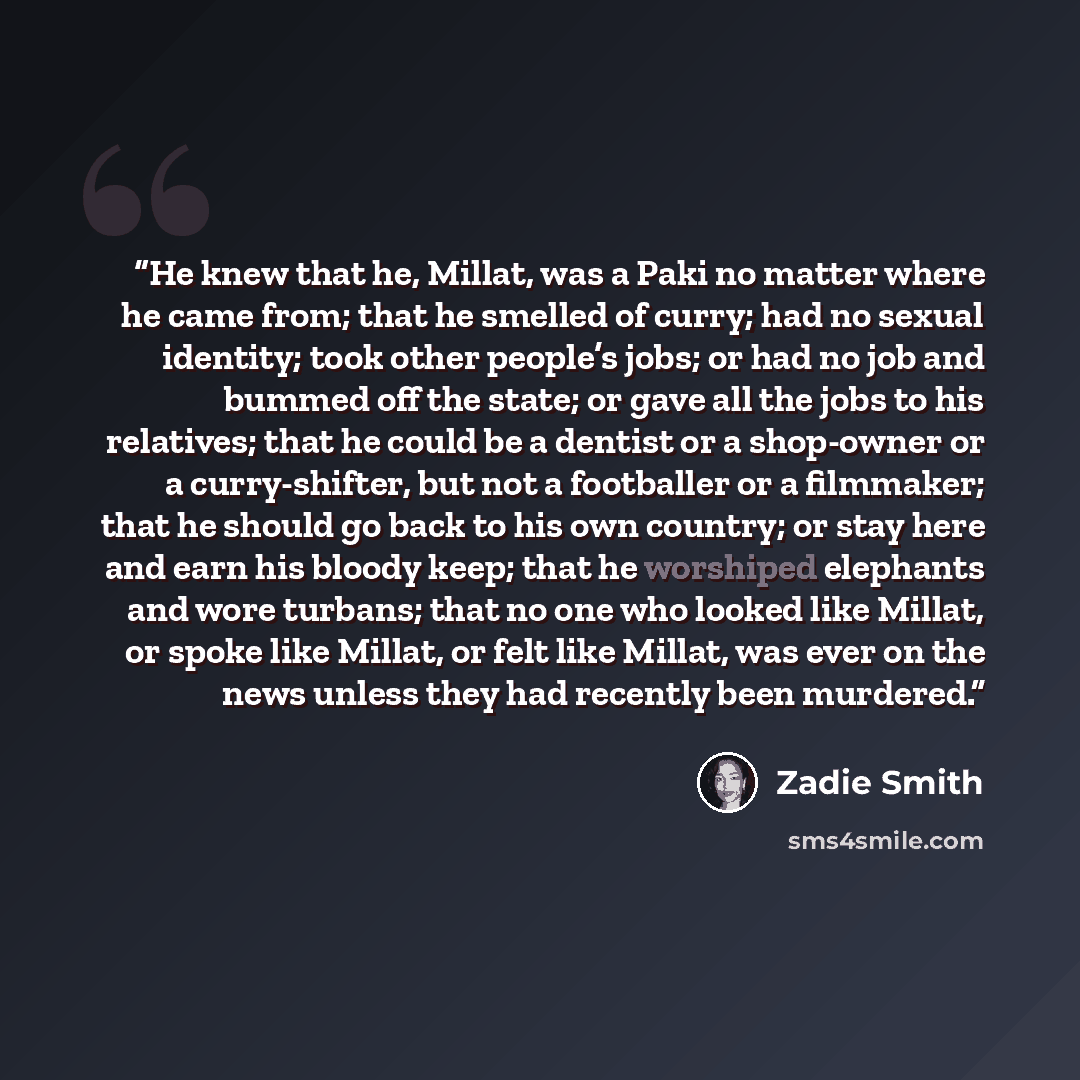
““He knew that he, Millat, was a Paki no matter where he came from; that he smelled of curry; had no sexual identity; took other people’s jobs; or had no job and bummed off the state; or gave all the jobs to his relatives; that he could be a dentist or a shop-owner or a curry-shifter, but not a footballer or a filmmaker; that he should go back to his own country; or stay here and earn his bloody keep; that he worshiped elephants and wore turbans; that no one who looked like Millat, or spoke like Millat, or felt like Millat, was ever on the news unless they had recently been murdered.””
About This Quote
This interpretation was drafted with AI assistance. It is one reading of the quote, not the author's own explanation.
The passage sat the stereotyping and marginalization faced by a South Asian immigrant, highlighting identity conflict and societal prejudice.
In simple terms: Immigrants face stereotypes and identity struggles.
Key Takeaway
Recognize and challenge stereotypes.
Themes
identity
stereotype
immigration
racism
belonging
Mood
frustrated
critical
reflective
Type
social commentary
critical analysis
When to use this quote
- workplace
- community interactions
- media representation
- policy making
Key Concepts
cultural bias
social exclusion
self perception
Questions to Reflect On
- How do stereotypes shape self‑identity?
- What can be done to reduce cultural bias?
A Different Perspective
Stereotypes can be deeply internalized, limiting opportunities.