Man has a body which is at once his burden and his…
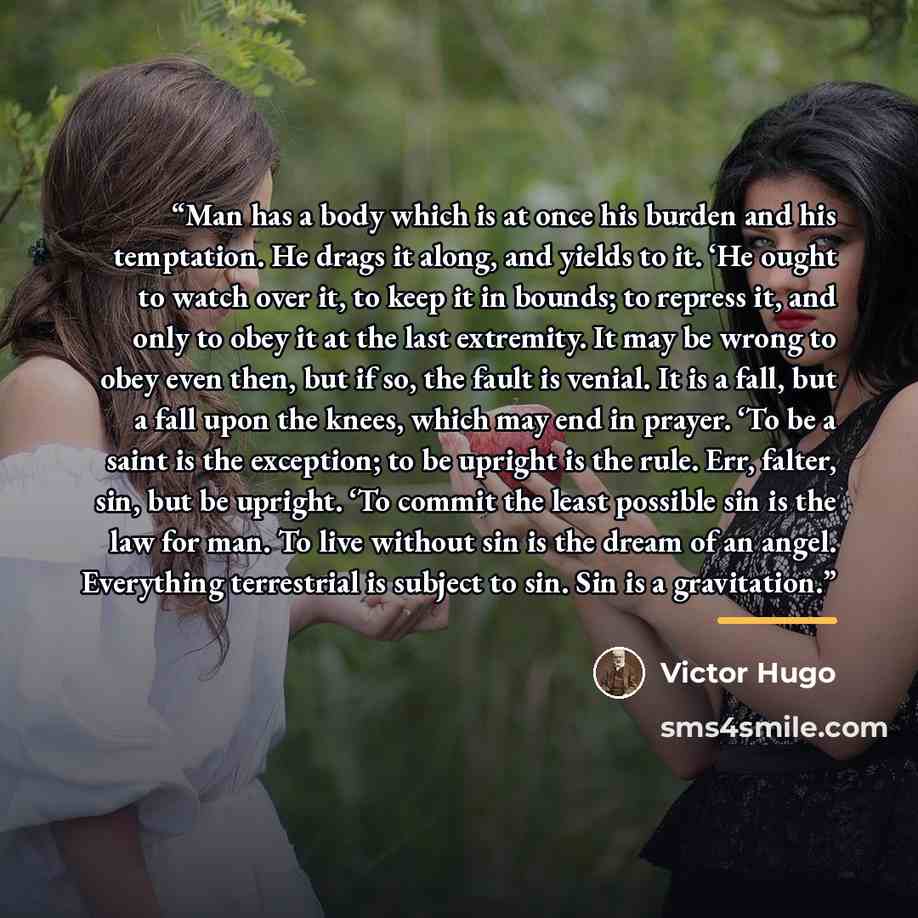
““Man has a body which is at once his burden and his temptation. He drags it along, and yields to it. ‘He ought to watch over it, to keep it in bounds; to repress it, and only to obey it at the last extremity. It may be wrong to obey even then, but if so, the fault is venial. It is a fall, but a fall upon the knees, which may end in prayer. ‘To be a saint is the exception; to be upright is the rule. Err, falter, sin, but be upright. ‘To commit the least possible sin is the law for man. To live without sin is the dream of an angel. Everything terrestrial is subject to sin. Sin is a gravitation.””
About This Quote
This interpretation was drafted with AI assistance. It is one reading of the quote, not the author's own explanation.
Human bodies are both a burden and a temptation, requiring self‑discipline; moral uprightness is the norm, while sainthood is rare; sin is an inevitable, gravitational pull.
In simple terms: Bodies tempt and burden; strive for uprightness.
Key Takeaway
Practice self‑control and humility.
Themes
morality
human nature
temptation
discipline
sin
Mood
thoughtful
serious
Type
philosophical
inspirational
When to use this quote
- daily decision making
- ethical dilemmas
- personal reflection
- teaching morality
Key Concepts
ethical philosophy
spirituality
human condition
Questions to Reflect On
- How do you balance self‑discipline with self‑compassion?
- Can one be upright without denying human desires?
A Different Perspective
The view may be overly ascetic, neglecting joy and compassion.