. . . a stone, a leaf, an unfound door; a stone, a leaf, a…
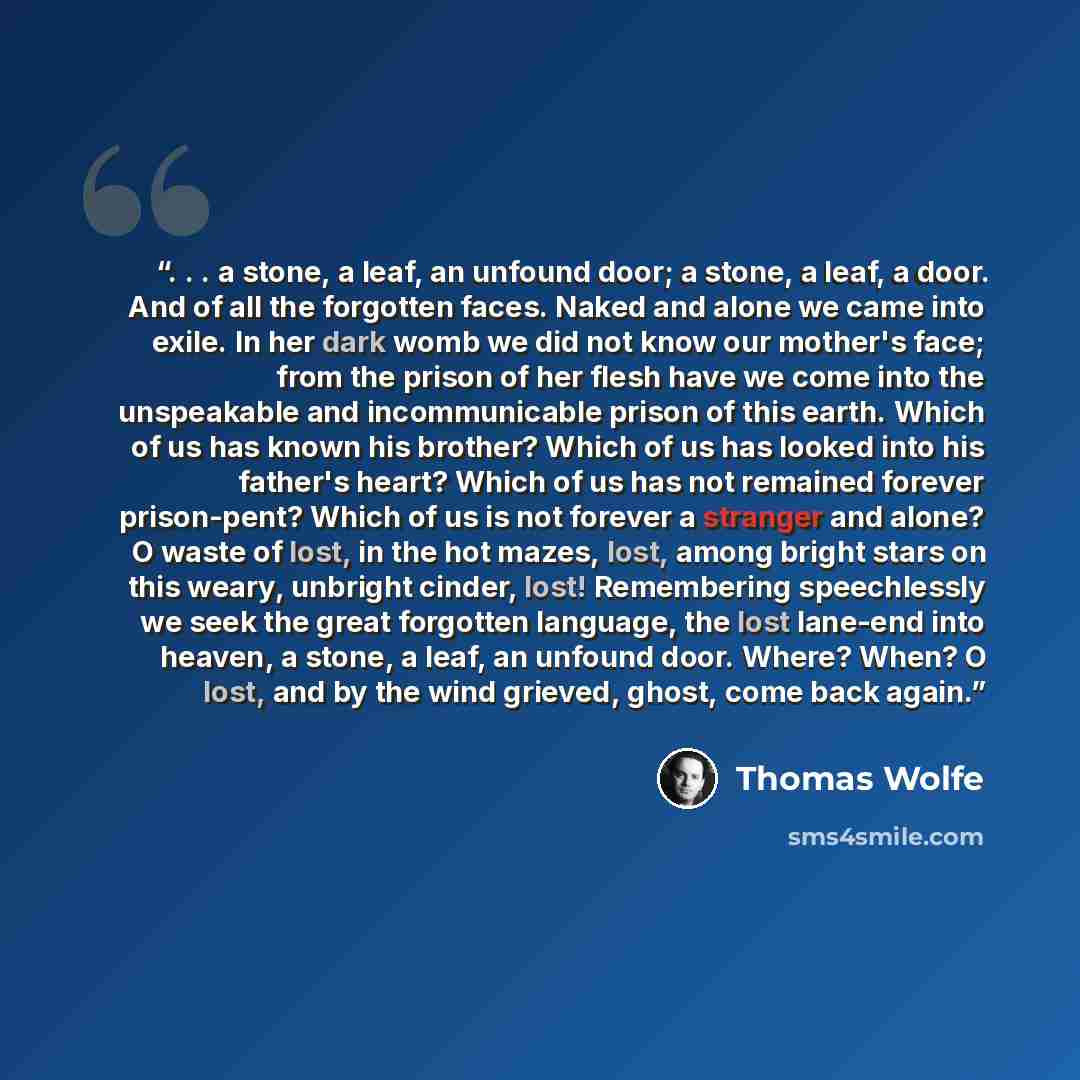
““. . . a stone, a leaf, an unfound door; a stone, a leaf, a door. And of all the forgotten faces. Naked and alone we came into exile. In her dark womb we did not know our mother's face; from the prison of her flesh have we come into the unspeakable and incommunicable prison of this earth. Which of us has known his brother? Which of us has looked into his father's heart? Which of us has not remained forever prison-pent? Which of us is not forever a stranger and alone? O waste of lost, in the hot mazes, lost, among bright stars on this weary, unbright cinder, lost! Remembering speechlessly we seek the great forgotten language, the lost lane-end into heaven, a stone, a leaf, an unfound door. Where? When? O lost, and by the wind grieved, ghost, come back again.””
About This Quote
This interpretation was drafted with AI assistance. It is one reading of the quote, not the author's own explanation.
The passage reflects existential alienation, the loss of identity, and yearning for a forgotten, transcendent connection beyond earthly confinement.
In simple terms: Feeling isolated and searching for meaning beyond the physical world.
Key Takeaway
Seek deeper connection and self‑knowledge.
Themes
existentialism
loneliness
search for meaning
spiritual yearning
Mood
melancholic
contemplative
poetic
Type
literary
philosophical
When to use this quote
- grief
- artistic creation
- philosophical contemplation
- personal introspection
Key Concepts
identity
memory
the unconscious
transcendence
Questions to Reflect On
- What does “the great forgotten language” symbolize for you?
- How can one find belonging in a world that feels alien?
A Different Perspective
The poetic language may obscure practical insight for everyday life.