The world has far too much morality, at least in the sense…
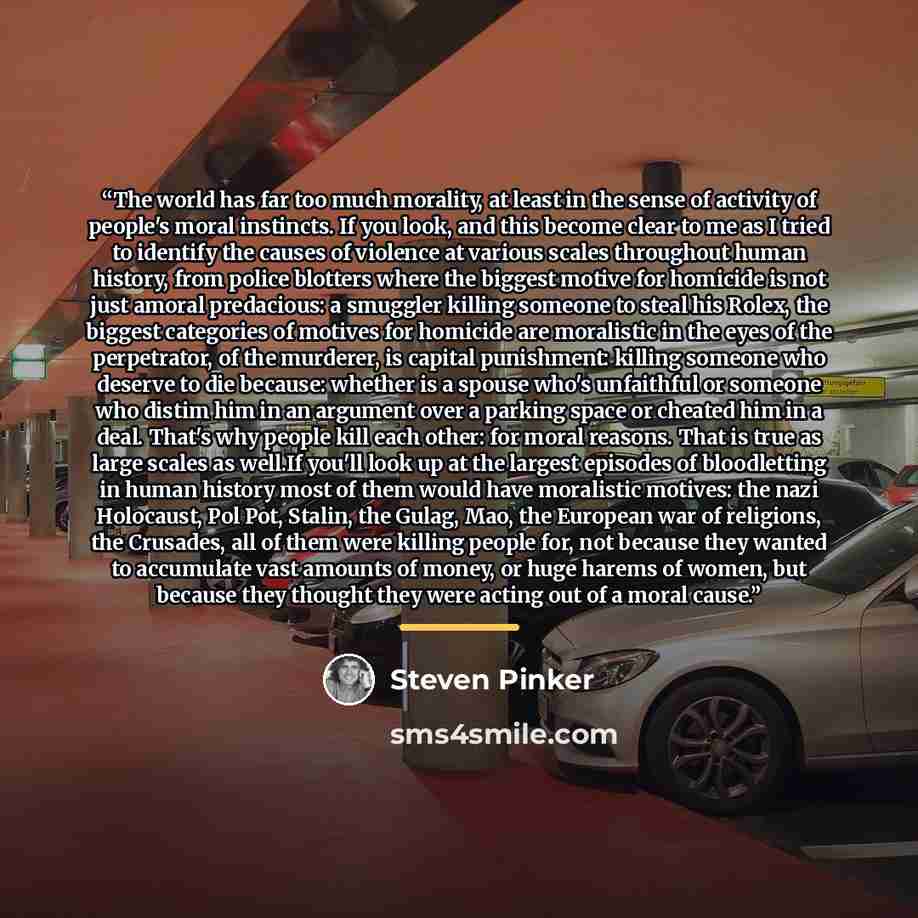
““The world has far too much morality, at least in the sense of activity of people's moral instincts. If you look, and this become clear to me as I tried to identify the causes of violence at various scales throughout human history, from police blotters where the biggest motive for homicide is not just amoral predacious: a smuggler killing someone to steal his Rolex, the biggest categories of motives for homicide are moralistic in the eyes of the perpetrator, of the murderer, is capital punishment: killing someone who deserve to die because: whether is a spouse who's unfaithful or someone who distim him in an argument over a parking space or cheated him in a deal. That's why people kill each other: for moral reasons. That is true as large scales as well.If you'll look up at the largest episodes of bloodletting in human history most of them would have moralistic motives: the nazi Holocaust, Pol Pot, Stalin, the Gulag, Mao, the European war of religions, the Crusades, all of them were killing people for, not because they wanted to accumulate vast amounts of money, or huge harems of women, but because they thought they were acting out of a moral cause.””
About This Quote
This interpretation was drafted with AI assistance. It is one reading of the quote, not the author's own explanation.
Many violent acts are driven by perceived moral justifications rather than material gain, showing morality can motivate both good and evil.
In simple terms: Moral motives often underlie violence.
Key Takeaway
Recognize the moral narratives that can justify harm.
Themes
morality
violence
human behavior
history
Mood
critical
analytical
Type
philosophical
historical
When to use this quote
- political analysis
- historical study
- conflict resolution
- media critique
Key Concepts
ethical psychology
social conflict
Questions to Reflect On
- How can societies differentiate genuine moral action from moralized violence?
- What role does empathy play in preventing moralistic aggression?
A Different Perspective
Moral reasoning can be manipulated to rationalize harmful actions.