...I do not think that it is right for a man to appeal to…
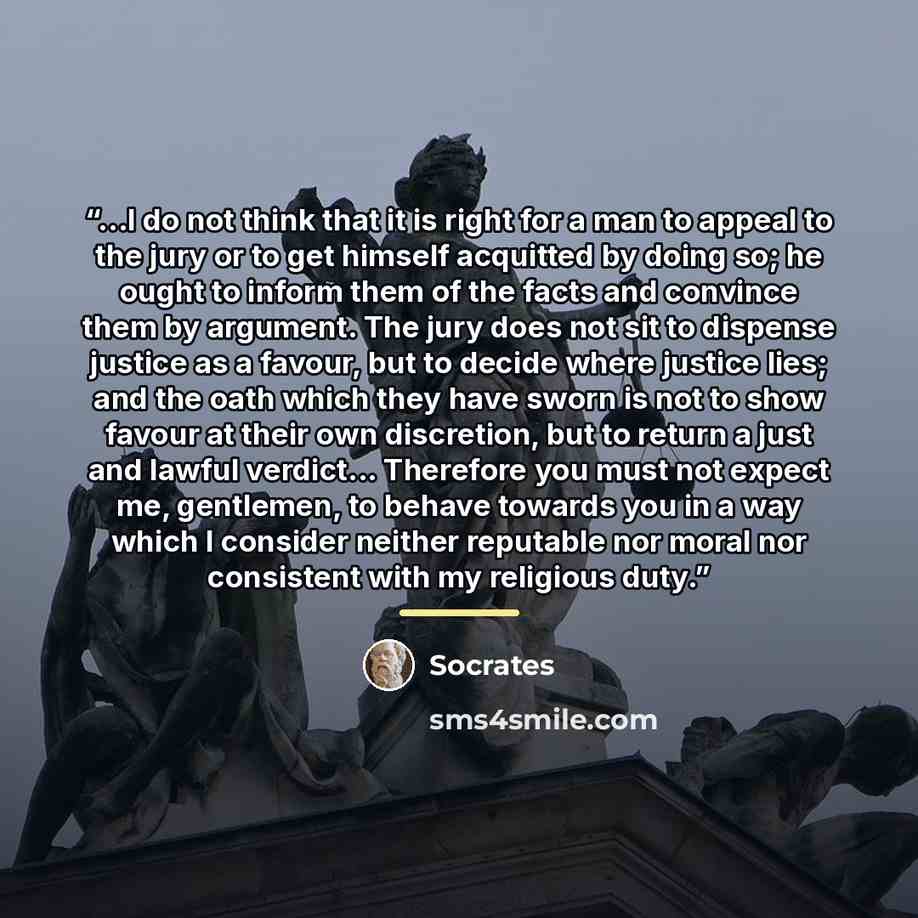
““...I do not think that it is right for a man to appeal to the jury or to get himself acquitted by doing so; he ought to inform them of the facts and convince them by argument. The jury does not sit to dispense justice as a favour, but to decide where justice lies; and the oath which they have sworn is not to show favour at their own discretion, but to return a just and lawful verdict... Therefore you must not expect me, gentlemen, to behave towards you in a way which I consider neither reputable nor moral nor consistent with my religious duty.””
About This Quote
This interpretation was drafted with AI assistance. It is one reading of the quote, not the author's own explanation.
A juror should decide based on evidence and reason, not personal favor; a speaker must present facts and logical argument, aligning with moral and religious duty.
In simple terms: Justice requires facts and reason, not favoritism.
Key Takeaway
Present clear evidence and logical reasoning.
Themes
justice
ethics
reason
integrity
duty
Mood
thoughtful
serious
inquisitive
Type
philosophical
ethical
When to use this quote
- courtroom
- public debate
- policy making
- ethical decision making
Key Concepts
legal philosophy
rhetoric
moral duty
Questions to Reflect On
- What responsibilities do jurors have beyond the law?
- How does personal bias affect justice?
A Different Perspective
Modern legal systems often involve negotiation and plea bargains, complicating pure rational judgment.