Antidemocracy, executive predominance, and elite rule are…
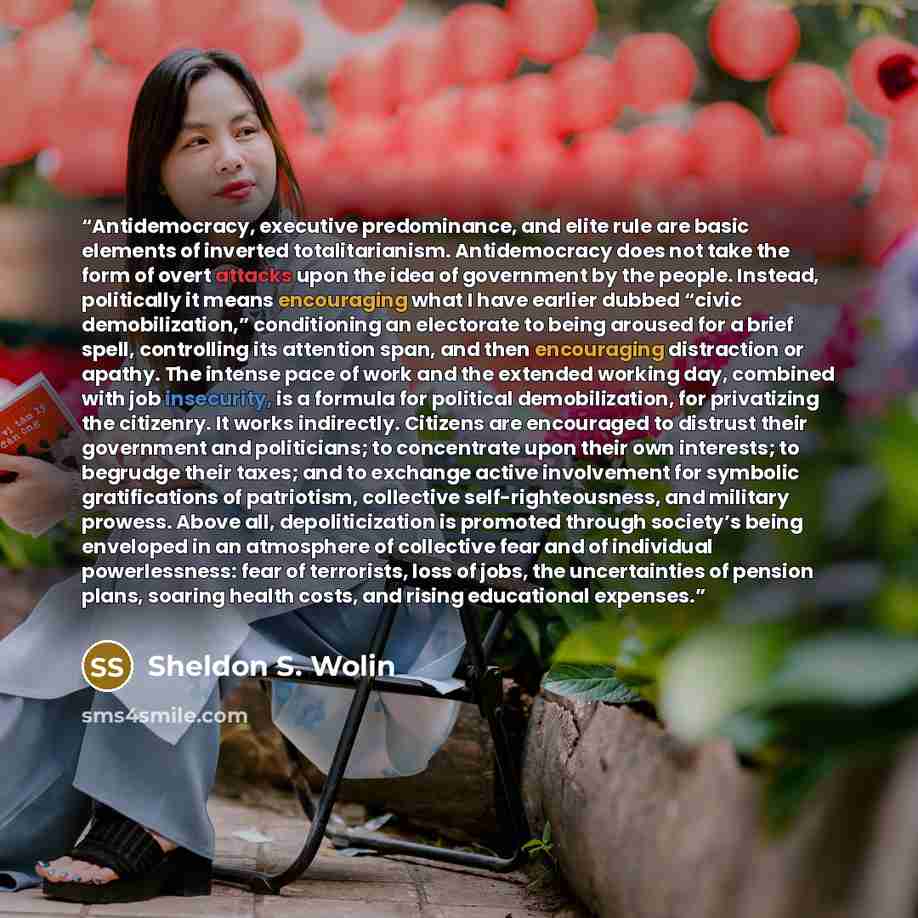
““Antidemocracy, executive predominance, and elite rule are basic elements of inverted totalitarianism. Antidemocracy does not take the form of overt attacks upon the idea of government by the people. Instead, politically it means encouraging what I have earlier dubbed “civic demobilization,” conditioning an electorate to being aroused for a brief spell, controlling its attention span, and then encouraging distraction or apathy. The intense pace of work and the extended working day, combined with job insecurity, is a formula for political demobilization, for privatizing the citizenry. It works indirectly. Citizens are encouraged to distrust their government and politicians; to concentrate upon their own interests; to begrudge their taxes; and to exchange active involvement for symbolic gratifications of patriotism, collective self-righteousness, and military prowess. Above all, depoliticization is promoted through society’s being enveloped in an atmosphere of collective fear and of individual powerlessness: fear of terrorists, loss of jobs, the uncertainties of pension plans, soaring health costs, and rising educational expenses.””
About This Quote
This interpretation was drafted with AI assistance. It is one reading of the quote, not the author's own explanation.
Inverted totalitarianism disguises elite control by keeping citizens distracted, insecure, and apathetic, preventing genuine democratic participation.
In simple terms: Elite rule hides behind fear and busy lives, stopping people from engaging politically.
Key Takeaway
Recognize and resist tactics that demobilize citizens.
Themes
political apathy
elite power
democratic erosion
media manipulation
social fear
Mood
anxious
critical
determined
Type
analytical
political
critical.
When to use this quote
- workplace stress
- media consumption
- public policy debates
- community organizing
Key Concepts
civic demobilization
political disengagement
structural inequality
Questions to Reflect On
- How does your daily routine affect your political awareness?
- What can you do to counteract fear‑based narratives?
A Different Perspective
The analysis may overstate the uniformity of citizen experiences across different societies.