If the cultural standing of excrement doesn't convince…
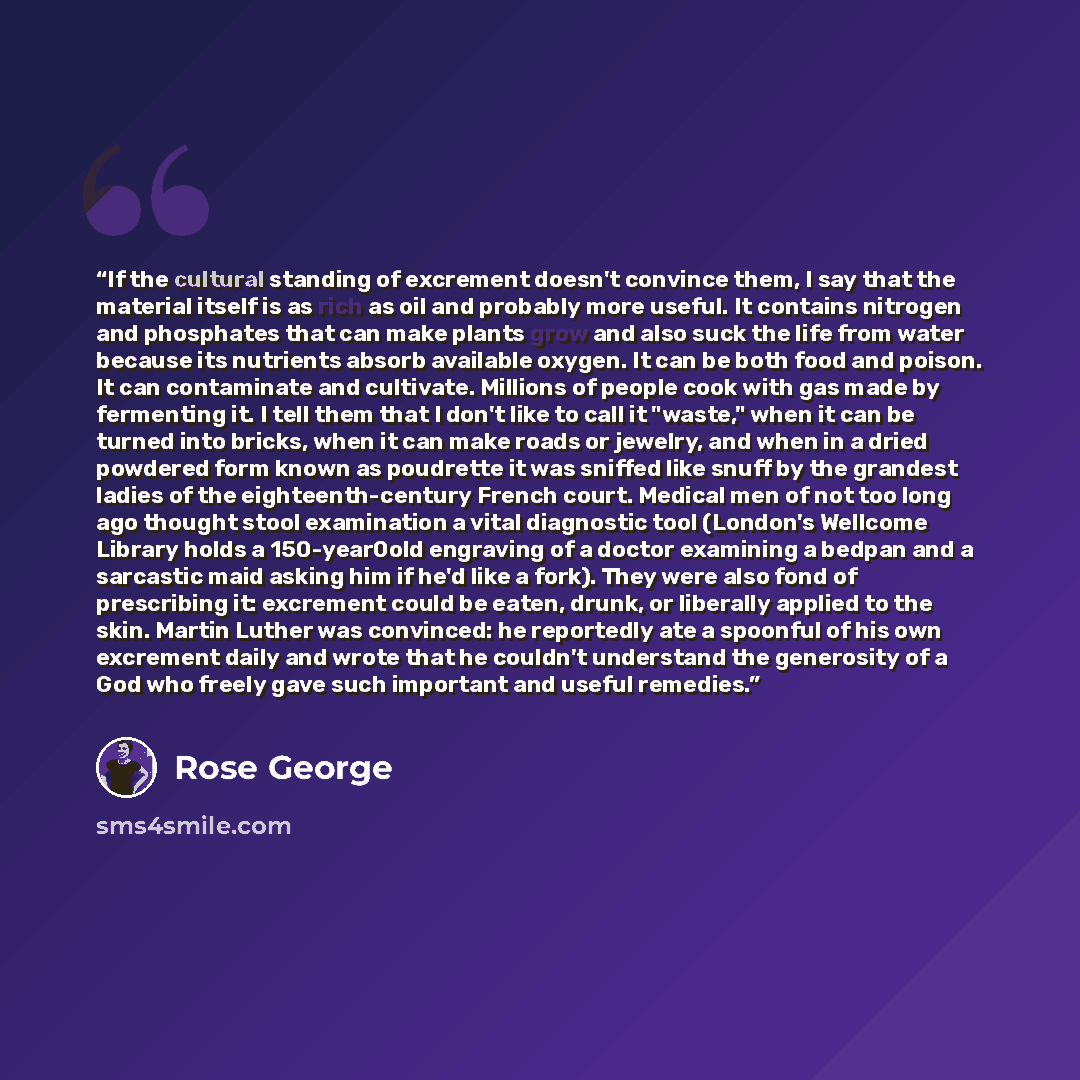
““If the cultural standing of excrement doesn't convince them, I say that the material itself is as rich as oil and probably more useful. It contains nitrogen and phosphates that can make plants grow and also suck the life from water because its nutrients absorb available oxygen. It can be both food and poison. It can contaminate and cultivate. Millions of people cook with gas made by fermenting it. I tell them that I don't like to call it "waste," when it can be turned into bricks, when it can make roads or jewelry, and when in a dried powdered form known as poudrette it was sniffed like snuff by the grandest ladies of the eighteenth-century French court. Medical men of not too long ago thought stool examination a vital diagnostic tool (London's Wellcome Library holds a 150-year0old engraving of a doctor examining a bedpan and a sarcastic maid asking him if he'd like a fork). They were also fond of prescribing it: excrement could be eaten, drunk, or liberally applied to the skin. Martin Luther was convinced: he reportedly ate a spoonful of his own excrement daily and wrote that he couldn't understand the generosity of a God who freely gave such important and useful remedies.””
About This Quote
This interpretation was drafted with AI assistance. It is one reading of the quote, not the author's own explanation.
The passage argues that human waste is a valuable resource, rich in nutrients, with potential for both beneficial uses and environmental hazards.
In simple terms: Excrement can be useful or harmful, depending on how we manage it.
Key Takeaway
Explore sustainable uses of waste while mitigating risks.
Themes
environment
resource management
health
history
technology
Mood
cautious
optimistic
pragmatic
Type
analytical
visionary
When to use this quote
- agriculture
- urban planning
- sanitation
- industrial design
- historical research
Key Concepts
nutrient cycling
waste valorisation
public health
historical practices
Questions to Reflect On
- What policies can balance waste reuse with safety?
- How can societies shift perception of waste?
A Different Perspective
The quote may overlook modern regulatory challenges and public acceptance.