A pozitív gondolkodás fogalma eredetileg egy ősi buddhista…
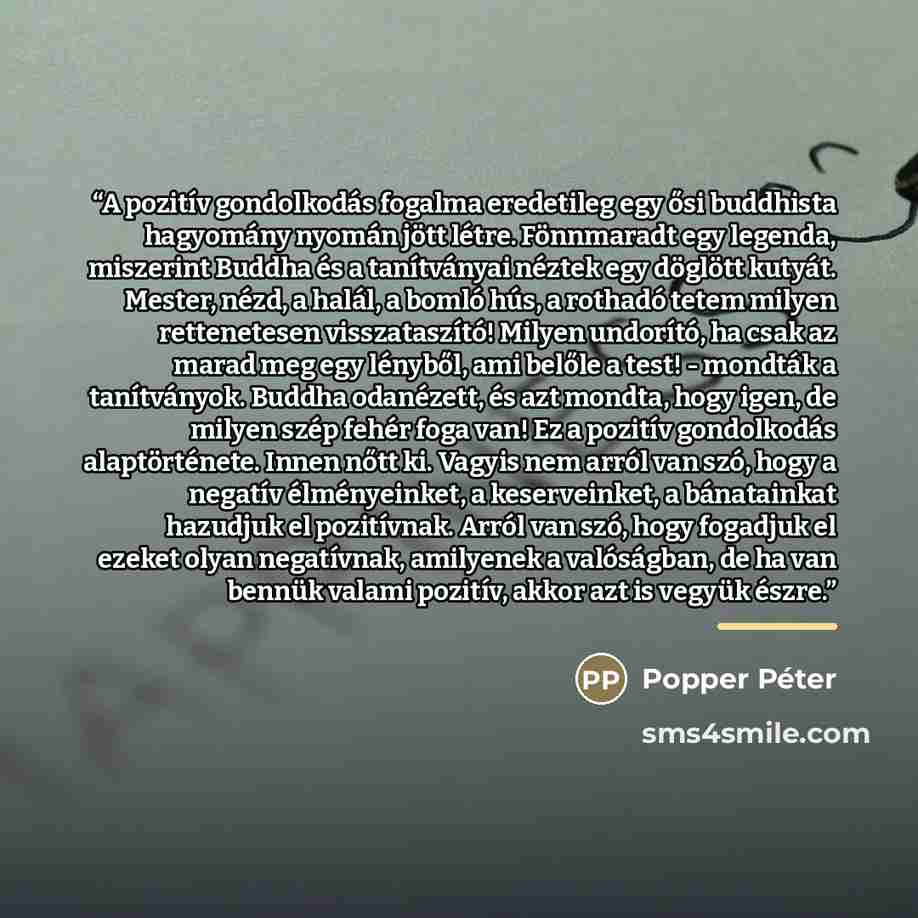
““A pozitív gondolkodás fogalma eredetileg egy ősi buddhista hagyomány nyomán jött létre. Fönnmaradt egy legenda, miszerint Buddha és a tanítványai néztek egy döglött kutyát. Mester, nézd, a halál, a bomló hús, a rothadó tetem milyen rettenetesen visszataszító! Milyen undorító, ha csak az marad meg egy lényből, ami belőle a test! - mondták a tanítványok. Buddha odanézett, és azt mondta, hogy igen, de milyen szép fehér foga van! Ez a pozitív gondolkodás alaptörténete. Innen nőtt ki. Vagyis nem arról van szó, hogy a negatív élményeinket, a keserveinket, a bánatainkat hazudjuk el pozitívnak. Arról van szó, hogy fogadjuk el ezeket olyan negatívnak, amilyenek a valóságban, de ha van bennük valami pozitív, akkor azt is vegyük észre.””
About This Quote
This interpretation was drafted with AI assistance. It is one reading of the quote, not the author's own explanation.
A Buddhist story illustrates positive thinking: acknowledging harsh reality while also seeing its bright side, integrating both into a balanced outlook.
In simple terms: Accept reality, yet notice its bright side.
Key Takeaway
Balance acceptance with optimism.
Themes
Buddhism
positivity
mindfulness
dual perception
philosophy
Mood
When does optimism become denial?
Type
thoughtful
balanced
spiritual
When to use this quote
- meditation
- daily journaling
- counseling
Key Concepts
cognitive reframing
spiritual practice
emotional balance
Questions to Reflect On
- How do you hold both negative and positive aspects of a situation?
A Different Perspective
Positive thinking may overlook necessary critique.