By such reflections and by the continuance in them of a…
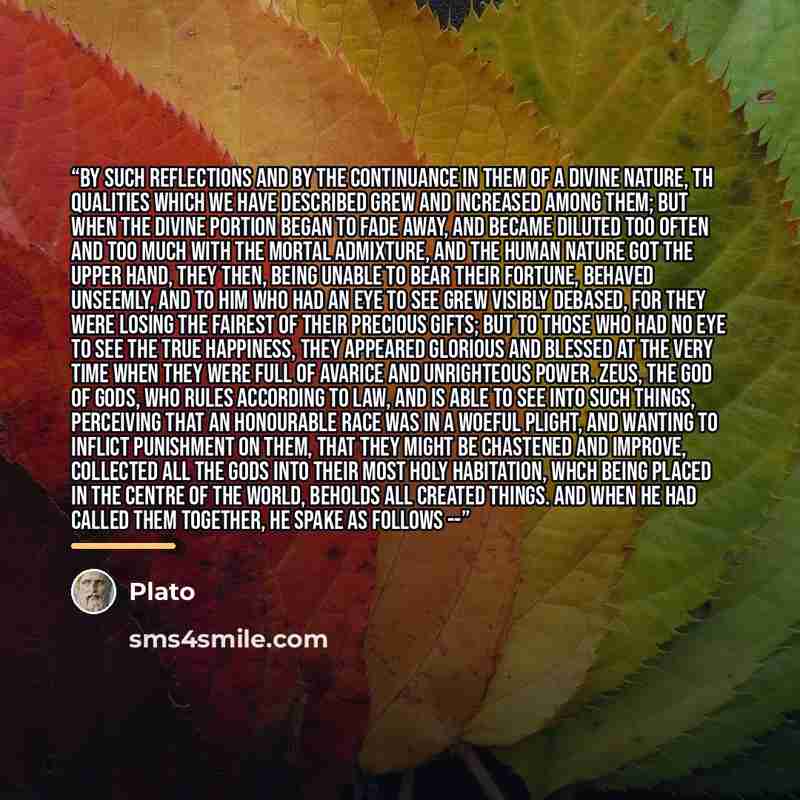
““By such reflections and by the continuance in them of a divine nature, th qualities which we have described grew and increased among them; but when the divine portion began to fade away, and became diluted too often and too much with the mortal admixture, and the human nature got the upper hand, they then, being unable to bear their fortune, behaved unseemly, and to him who had an eye to see grew visibly debased, for they were losing the fairest of their precious gifts; but to those who had no eye to see the true happiness, they appeared glorious and blessed at the very time when they were full of avarice and unrighteous power. Zeus, the god of gods, who rules according to law, and is able to see into such things, perceiving that an honourable race was in a woeful plight, and wanting to inflict punishment on them, that they might be chastened and improve, collected all the gods into their most holy habitation, whch being placed in the centre of the world, beholds all created things. And when he had called them together, he spake as follows --””
About This Quote
This interpretation was drafted with AI assistance. It is one reading of the quote, not the author's own explanation.
Divine qualities fade as mortal influence grows, leading to moral decline; Zeus observes and seeks to punish to restore order.
In simple terms: Human nature overwhelms divine virtues, causing corruption; divine intervention aims to correct it.
Key Takeaway
Recognize the tension between higher ideals and base impulses.
Themes
philosophy
mythology
ethics
human nature
divine justice
Mood
thoughtful
serious
inquisitive
Type
didactic
mythic
ethical
When to use this quote
- personal moral reflection
- educational curricula
- leadership training
- counseling sessions
- artistic storytelling
Key Concepts
moral decay
divine oversight
spiritual conflict
punishment theory
Questions to Reflect On
- How can societies balance lofty ideals with everyday realities?
- What role should higher authority play in correcting moral failings?
A Different Perspective
Idealism may overlook practical human limitations and complexities.