Have I not already told you', replied Don Quixote, 'that I…
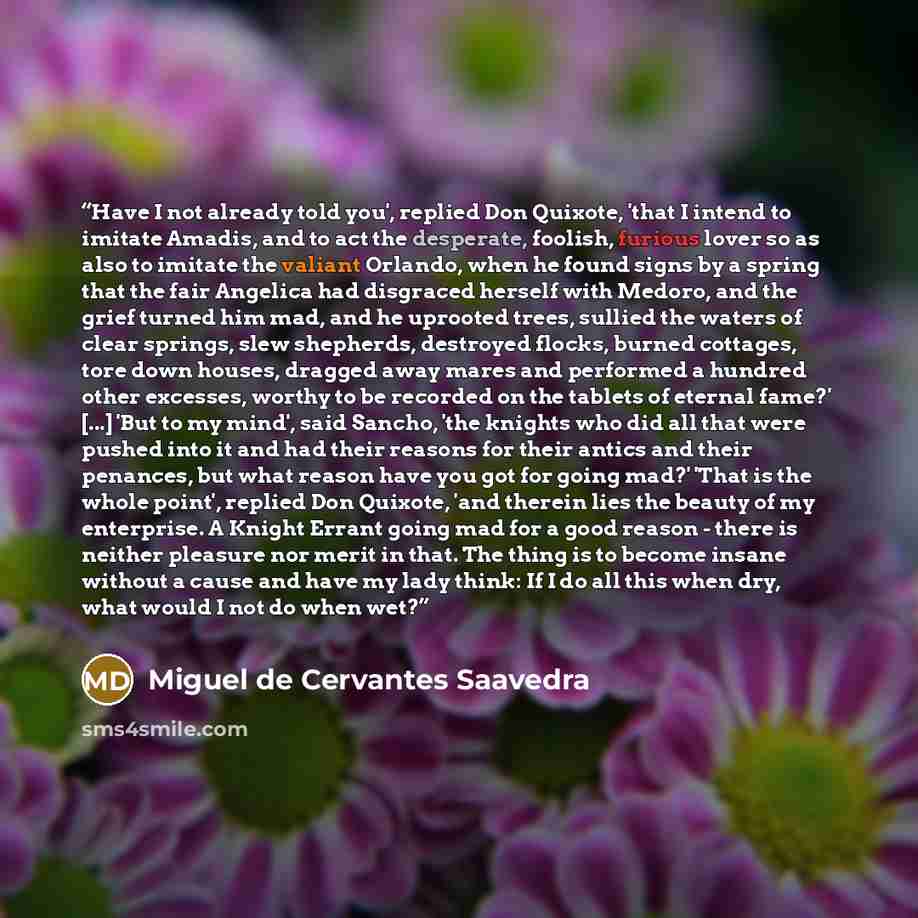
““Have I not already told you', replied Don Quixote, 'that I intend to imitate Amadis, and to act the desperate, foolish, furious lover so as also to imitate the valiant Orlando, when he found signs by a spring that the fair Angelica had disgraced herself with Medoro, and the grief turned him mad, and he uprooted trees, sullied the waters of clear springs, slew shepherds, destroyed flocks, burned cottages, tore down houses, dragged away mares and performed a hundred other excesses, worthy to be recorded on the tablets of eternal fame?' [...] 'But to my mind', said Sancho, 'the knights who did all that were pushed into it and had their reasons for their antics and their penances, but what reason have you got for going mad?' 'That is the whole point', replied Don Quixote, 'and therein lies the beauty of my enterprise. A Knight Errant going mad for a good reason - there is neither pleasure nor merit in that. The thing is to become insane without a cause and have my lady think: If I do all this when dry, what would I not do when wet?””
About This Quote
This interpretation was drafted with AI assistance. It is one reading of the quote, not the author's own explanation.
Don Quixote embraces reckless, passionate love and heroic madness for the sake of idealism, rejecting pragmatic reasons.
In simple terms: He loves wildly without practical cause.
Key Takeaway
Pursue noble passions, even if irrational.
Themes
idealism
madness
heroism
love
reason
Mood
conflicted
passionate
Type
literary
philosophical
When to use this quote
- literary analysis
- personal motivation
- creative writing
- philosophical debate
Key Concepts
chivalry
romanticism
existentialism
Questions to Reflect On
- What drives you to act irrationally for love?
- Is noble intent enough to justify reckless deeds?
A Different Perspective
The extreme actions may cause real harm and chaos.