Utopianism also finds a receptive audience among the…
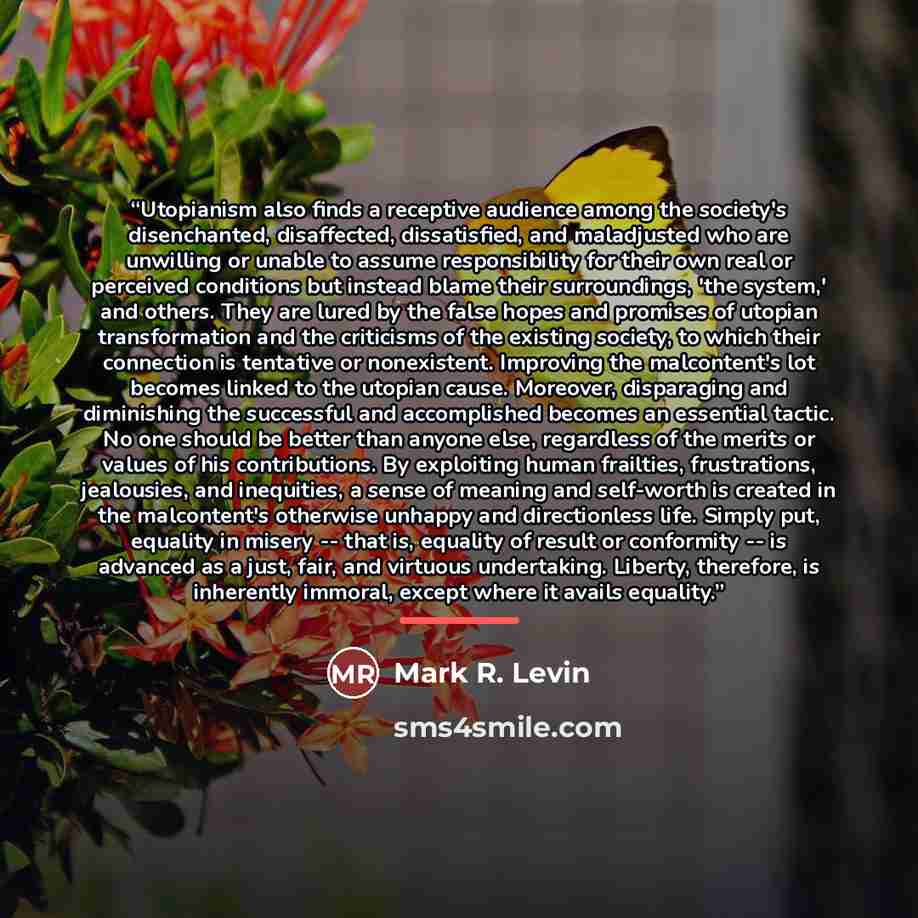
““Utopianism also finds a receptive audience among the society's disenchanted, disaffected, dissatisfied, and maladjusted who are unwilling or unable to assume responsibility for their own real or perceived conditions but instead blame their surroundings, 'the system,' and others. They are lured by the false hopes and promises of utopian transformation and the criticisms of the existing society, to which their connection is tentative or nonexistent. Improving the malcontent's lot becomes linked to the utopian cause. Moreover, disparaging and diminishing the successful and accomplished becomes an essential tactic. No one should be better than anyone else, regardless of the merits or values of his contributions. By exploiting human frailties, frustrations, jealousies, and inequities, a sense of meaning and self-worth is created in the malcontent's otherwise unhappy and directionless life. Simply put, equality in misery -- that is, equality of result or conformity -- is advanced as a just, fair, and virtuous undertaking. Liberty, therefore, is inherently immoral, except where it avails equality.””
About This Quote
This interpretation was drafted with AI assistance. It is one reading of the quote, not the author's own explanation.
Utopian promises attract those disillusioned with society, offering false hope while discouraging personal responsibility and celebrating mediocrity.
In simple terms: Utopian ideas lure the discontented and blame the system.
Key Takeaway
Critically assess any utopian claim for hidden motives.
Themes
politics
psychology
social critique
Mood
skeptical
critical
analytical
Type
philosophical
political
When to use this quote
- activist movements
- political rallies
- online forums
- community organizing
Key Concepts
Utopianism
responsibility
elitism
Questions to Reflect On
- What responsibilities are being avoided?
- How does equality of outcome differ from equality of opportunity?
A Different Perspective
Utopian visions often ignore practical constraints and individual agency.