And it was at that moment, too — thanks to a peasant who…
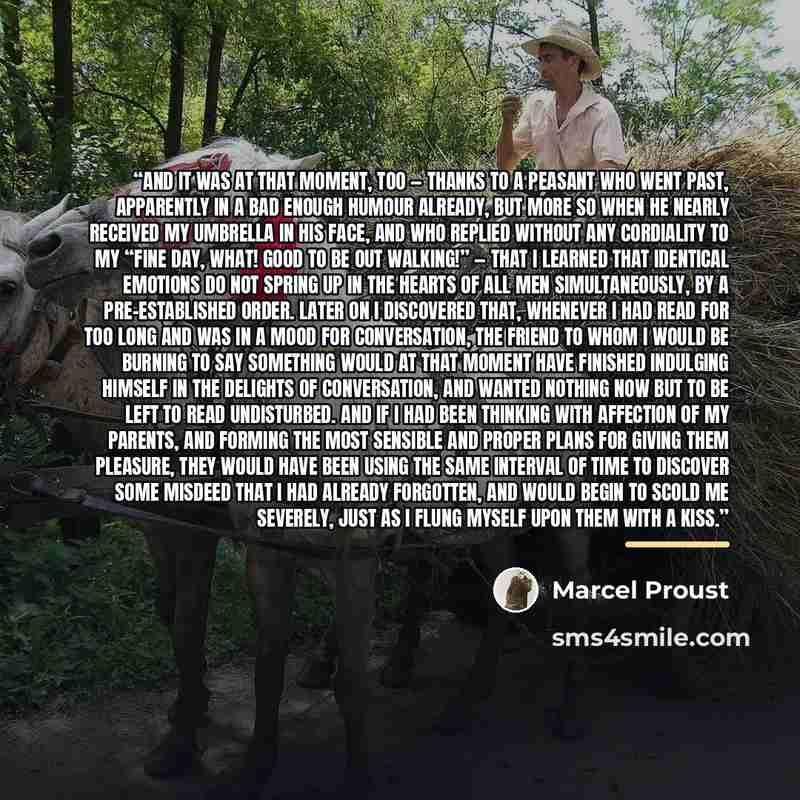
““And it was at that moment, too — thanks to a peasant who went past, apparently in a bad enough humour already, but more so when he nearly received my umbrella in his face, and who replied without any cordiality to my “Fine day, what! good to be out walking!” — that I learned that identical emotions do not spring up in the hearts of all men simultaneously, by a pre-established order. Later on I discovered that, whenever I had read for too long and was in a mood for conversation, the friend to whom I would be burning to say something would at that moment have finished indulging himself in the delights of conversation, and wanted nothing now but to be left to read undisturbed. And if I had been thinking with affection of my parents, and forming the most sensible and proper plans for giving them pleasure, they would have been using the same interval of time to discover some misdeed that I had already forgotten, and would begin to scold me severely, just as I flung myself upon them with a kiss.””
About This Quote
This interpretation was drafted with AI assistance. It is one reading of the quote, not the author's own explanation.
The passage illustrates how emotions and timing differ among people, leading to missed connections and misunderstandings.
In simple terms: People experience feelings at different times, causing misaligned interactions.
Key Takeaway
Recognize timing differences in communication.
Themes
communication
timing
misunderstanding
empathy
Mood
thoughtful
philosophical
Type
literary
reflective
When to use this quote
- conversation
- reading
- family dynamics
- social interaction
Key Concepts
subjectivity
temporal perception
Questions to Reflect On
- How can you adjust expectations of others' timing?
- What cues indicate a better moment to engage?
A Different Perspective
Assuming synchronized emotions can cause frustration.