But it will be asked: What is the force and power of the…
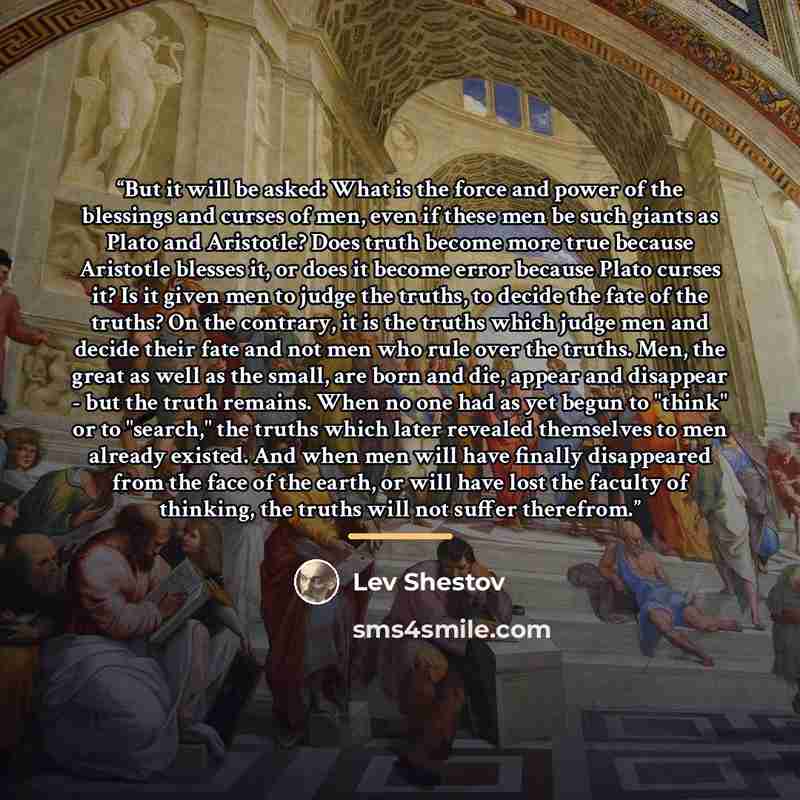
““But it will be asked: What is the force and power of the blessings and curses of men, even if these men be such giants as Plato and Aristotle? Does truth become more true because Aristotle blesses it, or does it become error because Plato curses it? Is it given men to judge the truths, to decide the fate of the truths? On the contrary, it is the truths which judge men and decide their fate and not men who rule over the truths. Men, the great as well as the small, are born and die, appear and disappear - but the truth remains. When no one had as yet begun to "think" or to "search," the truths which later revealed themselves to men already existed. And when men will have finally disappeared from the face of the earth, or will have lost the faculty of thinking, the truths will not suffer therefrom.””
About This Quote
This interpretation was drafted with AI assistance. It is one reading of the quote, not the author's own explanation.
Truth exists independently of human opinion; it endures beyond individuals, regardless of praise or condemnation.
In simple terms: Truth stands alone, beyond people's judgments.
Key Takeaway
Seek truth, not approval.
Themes
philosophy
truth
human limitation
Mood
contemplative
serious
Type
philosophical
inspirational
When to use this quote
- academic debate
- personal belief
- cultural discourse
- ethical decision‑making
Key Concepts
epistemology
metaphysics
Questions to Reflect On
- What role do personal biases play in perceiving truth?
- Can truth be fully known?
A Different Perspective
Truth may be inaccessible without proper inquiry.