Mastema prefers absolutes. He wants fences on the world…
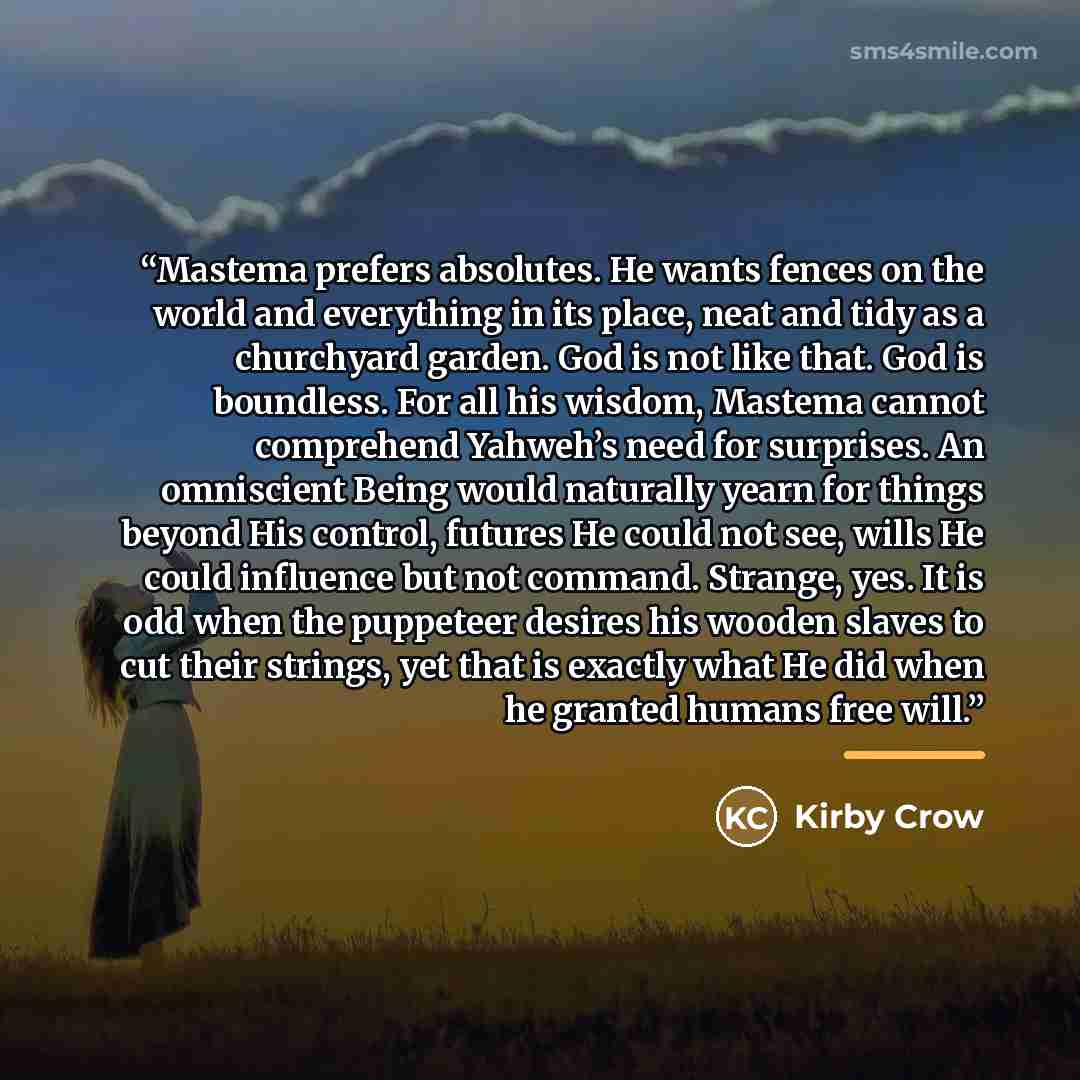
““Mastema prefers absolutes. He wants fences on the world and everything in its place, neat and tidy as a churchyard garden. God is not like that. God is boundless. For all his wisdom, Mastema cannot comprehend Yahweh’s need for surprises. An omniscient Being would naturally yearn for things beyond His control, futures He could not see, wills He could influence but not command. Strange, yes. It is odd when the puppeteer desires his wooden slaves to cut their strings, yet that is exactly what He did when he granted humans free will.””
About This Quote
This interpretation was drafted with AI assistance. It is one reading of the quote, not the author's own explanation.
The quote contrasts rigid, deterministic control with divine boundlessness, suggesting that true freedom arises from a creator who values unpredictability and free will over absolute order.
In simple terms: Divine freedom vs. deterministic control
Key Takeaway
God embraces uncertainty, humans are granted free will
Themes
theology
philosophy
free will
determinism
creativity
paradox
Mood
contemplative
reverent
inquisitive
Type
aphorism
theological reflection
philosophical insight
When to use this quote
- theological reflection
- philosophical debate
- personal spiritual practice
- creative writing
- ethical decision‑making
Key Concepts
divine nature
human agency
order vs. chaos
surprise
Practical Applications
- exploring concepts in sermons
- informing philosophical essays
Questions to Reflect On
- Does freedom require the possibility of the unknown?
- How does belief in a boundless deity shape moral responsibility?
A Different Perspective
Some may argue that divine omniscience inherently limits true freedom, making the concept of surprise contradictory.