The Highest Good consists," says he, "in the emptiness of…
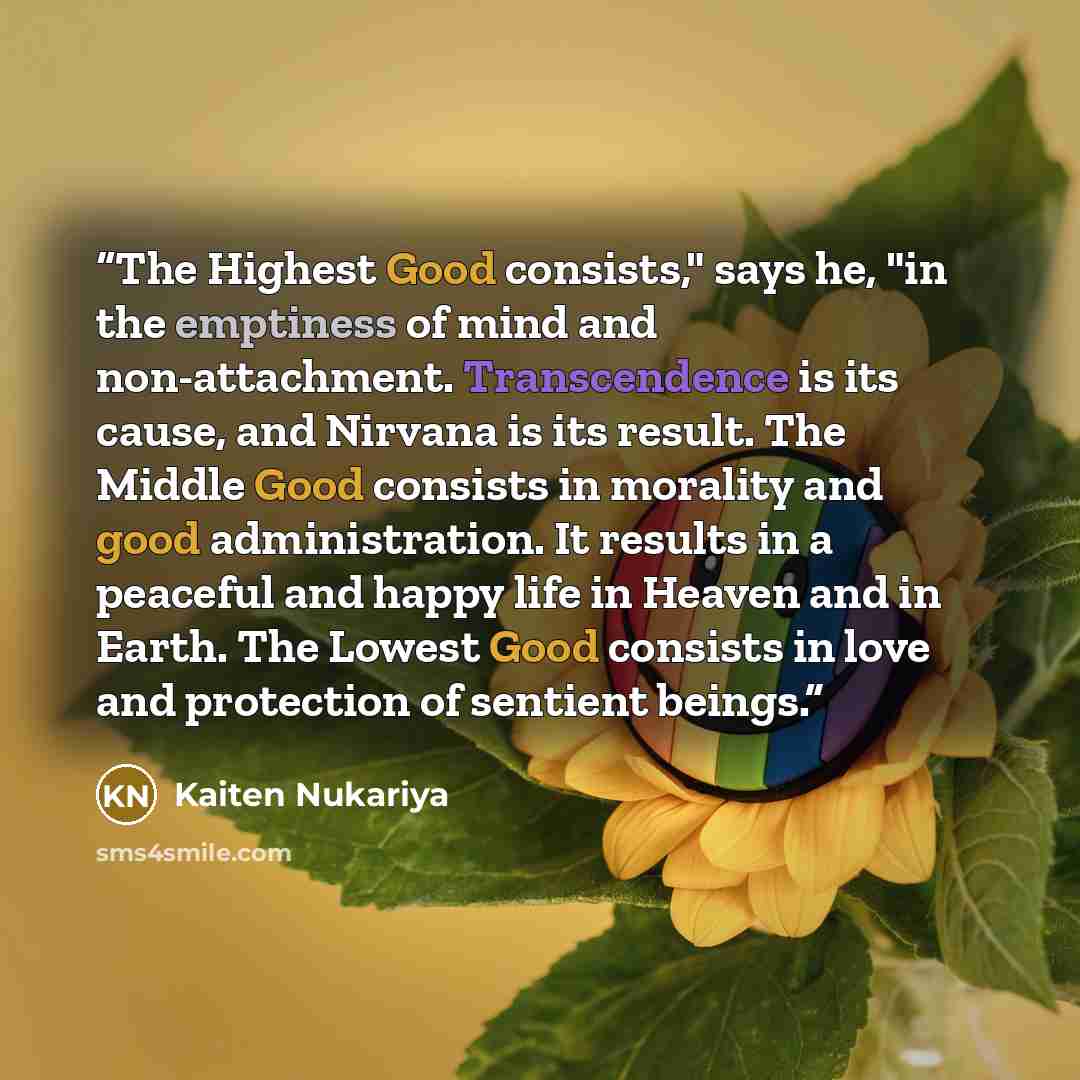
““The Highest Good consists," says he, "in the emptiness of mind and non-attachment. Transcendence is its cause, and Nirvana is its result. The Middle Good consists in morality and good administration. It results in a peaceful and happy life in Heaven and in Earth. The Lowest Good consists in love and protection of sentient beings.””
About This Quote
This interpretation was drafted with AI assistance. It is one reading of the quote, not the author's own explanation.
The highest form of good is a mind free of desire and attachment, leading to transcendence and Nirvana; middle good is moral conduct and good governance, yielding peace; lowest good is compassionate care for sentient beings.
In simple terms: Freedom from desire brings ultimate peace; moral order creates societal harmony; caring for beings is basic virtue.
Key Takeaway
Cultivate non‑attachment, practice ethical leadership, and protect life.
Themes
spirituality
ethics
philosophy
Mood
contemplative
hopeful
Type
philosophical
inspirational
When to use this quote
- personal meditation
- community leadership
- environmental activism
- animal welfare
- conflict resolution
Key Concepts
Buddhism
transcendence
nirvana
morality
compassion
Questions to Reflect On
- How can you balance non‑attachment with necessary responsibilities?
- What does “middle good” look like in modern governance?
A Different Perspective
Non‑attachment can be hard to maintain in a consumerist culture.