You’ll be seeing him tomorrow night, anyway.” “I am?”…
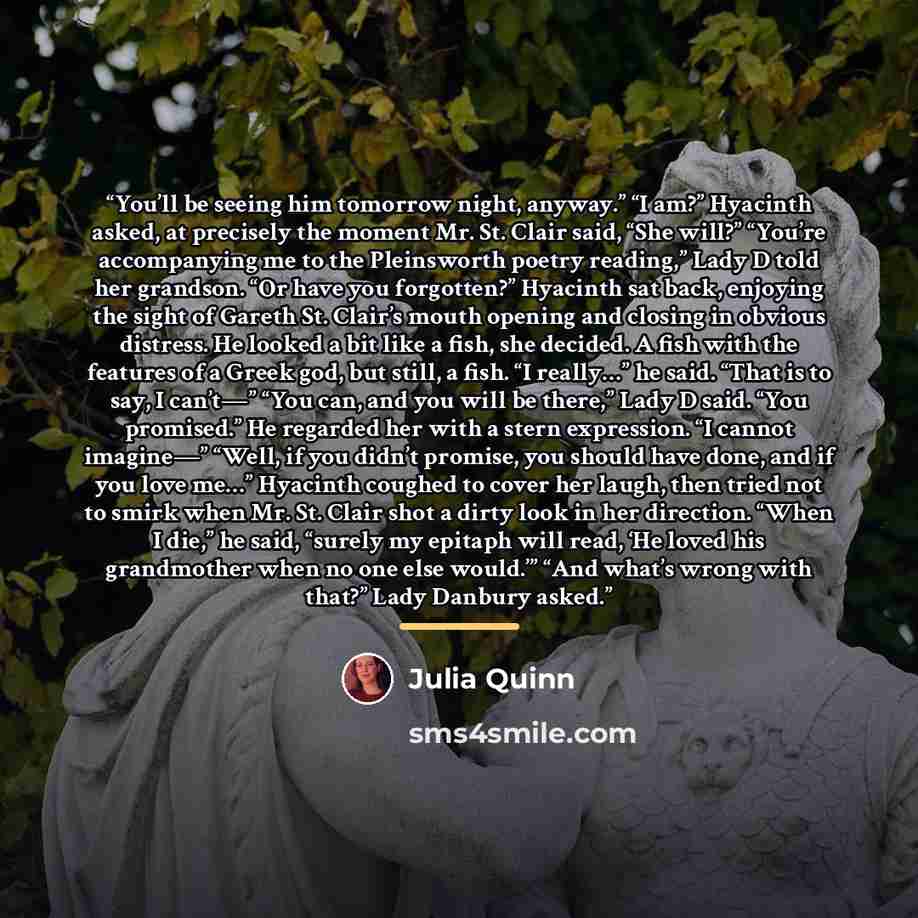
““You’ll be seeing him tomorrow night, anyway.” “I am?” Hyacinth asked, at precisely the moment Mr. St. Clair said, “She will?” “You’re accompanying me to the Pleinsworth poetry reading,” Lady D told her grandson. “Or have you forgotten?” Hyacinth sat back, enjoying the sight of Gareth St. Clair’s mouth opening and closing in obvious distress. He looked a bit like a fish, she decided. A fish with the features of a Greek god, but still, a fish. “I really…” he said. “That is to say, I can’t—” “You can, and you will be there,” Lady D said. “You promised.” He regarded her with a stern expression. “I cannot imagine—” “Well, if you didn’t promise, you should have done, and if you love me…” Hyacinth coughed to cover her laugh, then tried not to smirk when Mr. St. Clair shot a dirty look in her direction. “When I die,” he said, “surely my epitaph will read, ‘He loved his grandmother when no one else would.’” “And what’s wrong with that?” Lady Danbury asked.””
About This Quote
This interpretation was drafted with AI assistance. It is one reading of the quote, not the author's own explanation.
A character uses humor and sarcasm to deflect a serious promise, revealing underlying affection and fear of commitment.
In simple terms: Humor hides true feelings about promises.
Key Takeaway
Recognize when jokes mask deeper emotions.
Themes
humor
relationships
commitment
family
social expectations
Mood
playful
ironic
lighthearted
Type
dialogue
dramatic
conversational
When to use this quote
- family gatherings
- romantic negotiations
- promise discussions
- social gatherings
- interpersonal conflict
Key Concepts
deflection
affection
fear of intimacy
Questions to Reflect On
- What are you avoiding by joking?
- How does humor affect trust?
A Different Perspective
The humor may prevent honest communication about expectations.