Junior, stop being orner.” It’s what Mama used to say to…
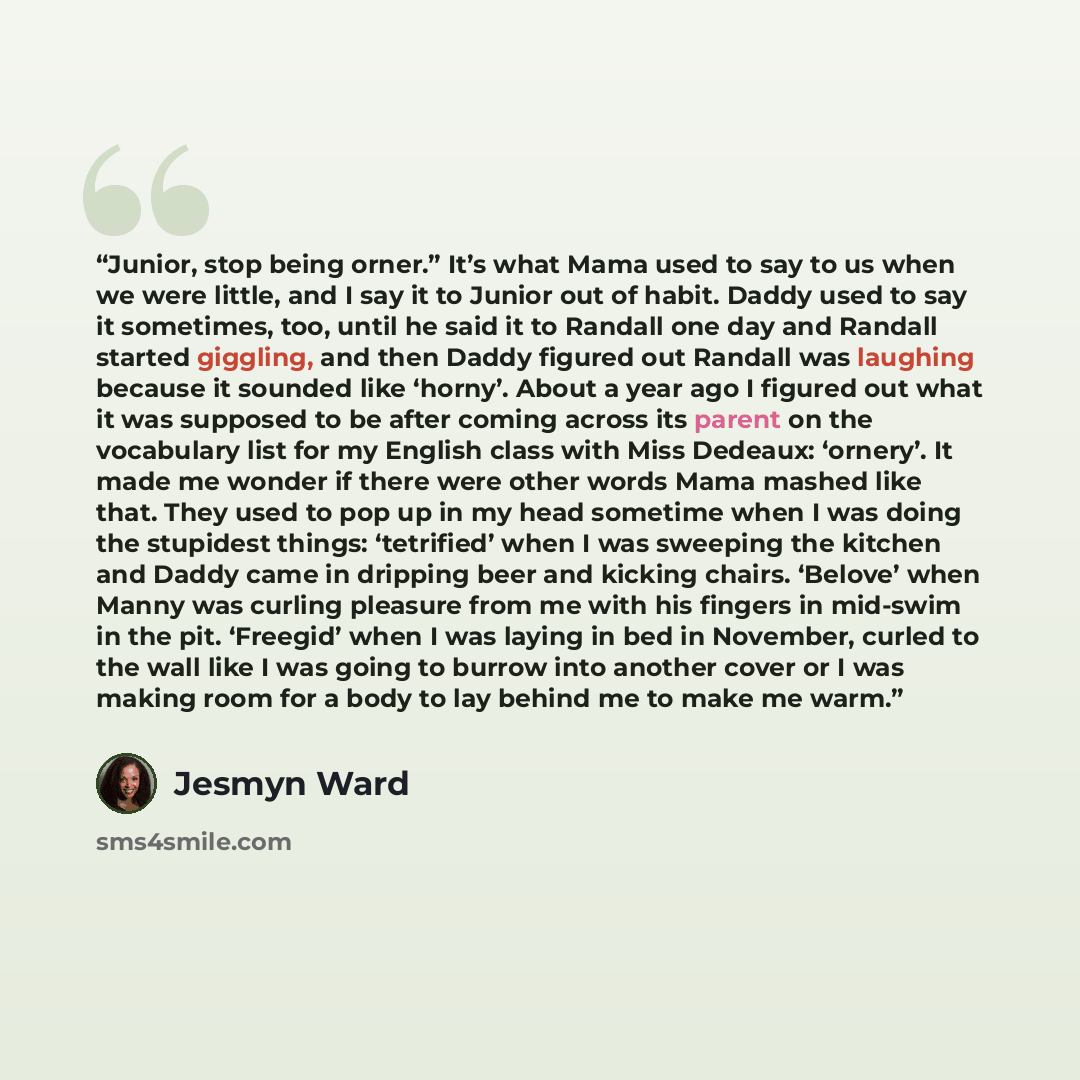
““Junior, stop being orner.” It’s what Mama used to say to us when we were little, and I say it to Junior out of habit. Daddy used to say it sometimes, too, until he said it to Randall one day and Randall started giggling, and then Daddy figured out Randall was laughing because it sounded like ‘horny’. About a year ago I figured out what it was supposed to be after coming across its parent on the vocabulary list for my English class with Miss Dedeaux: ‘ornery’. It made me wonder if there were other words Mama mashed like that. They used to pop up in my head sometime when I was doing the stupidest things: ‘tetrified’ when I was sweeping the kitchen and Daddy came in dripping beer and kicking chairs. ‘Belove’ when Manny was curling pleasure from me with his fingers in mid-swim in the pit. ‘Freegid’ when I was laying in bed in November, curled to the wall like I was going to burrow into another cover or I was making room for a body to lay behind me to make me warm.””
About This Quote
This interpretation was drafted with AI assistance. It is one reading of the quote, not the author's own explanation.
A speaker reflects on childhood mispronunciations and the quirky words that emerged, highlighting how language can be playful and personal.
In simple terms: Childhood mispronunciations reveal personal language quirks.
Key Takeaway
Embrace the uniqueness of your own linguistic quirks.
Themes
language
family
identity
memory
playfulness
Mood
nostalgic
reflective
playful
Type
personal
anecdotal
literary
When to use this quote
- writing
- teaching
- personal storytelling
- language learning
Key Concepts
phonetics
semantic shift
cultural transmission
Questions to Reflect On
- How do mispronunciations shape personal identity?
- What role does family language play in creative expression?
A Different Perspective
These recollections may romanticize errors, overlooking the value of precise communication.