Then it occurred to her (Elizabeth Keckley) that if Tad…
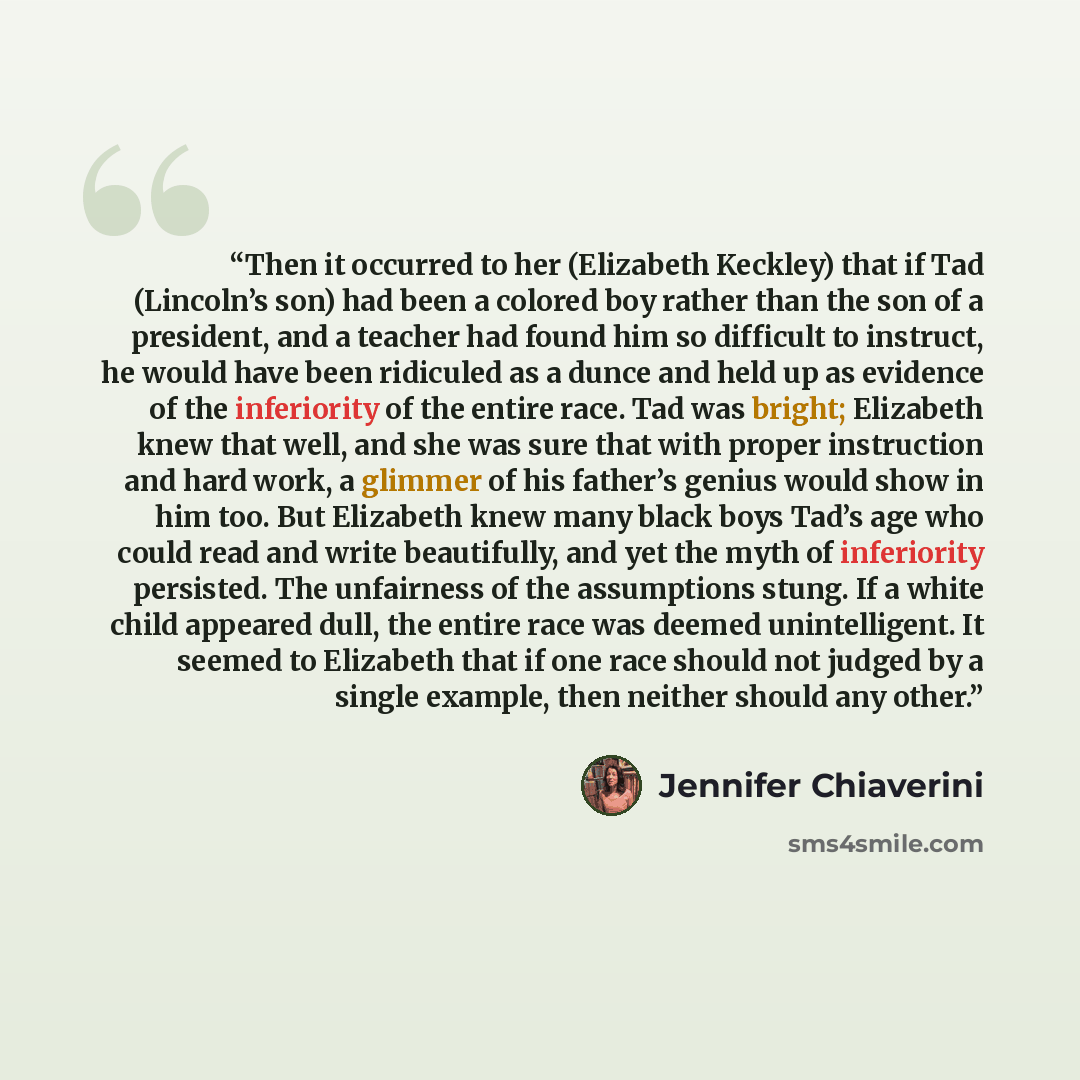
““Then it occurred to her (Elizabeth Keckley) that if Tad (Lincoln’s son) had been a colored boy rather than the son of a president, and a teacher had found him so difficult to instruct, he would have been ridiculed as a dunce and held up as evidence of the inferiority of the entire race. Tad was bright; Elizabeth knew that well, and she was sure that with proper instruction and hard work, a glimmer of his father’s genius would show in him too. But Elizabeth knew many black boys Tad’s age who could read and write beautifully, and yet the myth of inferiority persisted. The unfairness of the assumptions stung. If a white child appeared dull, the entire race was deemed unintelligent. It seemed to Elizabeth that if one race should not judged by a single example, then neither should any other.””
About This Quote
This interpretation was drafted with AI assistance. It is one reading of the quote, not the author's own explanation.
Assumptions about intelligence based on race are unfair; individual ability should be judged, not collective stereotypes.
In simple terms: Judge individuals, not groups.
Key Takeaway
Challenge stereotypes with evidence.
Themes
racial bias
education
stereotypes
Mood
thoughtful
inquisitive
Type
educational
inspirational
When to use this quote
- classroom teaching
- policy making
- parental guidance
Key Concepts
systemic racism
individual potential
Questions to Reflect On
- How do you confront bias in daily life?
- What evidence can you share to counter stereotypes?
A Different Perspective
Changing deep‑seated biases requires sustained effort.