Often we can, usually unwittingly, be quite insensitive to…
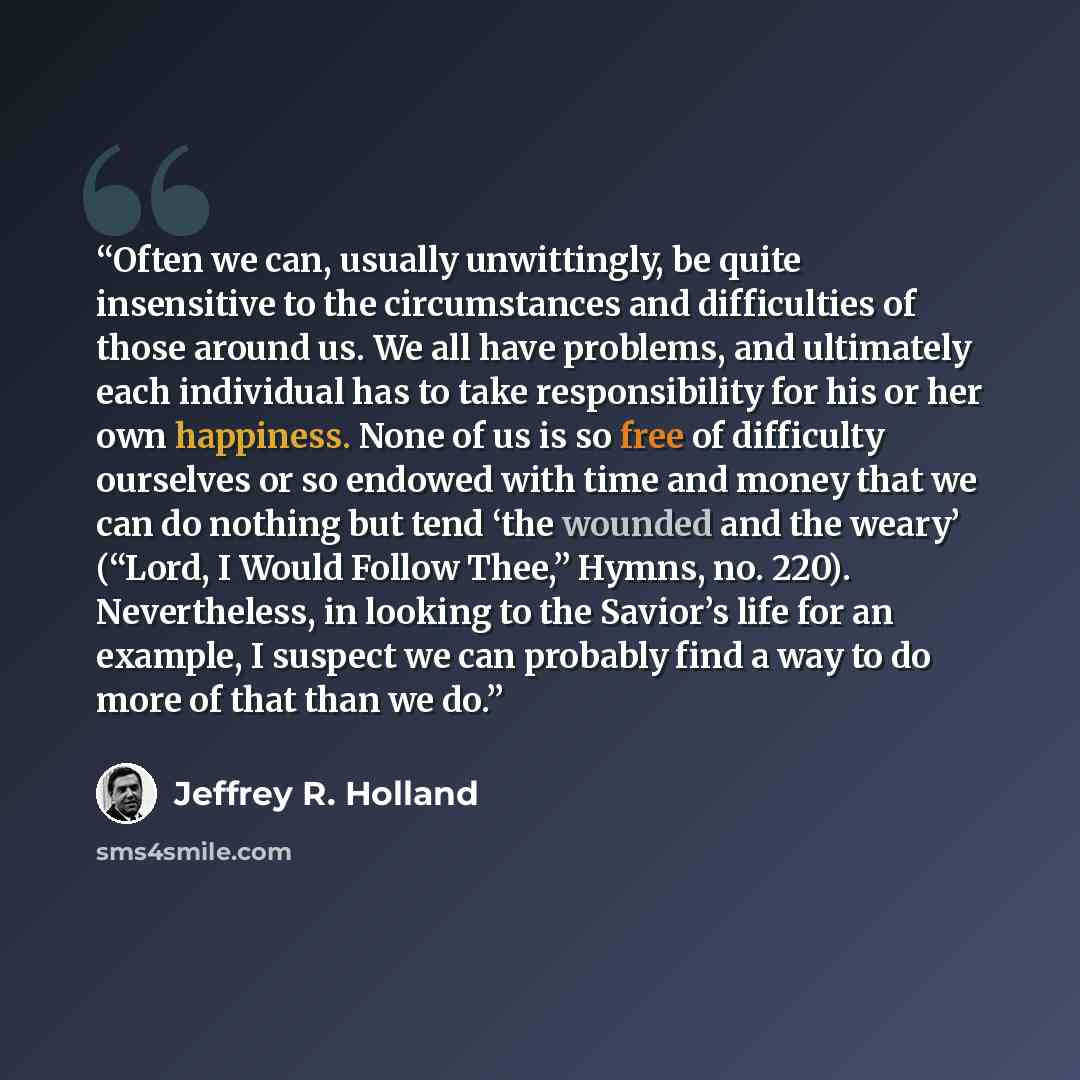
““Often we can, usually unwittingly, be quite insensitive to the circumstances and difficulties of those around us. We all have problems, and ultimately each individual has to take responsibility for his or her own happiness. None of us is so free of difficulty ourselves or so endowed with time and money that we can do nothing but tend ‘the wounded and the weary’ (“Lord, I Would Follow Thee,” Hymns, no. 220). Nevertheless, in looking to the Savior’s life for an example, I suspect we can probably find a way to do more of that than we do.””
About This Quote
This interpretation was drafted with AI assistance. It is one reading of the quote, not the author's own explanation.
He acknowledges personal insensitivity to others' struggles, urging individual responsibility for happiness while encouraging greater compassion inspired by the Savior.
In simple terms: We often overlook others' hardships; we must take responsibility and be more compassionate.
Key Takeaway
Practice empathy and personal responsibility.
Themes
compassion
responsibility
spirituality
empathy
Mood
hopeful
inspirational
thoughtful
Type
spiritual
motivational
When to use this quote
- personal growth
- volunteer work
- mental health
- family life
Key Concepts
self‑care
service
faith
community support
Questions to Reflect On
- How can we balance self‑care with helping others?
- What practical steps increase empathy in daily life?
A Different Perspective
The call may overlook systemic barriers that limit one’s ability to help others.