In May, when the grass was so green it hurt to look at it…
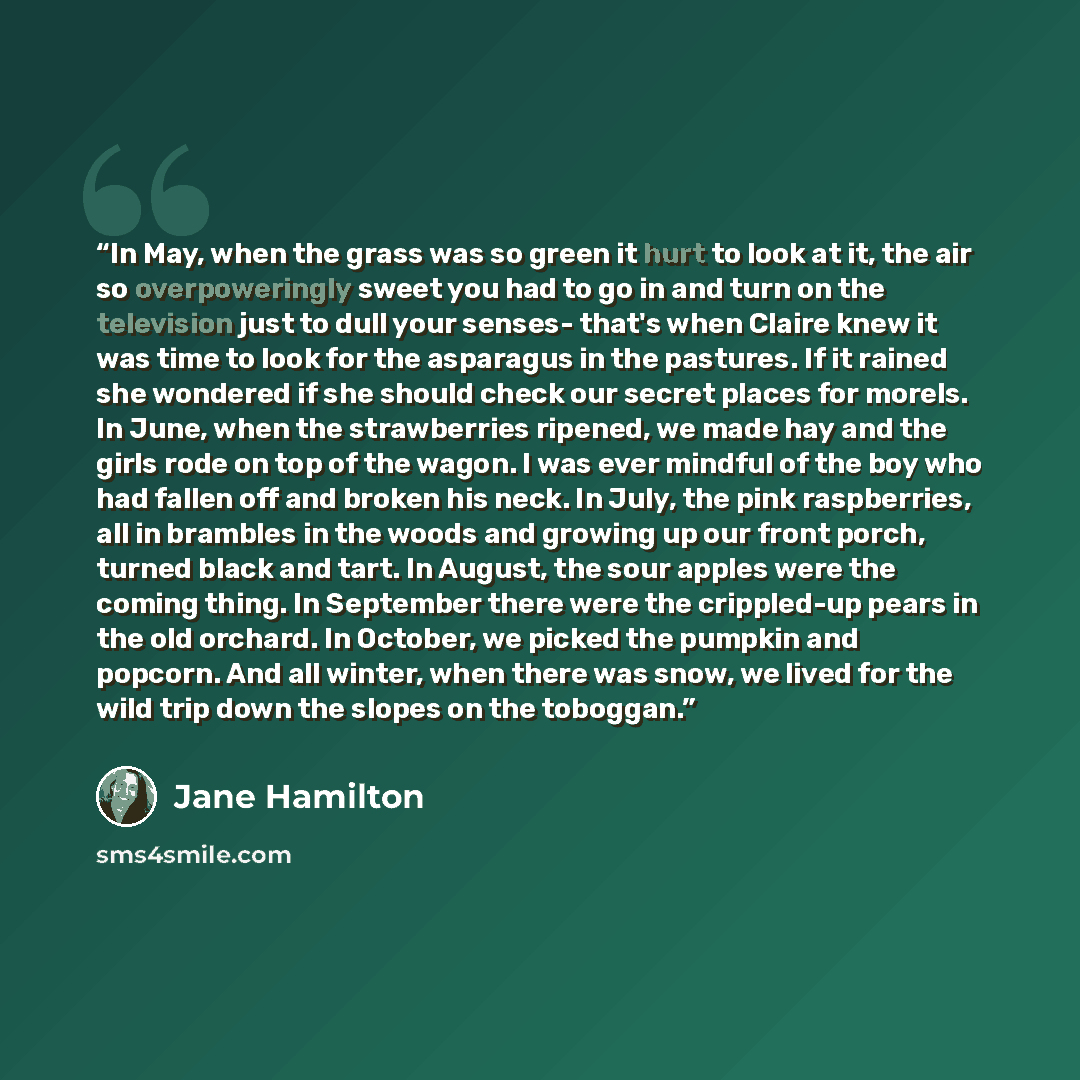
““In May, when the grass was so green it hurt to look at it, the air so overpoweringly sweet you had to go in and turn on the television just to dull your senses- that's when Claire knew it was time to look for the asparagus in the pastures. If it rained she wondered if she should check our secret places for morels. In June, when the strawberries ripened, we made hay and the girls rode on top of the wagon. I was ever mindful of the boy who had fallen off and broken his neck. In July, the pink raspberries, all in brambles in the woods and growing up our front porch, turned black and tart. In August, the sour apples were the coming thing. In September there were the crippled-up pears in the old orchard. In October, we picked the pumpkin and popcorn. And all winter, when there was snow, we lived for the wild trip down the slopes on the toboggan.””
About This Quote
This interpretation was drafted with AI assistance. It is one reading of the quote, not the author's own explanation.
The passage uses vivid seasonal imagery to reflect the passage of time and the characters’ experiences, linking nature’s cycles to human life.
In simple terms: Seasonal changes mirror life events and emotions.
Key Takeaway
Observe how nature’s rhythm parallels personal growth.
Themes
nature
time
human experience
seasonal cycles
Mood
reflective
poetic
Type
descriptive
contemplative
When to use this quote
- creative writing
- teaching literature
- mindful observation
- seasonal planning
Key Concepts
metaphor
sensory description
life cycles
Questions to Reflect On
- What personal memories does each season evoke?
- How can seasonal cues shape narrative pacing?
A Different Perspective
Over‑reliance on metaphor may obscure concrete meaning.