Page 142: "When a spouse says to the alcoholic, "you need…
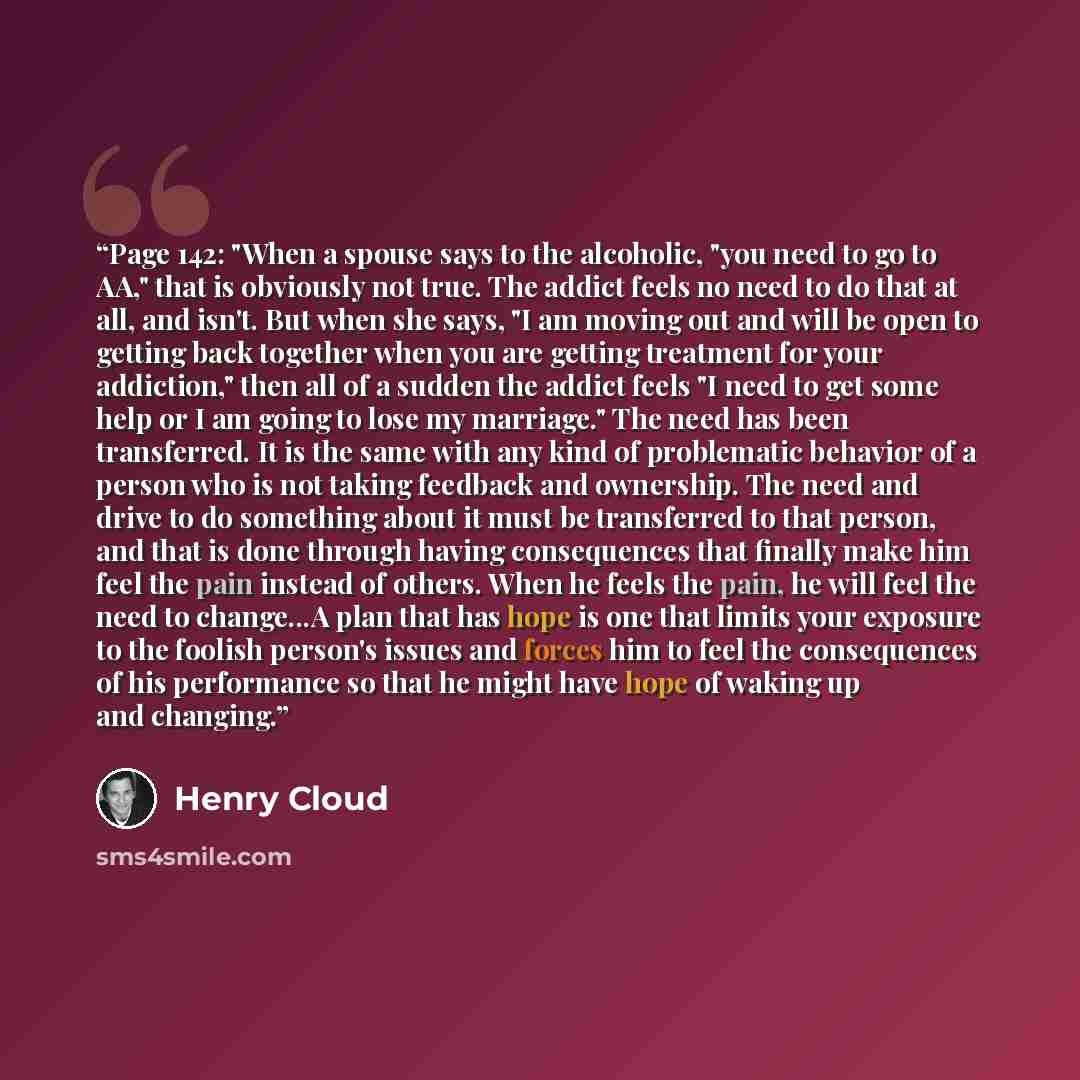
““Page 142: "When a spouse says to the alcoholic, "you need to go to AA," that is obviously not true. The addict feels no need to do that at all, and isn't. But when she says, "I am moving out and will be open to getting back together when you are getting treatment for your addiction," then all of a sudden the addict feels "I need to get some help or I am going to lose my marriage." The need has been transferred. It is the same with any kind of problematic behavior of a person who is not taking feedback and ownership. The need and drive to do something about it must be transferred to that person, and that is done through having consequences that finally make him feel the pain instead of others. When he feels the pain, he will feel the need to change...A plan that has hope is one that limits your exposure to the foolish person's issues and forces him to feel the consequences of his performance so that he might have hope of waking up and changing.””
About This Quote
This interpretation was drafted with AI assistance. It is one reading of the quote, not the author's own explanation.
Change occurs when consequences make the person feel pain and need to act, rather than external pressure alone.
In simple terms: Painful consequences can spark personal change.
Key Takeaway
Create clear consequences to motivate change.
Themes
relationships
addiction
boundaries
Mood
reflective
serious
Type
advice
psychological
When to use this quote
- marriage counseling
- addiction recovery
- family therapy
- personal development
Key Concepts
psychology
behavioral change
accountability
Questions to Reflect On
- How can you set consequences that are firm yet supportive?
- What limits might you face when applying this approach?
A Different Perspective
Consequences may cause resistance or resentment if not applied compassionately.