Is it ever thus, at the end of things? Does any woman ever…
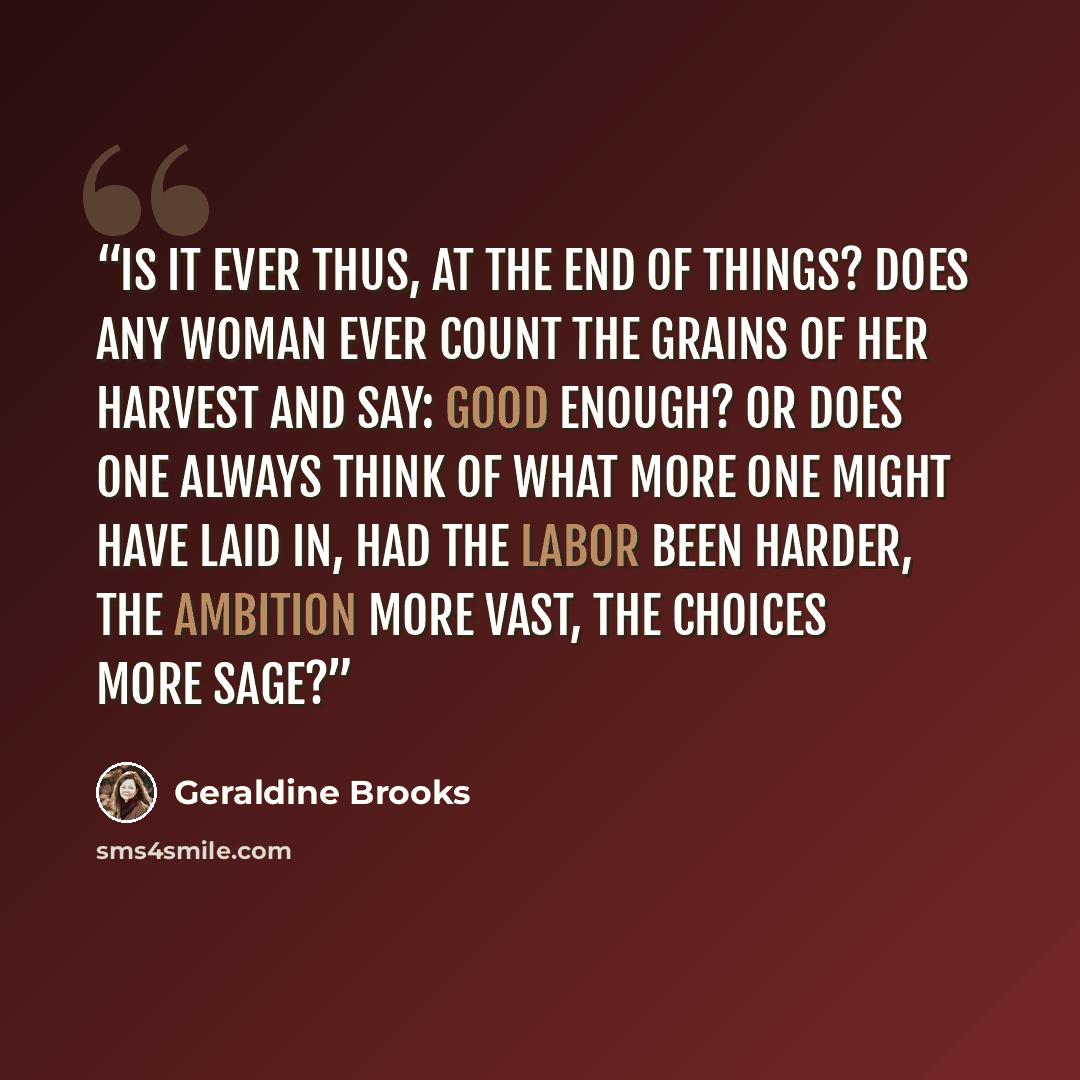
““Is it ever thus, at the end of things? Does any woman ever count the grains of her harvest and say: Good enough? Or does one always think of what more one might have laid in, had the labor been harder, the ambition more vast, the choices more sage?””
About This Quote
This interpretation was drafted with AI assistance. It is one reading of the quote, not the author's own explanation.
The passage questions whether satisfaction comes from contentment with what one has or from endless ambition, using harvest imagery to explore desire versus acceptance.
In simple terms: Do we settle or always want more?
Key Takeaway
Balance gratitude with healthy ambition.
Themes
contentment
ambition
gratitude
Mood
contemplative
hopeful
Type
philosophical
inspirational
When to use this quote
- career goals
- personal growth
- creative projects
Key Concepts
philosophy
psychology
Questions to Reflect On
- What does “good enough” mean for you?
- How do you measure fulfillment?
A Different Perspective
It may idealize endless striving over realistic satisfaction.