Principles of design: 1. Use both knowledge in the world…
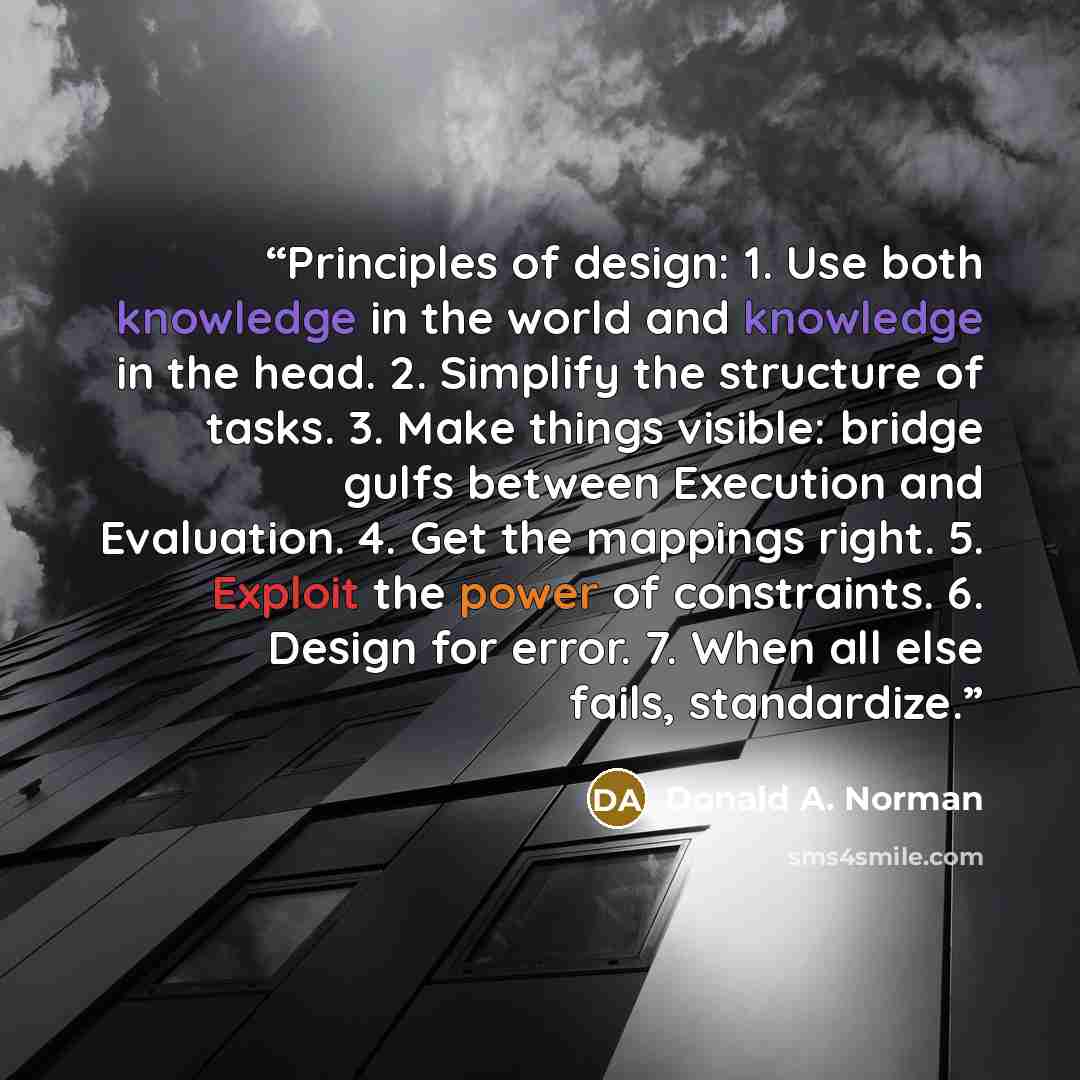
““Principles of design: 1. Use both knowledge in the world and knowledge in the head. 2. Simplify the structure of tasks. 3. Make things visible: bridge gulfs between Execution and Evaluation. 4. Get the mappings right. 5. Exploit the power of constraints. 6. Design for error. 7. When all else fails, standardize.””
About This Quote
This interpretation was drafted with AI assistance. It is one reading of the quote, not the author's own explanation.
Design should align external representations with mental models, simplify tasks, make actions visible, use constraints, anticipate errors, and standardize when needed.
In simple terms: Good design matches mind and world, simplifies, shows, uses limits, plans for mistakes, and standardizes.
Key Takeaway
Apply these principles to improve usability.
Themes
usability
human-centered design
error prevention
standardization
Mood
practical
analytical
Type
guideline
instructional
When to use this quote
- software interfaces
- physical products
- instruction manuals
- training programs
Key Concepts
mental models
affordances
visibility
constraints
error design
Questions to Reflect On
- How can you balance constraints with innovation?
- When should standardization be avoided?
A Different Perspective
Design constraints can limit creativity if overused.