He is not to them what he is to me,' I thought: 'he is not…
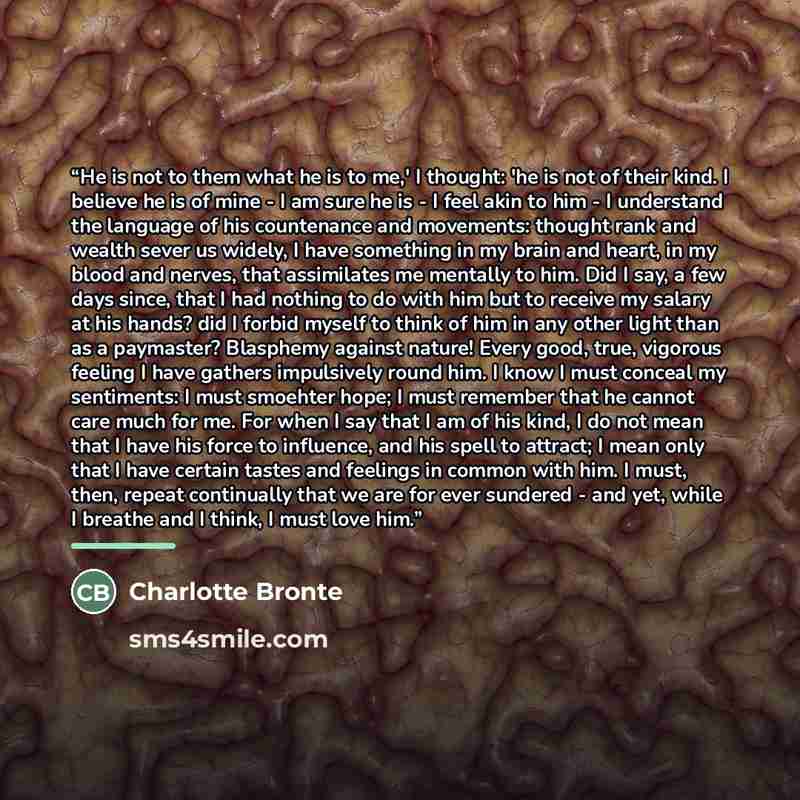
““He is not to them what he is to me,' I thought: 'he is not of their kind. I believe he is of mine - I am sure he is - I feel akin to him - I understand the language of his countenance and movements: thought rank and wealth sever us widely, I have something in my brain and heart, in my blood and nerves, that assimilates me mentally to him. Did I say, a few days since, that I had nothing to do with him but to receive my salary at his hands? did I forbid myself to think of him in any other light than as a paymaster? Blasphemy against nature! Every good, true, vigorous feeling I have gathers impulsively round him. I know I must conceal my sentiments: I must smoehter hope; I must remember that he cannot care much for me. For when I say that I am of his kind, I do not mean that I have his force to influence, and his spell to attract; I mean only that I have certain tastes and feelings in common with him. I must, then, repeat continually that we are for ever sundered - and yet, while I breathe and I think, I must love him.””
About This Quote
This interpretation was drafted with AI assistance. It is one reading of the quote, not the author's own explanation.
The narrator wrestles with class differences, feeling both connection and separation from a superior, and must conceal affection while acknowledging shared humanity.
In simple terms: She feels a bond despite social distance, yet must hide it.
Key Takeaway
Recognize shared humanity across class lines.
Themes
class
love
identity
conflict
self‑control
Mood
conflicted
hopeful
introspective
Type
literary
philosophical
emotional
When to use this quote
- workplace
- romantic tension
- personal reflection
- social mobility
Key Concepts
empathy
social hierarchy
self‑deception
Questions to Reflect On
- How do social hierarchies shape personal relationships?
- Can hidden empathy be expressed openly?
A Different Perspective
The narrator’s duty and fear of rejection may limit authentic connection.