I believe in good and evil," said Jem. "And I believe the…
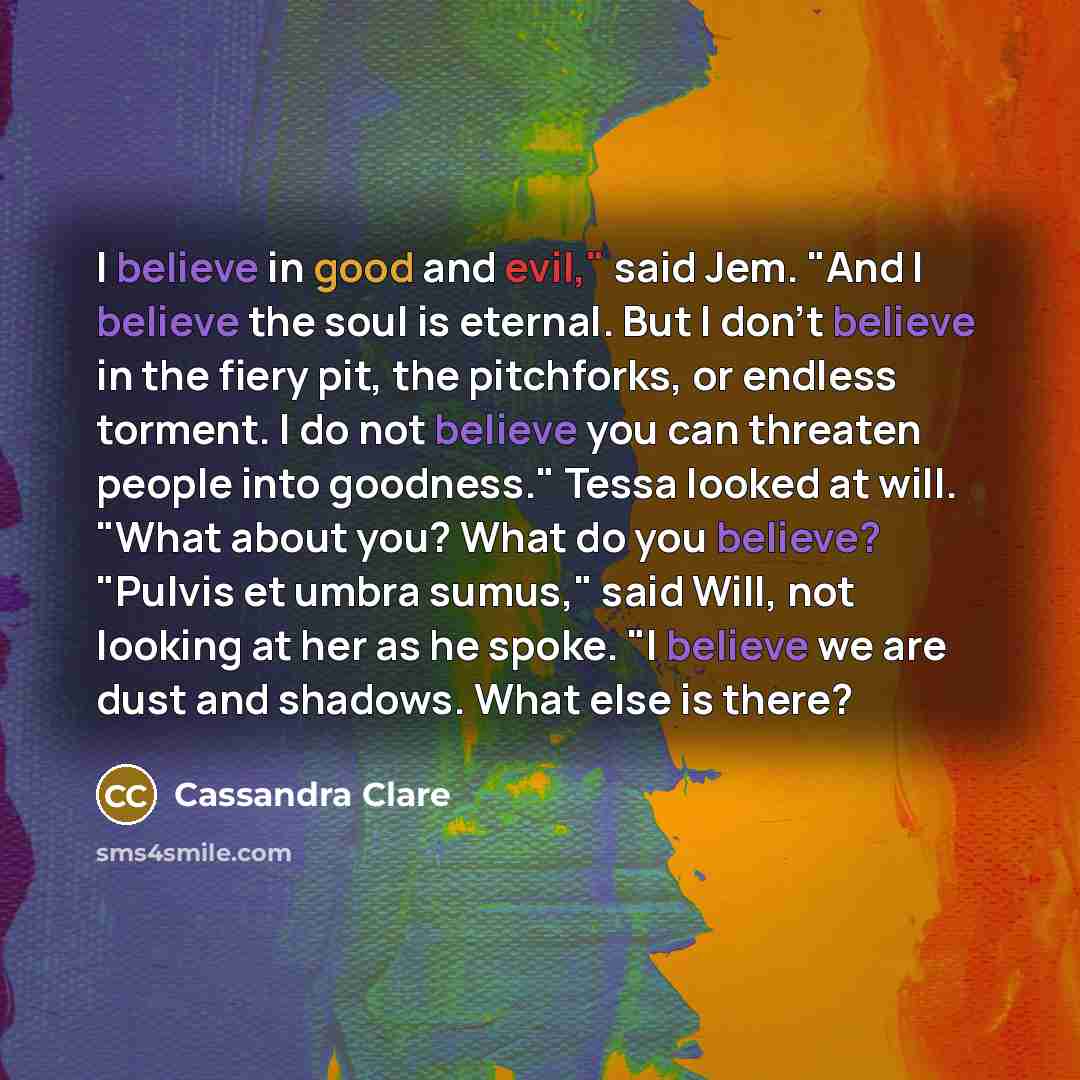
“I believe in good and evil," said Jem. "And I believe the soul is eternal. But I don't believe in the fiery pit, the pitchforks, or endless torment. I do not believe you can threaten people into goodness." Tessa looked at will. "What about you? What do you believe? "Pulvis et umbra sumus," said Will, not looking at her as he spoke. "I believe we are dust and shadows. What else is there?”
About This Quote
This interpretation was drafted with AI assistance. It is one reading of the quote, not the author's own explanation.
The speaker rejects traditional afterlife punishments, seeing the soul as transient and moral behavior as non‑coercive.
In simple terms: Soul is fleeting; morality isn’t forced.
Key Takeaway
Cultivate genuine goodness.
Themes
spirituality
morality
existence
Mood
contemplative
introspective
Type
philosophical
literary
When to use this quote
- making ethical decisions
- discussing belief
- reading literature
Key Concepts
Eternal soul
free will
existentialism
Questions to Reflect On
- What motivates moral behavior without fear of punishment?
- Does belief in impermanence affect responsibility?
A Different Perspective
May overlook cultural/religious afterlife concepts.