The expanding bull’s eye effect means we’re likely to see…
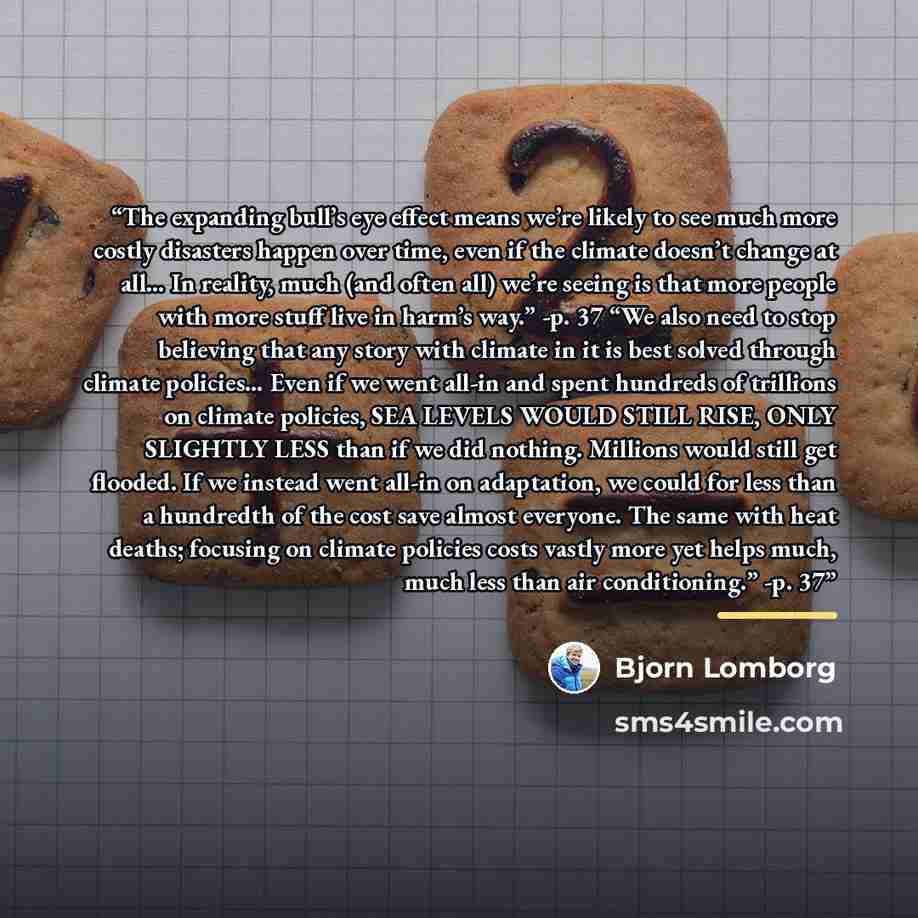
““The expanding bull’s eye effect means we’re likely to see much more costly disasters happen over time, even if the climate doesn’t change at all… In reality, much (and often all) we’re seeing is that more people with more stuff live in harm’s way.” -p. 37 “We also need to stop believing that any story with climate in it is best solved through climate policies… Even if we went all-in and spent hundreds of trillions on climate policies, SEA LEVELS WOULD STILL RISE, ONLY SLIGHTLY LESS than if we did nothing. Millions would still get flooded. If we instead went all-in on adaptation, we could for less than a hundredth of the cost save almost everyone. The same with heat deaths; focusing on climate policies costs vastly more yet helps much, much less than air conditioning.” -p. 37””
About This Quote
This interpretation was drafted with AI assistance. It is one reading of the quote, not the author's own explanation.
Climate impacts are driven more by increased exposure and wealth than by climate change itself; adaptation is far cheaper and more effective than mitigation.
In simple terms: More people and assets in risky areas cause higher costs; adaptation beats mitigation.
Key Takeaway
Prioritize adaptation, reduce exposure.
Themes
climate risk
adaptation
economics
Mood
analytical
concerned
Type
policy
environmental
When to use this quote
- urban planning
- insurance
- policy making
- disaster preparedness
Key Concepts
exposure
cost‑benefit analysis
Questions to Reflect On
- How can societies reduce exposure?
- What balance of adaptation and mitigation is optimal?
A Different Perspective
Mitigation still needed for long‑term stability.