The wise man does not expose himself needlessly to danger…
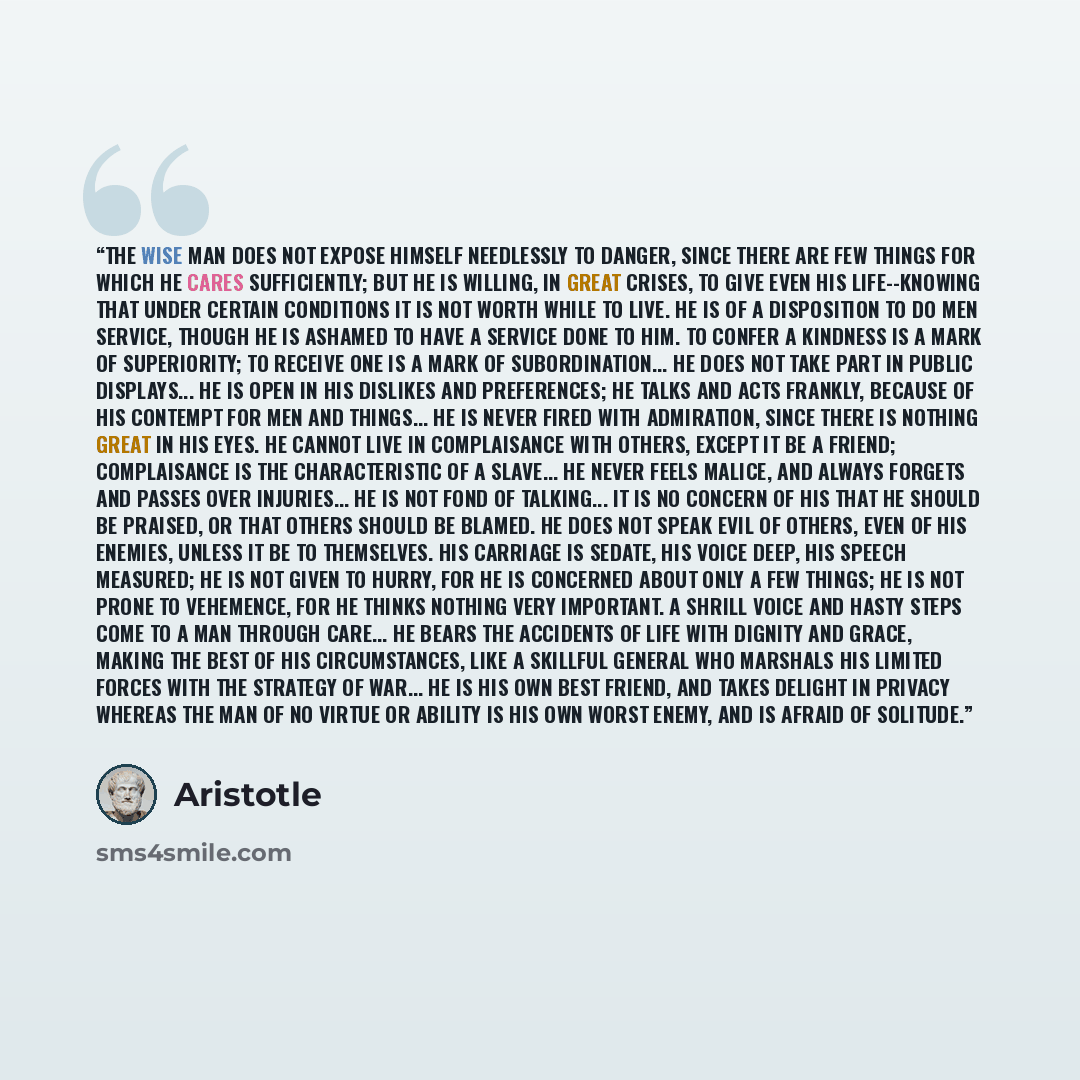
““The wise man does not expose himself needlessly to danger, since there are few things for which he cares sufficiently; but he is willing, in great crises, to give even his life--knowing that under certain conditions it is not worth while to live. He is of a disposition to do men service, though he is ashamed to have a service done to him. To confer a kindness is a mark of superiority; to receive one is a mark of subordination... He does not take part in public displays... He is open in his dislikes and preferences; he talks and acts frankly, because of his contempt for men and things... He is never fired with admiration, since there is nothing great in his eyes. He cannot live in complaisance with others, except it be a friend; complaisance is the characteristic of a slave... He never feels malice, and always forgets and passes over injuries... He is not fond of talking... It is no concern of his that he should be praised, or that others should be blamed. He does not speak evil of others, even of his enemies, unless it be to themselves. His carriage is sedate, his voice deep, his speech measured; he is not given to hurry, for he is concerned about only a few things; he is not prone to vehemence, for he thinks nothing very important. A shrill voice and hasty steps come to a man through care... He bears the accidents of life with dignity and grace, making the best of his circumstances, like a skillful general who marshals his limited forces with the strategy of war... He is his own best friend, and takes delight in privacy whereas the man of no virtue or ability is his own worst enemy, and is afraid of solitude.””
About This Quote
This interpretation was drafted with AI assistance. It is one reading of the quote, not the author's own explanation.
A wise person avoids unnecessary danger, values service, embraces humility, and maintains dignity, focusing only on what truly matters.
In simple terms: Wisdom is modest, purposeful, and dignified.
Key Takeaway
Cultivate modesty and purposeful action.
Themes
wisdom
humility
service
dignity
Mood
reflective
philosophical
Type
ethical
inspirational
When to use this quote
- leadership
- personal conduct
- conflict resolution
- public service
Key Concepts
ethics
philosophy
self‑control
Questions to Reflect On
- How do you practice humility in leadership?
- When is it appropriate to engage publicly?
A Different Perspective
May be idealistic, ignoring complex social dynamics.