The Roman Catholic Church has historically taught that, as…
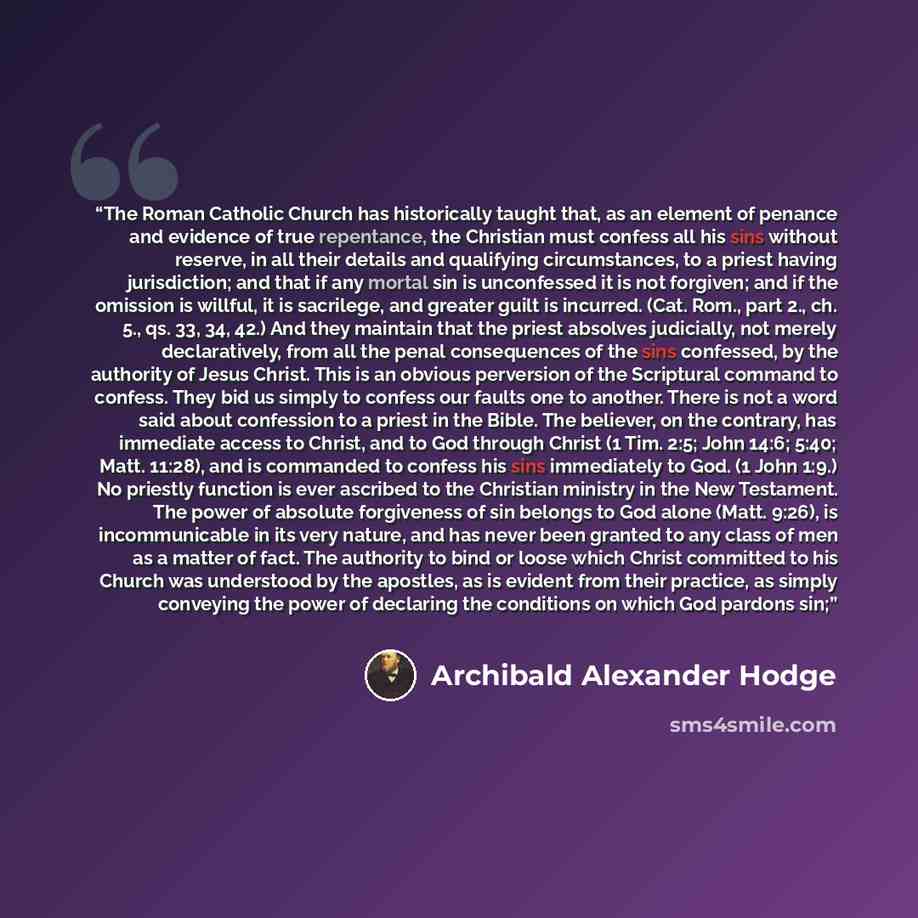
““The Roman Catholic Church has historically taught that, as an element of penance and evidence of true repentance, the Christian must confess all his sins without reserve, in all their details and qualifying circumstances, to a priest having jurisdiction; and that if any mortal sin is unconfessed it is not forgiven; and if the omission is willful, it is sacrilege, and greater guilt is incurred. (Cat. Rom., part 2., ch. 5., qs. 33, 34, 42.) And they maintain that the priest absolves judicially, not merely declaratively, from all the penal consequences of the sins confessed, by the authority of Jesus Christ. This is an obvious perversion of the Scriptural command to confess. They bid us simply to confess our faults one to another. There is not a word said about confession to a priest in the Bible. The believer, on the contrary, has immediate access to Christ, and to God through Christ (1 Tim. 2:5; John 14:6; 5:40; Matt. 11:28), and is commanded to confess his sins immediately to God. (1 John 1:9.) No priestly function is ever ascribed to the Christian ministry in the New Testament. The power of absolute forgiveness of sin belongs to God alone (Matt. 9:26), is incommunicable in its very nature, and has never been granted to any class of men as a matter of fact. The authority to bind or loose which Christ committed to his Church was understood by the apostles, as is evident from their practice, as simply conveying the power of declaring the conditions on which God pardons sin;””
About This Quote
This interpretation was drafted with AI assistance. It is one reading of the quote, not the author's own explanation.
The Catholic doctrine of priestly confession is a human tradition, not a biblical mandate; believers have direct access to divine forgiveness.
In simple terms: Priestly confession is tradition, not scriptural; God forgives directly.
Key Takeaway
Seek direct confession to God rather than mediated rites
Themes
theology
scripture
authority
forgiveness
tradition
Mood
thoughtful
inquisitive
Type
theological
philosophical
When to use this quote
- church practice
- personal prayer
- counseling
- theological study
Key Concepts
religious reform
personal spirituality
Questions to Reflect On
- Do you feel personal confession is sufficient?
- How does community influence your spiritual practice?
A Different Perspective
Rituals can provide community support despite doctrinal debates.