I have often behaved badly and I have often behaved…
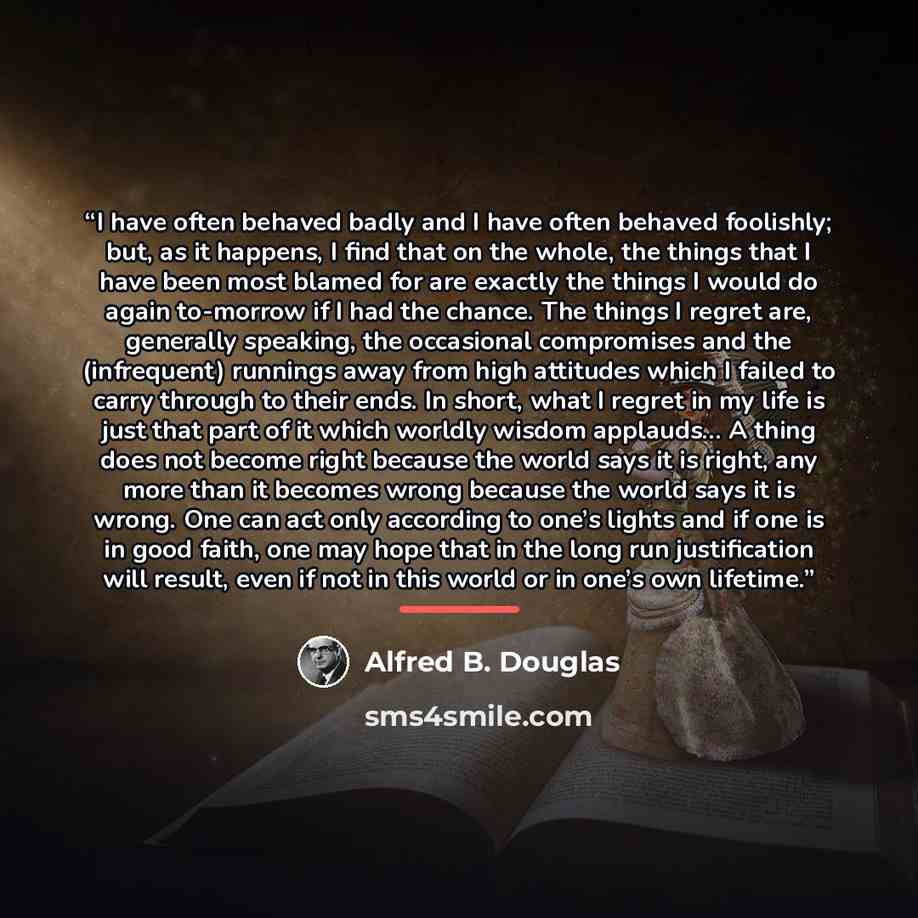
““I have often behaved badly and I have often behaved foolishly; but, as it happens, I find that on the whole, the things that I have been most blamed for are exactly the things I would do again to-morrow if I had the chance. The things I regret are, generally speaking, the occasional compromises and the (infrequent) runnings away from high attitudes which I failed to carry through to their ends. In short, what I regret in my life is just that part of it which worldly wisdom applauds… A thing does not become right because the world says it is right, any more than it becomes wrong because the world says it is wrong. One can act only according to one’s lights and if one is in good faith, one may hope that in the long run justification will result, even if not in this world or in one’s own lifetime.””
About This Quote
This interpretation was drafted with AI assistance. It is one reading of the quote, not the author's own explanation.
The author reflects that personal regret stems from compromising integrity, not from bold actions, and that true justification comes from inner conviction rather than societal approval.
In simple terms: Regret comes from compromising values, not from daring acts.
Key Takeaway
Stay true to your principles.
Themes
integrity
regret
personal philosophy
Mood
thoughtful
reflective
Type
philosophical
personal
When to use this quote
- making ethical decisions
- standing up for beliefs
- avoiding compromise
- long‑term self‑assessment
Key Concepts
moral courage
inner conviction
worldly vs personal truth
Questions to Reflect On
- Do you prioritize personal integrity over social approval?
- How can you recognize when compromise is necessary?
A Different Perspective
Societal pressure may still influence outcomes despite personal integrity.