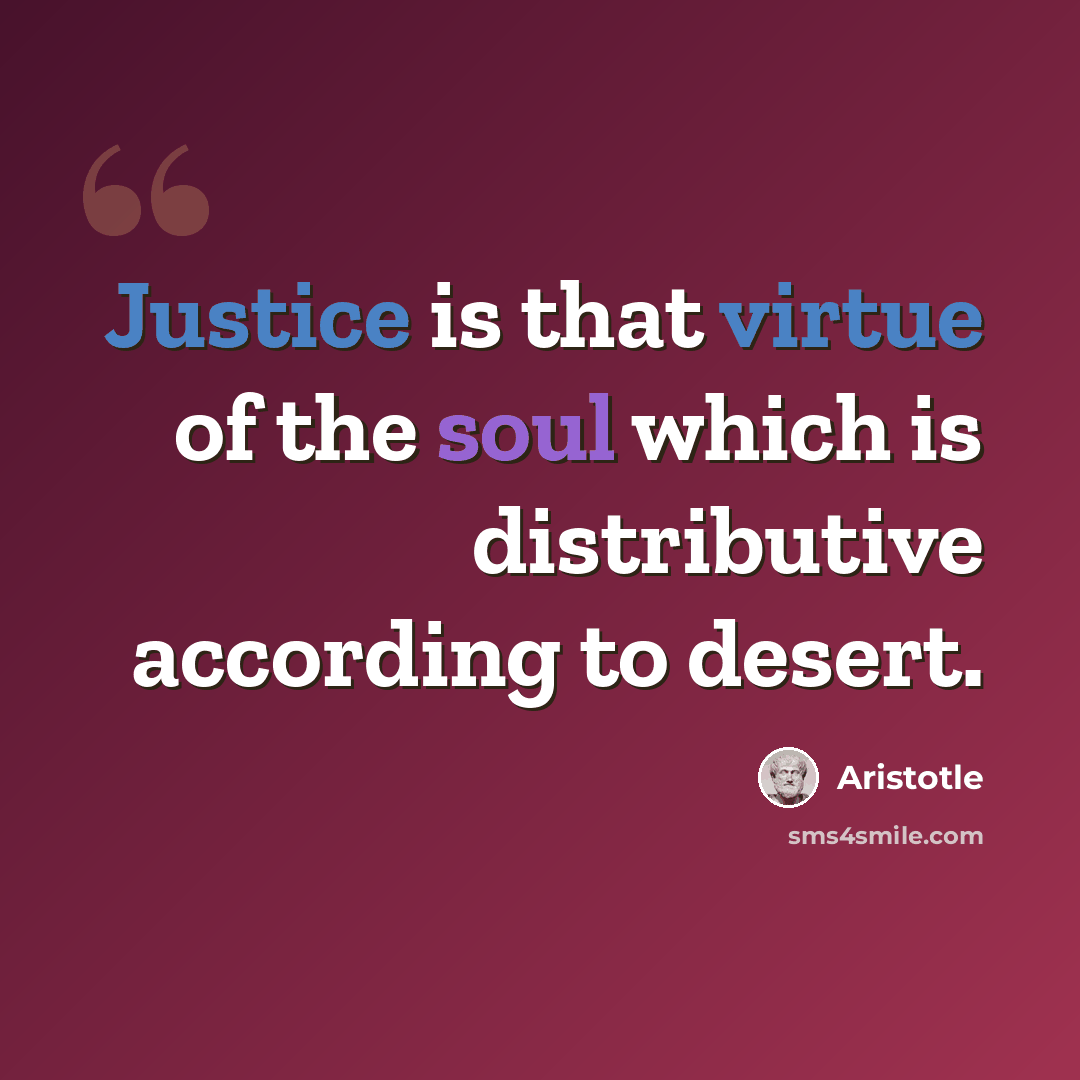
Justice is that virtue of the soul which is distributive according to desert. — Aristotle Copy Share Image
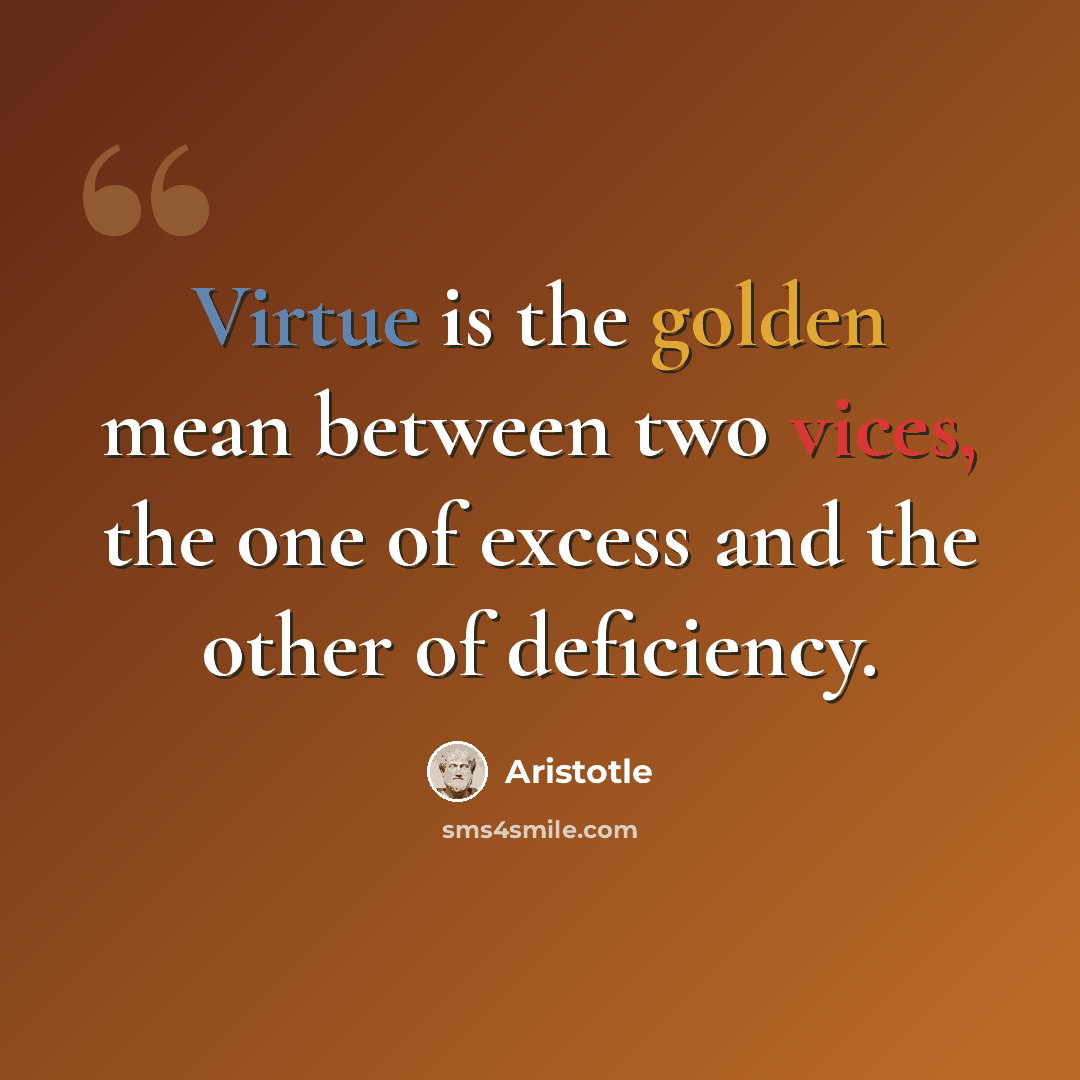
Virtue is the golden mean between two vices, the one of excess and the other of deficiency. — Aristotle Copy Share Image
The good citizen need not of necessity possess the virtue which makes a good man. — Aristotle Copy Share Image
The virtue as the art consecrates itself constantly to what's difficult to do, and the harder the task, the shinier the success. — Aristotle Copy Share Image
Neither by nature, then, nor contrary to nature do the virtues arise in us; rather we are adapted by nature to receive… — Aristotle Copy Share Image
Even if we could suppose the citizen body to be virtuous, without each of them being so, yet the latter would be… — Aristotle Copy Share Image
To know what virtue is is not enough; we must endeavor to possess and to practice it, or in some other manner… — Aristotle Copy Share Image
for we are inquiring not in order to know what virtue is, but in order to become good, since otherwise our inquiry… — Aristotle Copy Share Image
... the good for man is an activity of the soul in accordance with virtue, or if there are more kinds of… — Aristotle Copy Share Image
“He is happy who lives in accordance with complete virtue and is sufficiently equipped with external goods, not for some chance period… — Aristotle Copy Share Image
Perhaps here we have a clue to the reason why royal rule used to exist formerly, namely the difficulty of finding enough… — Aristotle Copy Share Image
The virtue of a faculty is related to the special function which that faculty performs. Now there are three elements in the… — Aristotle Copy Share Image
The life of theoretical philosophy is the best and happiest a man can lead. Few men are capable of it and then… — Aristotle Copy Share Image
Error is multiform (for evil is a form of the unlimited, as in the old Pythagorean imagery, and good of the limited),… — Aristotle Copy Share Image
...happiness does not consist in amusement. In fact, it would be strange if our end were amusement, and if we were to… — Aristotle Copy Share Image
The happy man . . . will be always or at least most often employed in doing and contemplating the things that… — Aristotle Copy Share Image
The government of freemen is nobler and implies more virtue than despotic government. Neither is a city to be deemed happy or… — Aristotle Copy Share Image
Happiness, then, is co-extensive with contemplation, and the more people contemplate, the happier they are; not incidentally, but in virtue of their… — Aristotle Copy Share Image
For as the interposition of a rivulet, however small, will occasion the line of the phalanx to fluctuate, so any trifling disagreement… — Aristotle Copy Share Image
Every formed disposition of the soul realizes its full nature in relation to and dealing with that class of objects by which… — Aristotle Copy Share Image
We assume therefore that moral virtue is the quality of acting in the best way in relation to pleasures and pains, and… — Aristotle Copy Share Image
...virtue is not merely a state in conformity with the right principle, but one that implies the right principle; and the right… — Aristotle Copy Share Image
It is the active exercise of our faculties in conformity with virtue that causes happiness, and the opposite activities its opposite. — Aristotle Copy Share Image
If happiness, then, is activity expressing virtue, it is reasonable for it to express the supreme virtue, which will be the virtueof… — Aristotle Copy Share Image
We have divided the Virtues of the Soul into two groups, the Virtues of the Character and the Virtues of the Intellect. — Aristotle Copy Share Image
These virtues are formed in man by his doing the actions ... The good of man is a working of the soul… — Aristotle Copy Share Image
“Moral virtue is the quality of acting in the best way in relation to pleasures and pains, and that vice is the… — Aristotle Copy Share Image
Modesty is hardly to be described as a virtue. It is a feeling rather than a disposition. It is a kind of… — Aristotle Copy Share Image
Purpose ... is held to be most closely connected with virtue, and to be a better token of our character than are… — Aristotle Copy Share Image
Those who believe that all virtue is to be found in their own party principles push matters to extremes; they do not… — Aristotle Copy Share Image
A proper wife should be as obedient as a slave... The female is a female by virtue of a certain lack of… — Aristotle Copy Share Image
“Virtue is a greater good than honour; and one might perhaps accordingly suppose that virtue rather than honour is the end of… — Aristotle Copy Share Image
Those who excel in virtue have the best right of all to rebel, but then they are of all men the least… — Aristotle Copy Share Image
True happiness flows from the possession of wisdom and virtue and not from the possession of external goods. — Aristotle Copy Share Image
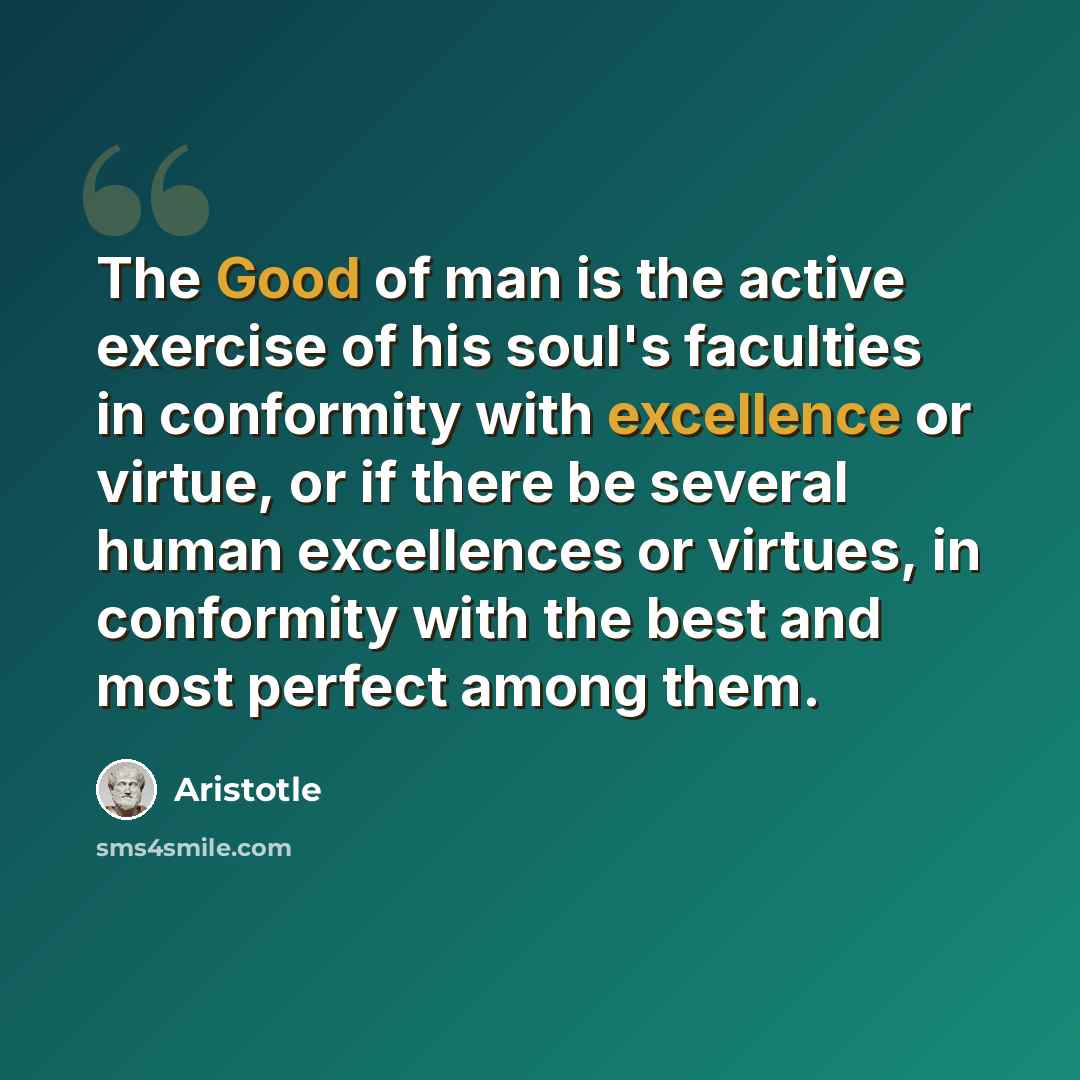
The Good of man is the active exercise of his soul's faculties in conformity with excellence or virtue, or if there be… — Aristotle Copy Share Image
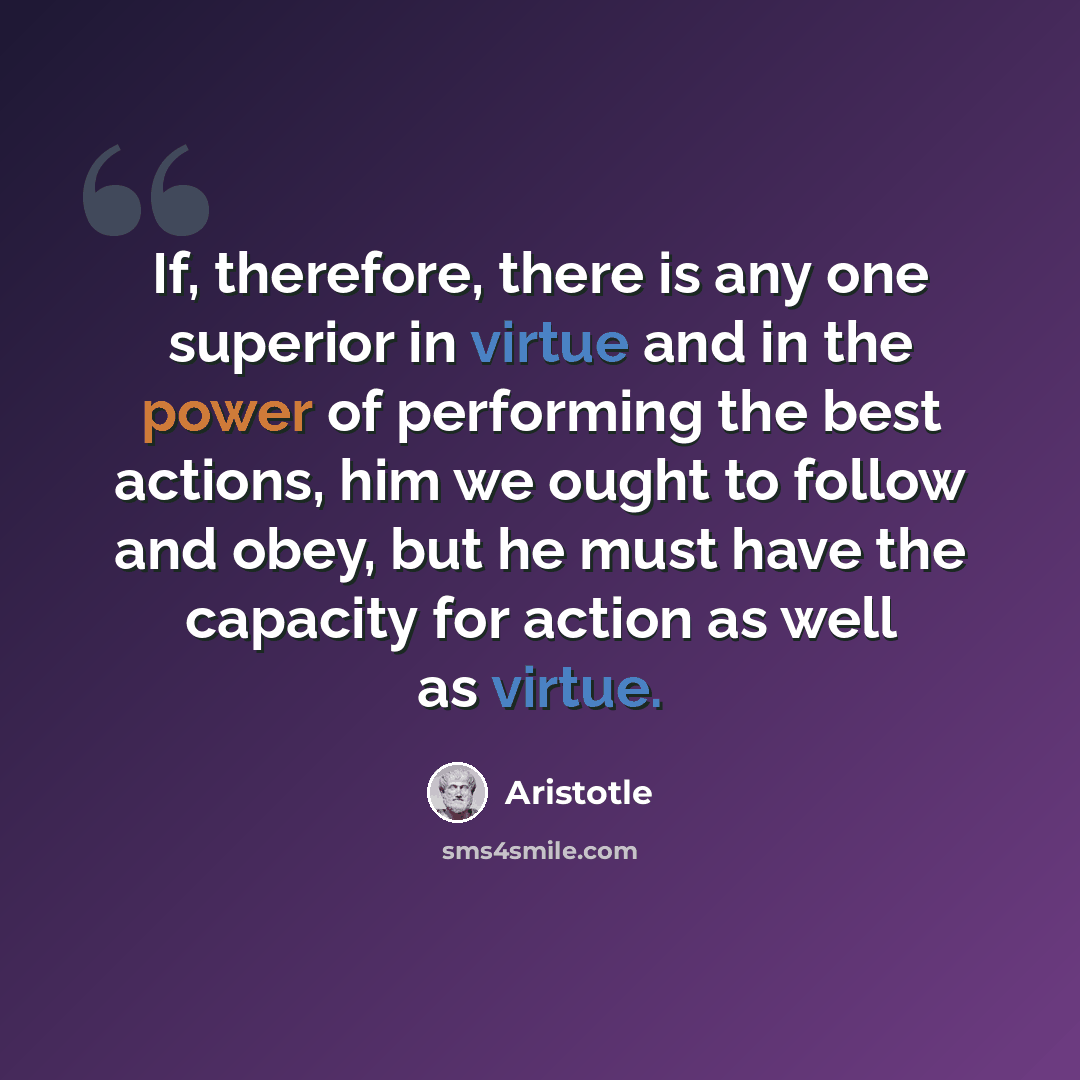
If, therefore, there is any one superior in virtue and in the power of performing the best actions, him we ought to… — Aristotle Copy Share Image
The virtues [moral excellence] therefore are engendered in us neither by nature nor yet in violation of nature; nature gives us the… — Aristotle Copy Share Image
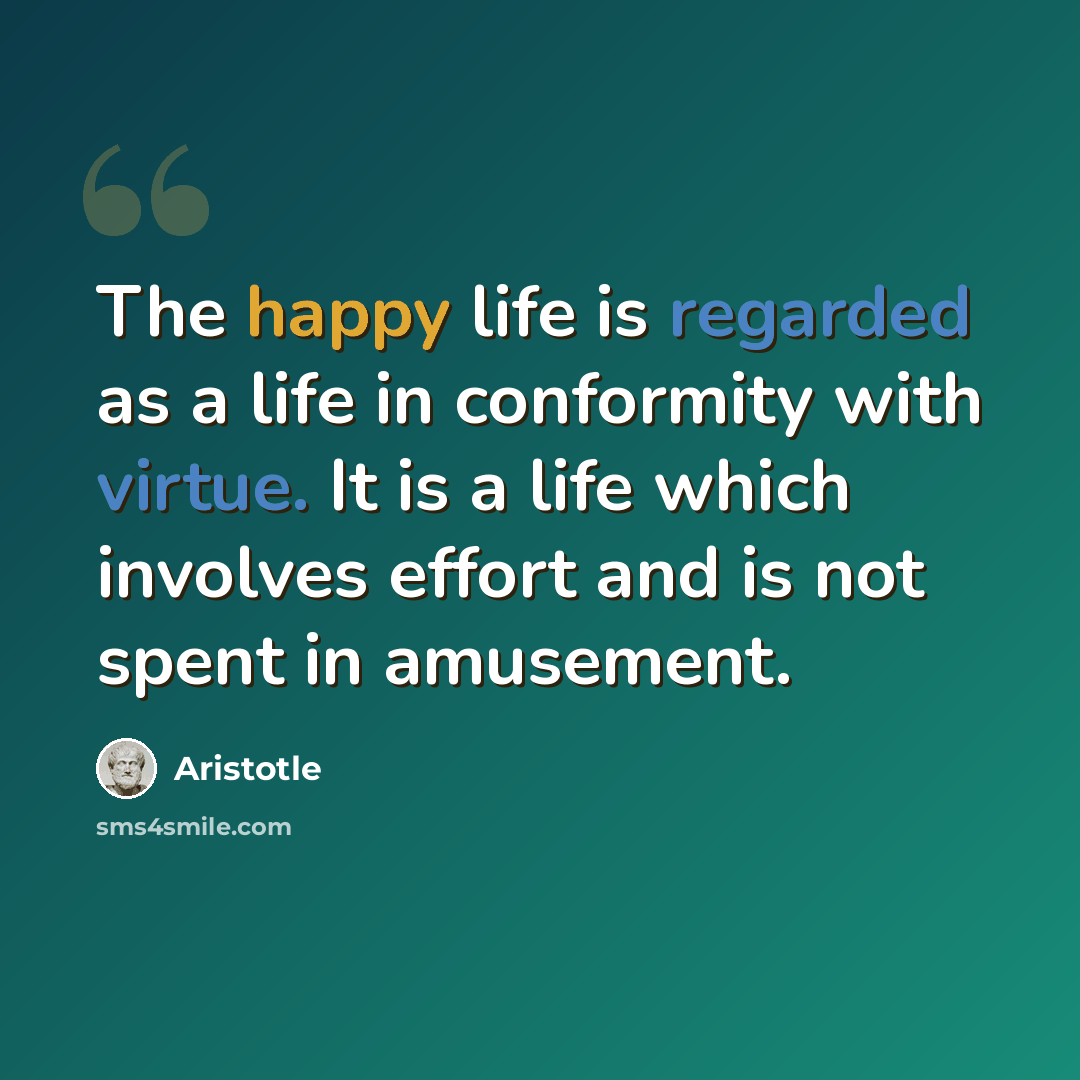
The happy life is regarded as a life in conformity with virtue. It is a life which involves effort and is not… — Aristotle Copy Share Image
The knowledge of the soul admittedly contributes greatly to the advance of truth in general, and, above all, to our understanding of Nature, for… — Aristotle Copy Share
Young men have strong passions and tend to gratify them indiscriminately. Of the bodily desires, it is the sexual by which they are most… — Aristotle Copy Share
The body is at its best between the ages of thirty and thirty-five; the mind is at its best about the age of forty-nine. — Aristotle Copy Share
The ensouled is distinguished from the unsouled by its being alive. Now since being alive is spoken of in many ways, even if only… — Aristotle Copy Share
Although it may be difficult in theory to know what is just and equal, the practical difficulty of inducing those to forbear who can,… — Aristotle Copy Share
The true forms of government, therefore, are those in which the one, or the few, or the many, govern with a view to the… — Aristotle Copy Share
All persons ought to endeavor to follow what is right, and not what is established. — Aristotle Copy Share
Give a man a fish, you feed him for a day. Give a man a poisoned fish, you feed him for the rest of… — Aristotle Copy Share
Obstinate people can be divided into the opinionated, the ignorant, and the boorish. — Aristotle Copy Share
Happiness does not consist in pastimes and amusements but in virtuous activities. — Aristotle Copy Share
To learn is a natural pleasure, not confined to philosophers, but common to all men. — Aristotle Copy Share

![“The virtues [moral excellence] therefore are engendered in us neither by nature nor yet in violation of nature; nature gives us the capacity to receive them, and this capacity is brought to maturity by habit.” quote by Aristotle](https://sms4smile.com/q/img-quotes/653/aristotle-78_capacity_the-virtues-moral-excellence-therefore-a_1076391.png)