The virtue of the good man is necessarily the same as the virtue of the citizen of the perfect state. — Aristotle Copy Share Image
In order to be effective you need not only virtue but also mental strength. — Aristotle Copy Share Image
Without virtue it is difficult to bear gracefully the honors of fortune. — Aristotle Copy Share Image
...happiness is an activity and a complete utilization of virtue, not conditionally but absolutely. — Aristotle Copy Share Image
It is the repeated performance of just and temperate actions that produces virtue. — Aristotle Copy Share Image
Let us be well persuaded that everyone of us possesses happiness in proportion to his virtue and wisdom, and according as he… — Aristotle Copy Share Image
“Excellence is an Art Won by Training and Habit. We do not act rightly Because we have Virtue and Excellence, But rather,… — Aristotle Copy Share Image
The attainment of truth is then the function of both the intellectual parts of the soul. Therefore their respective virtues are those… — Aristotle Copy Share Image
Happiness may be defined as good fortune joined to virtue, or a independence, or as a life that is both agreeable and… — Aristotle Copy Share Image
“Actions which produce [virtue] are those which increase it, and also, if differently performed, destroy it.” — Aristotle Copy Share Image
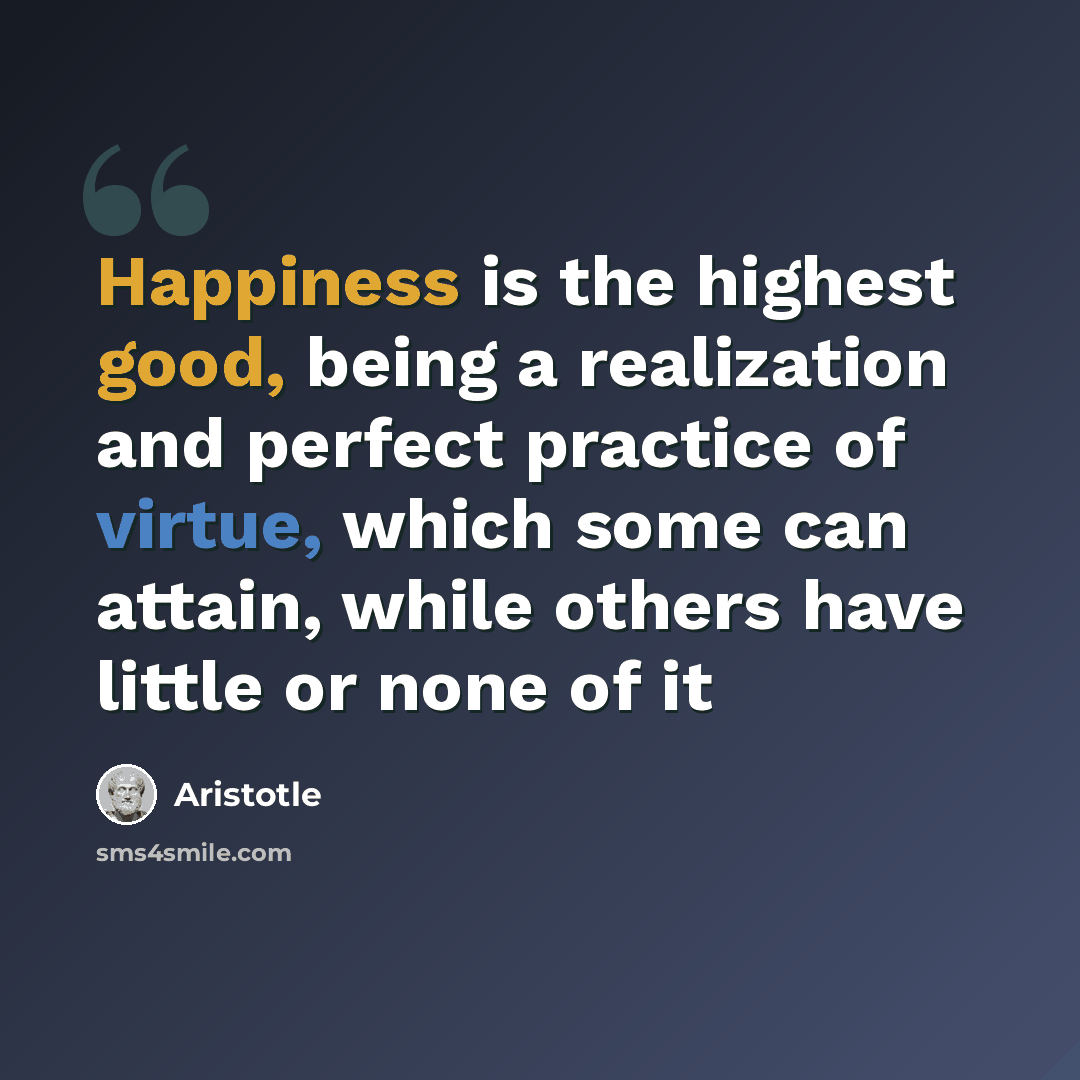
Happiness is the highest good, being a realization and perfect practice of virtue, which some can attain, while others have little or… — Aristotle Copy Share Image
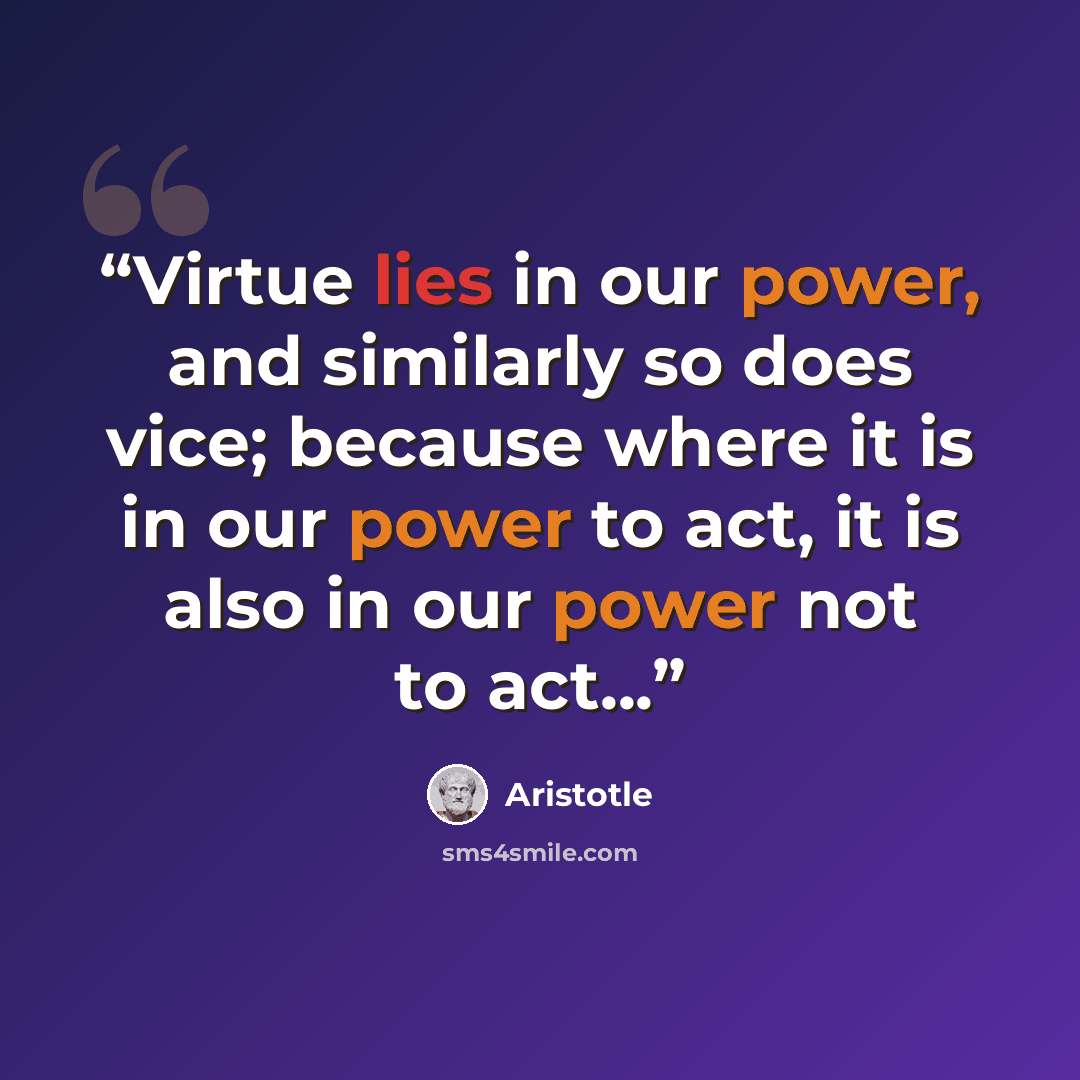
“Virtue lies in our power, and similarly so does vice; because where it is in our power to act, it is also… — Aristotle Copy Share Image
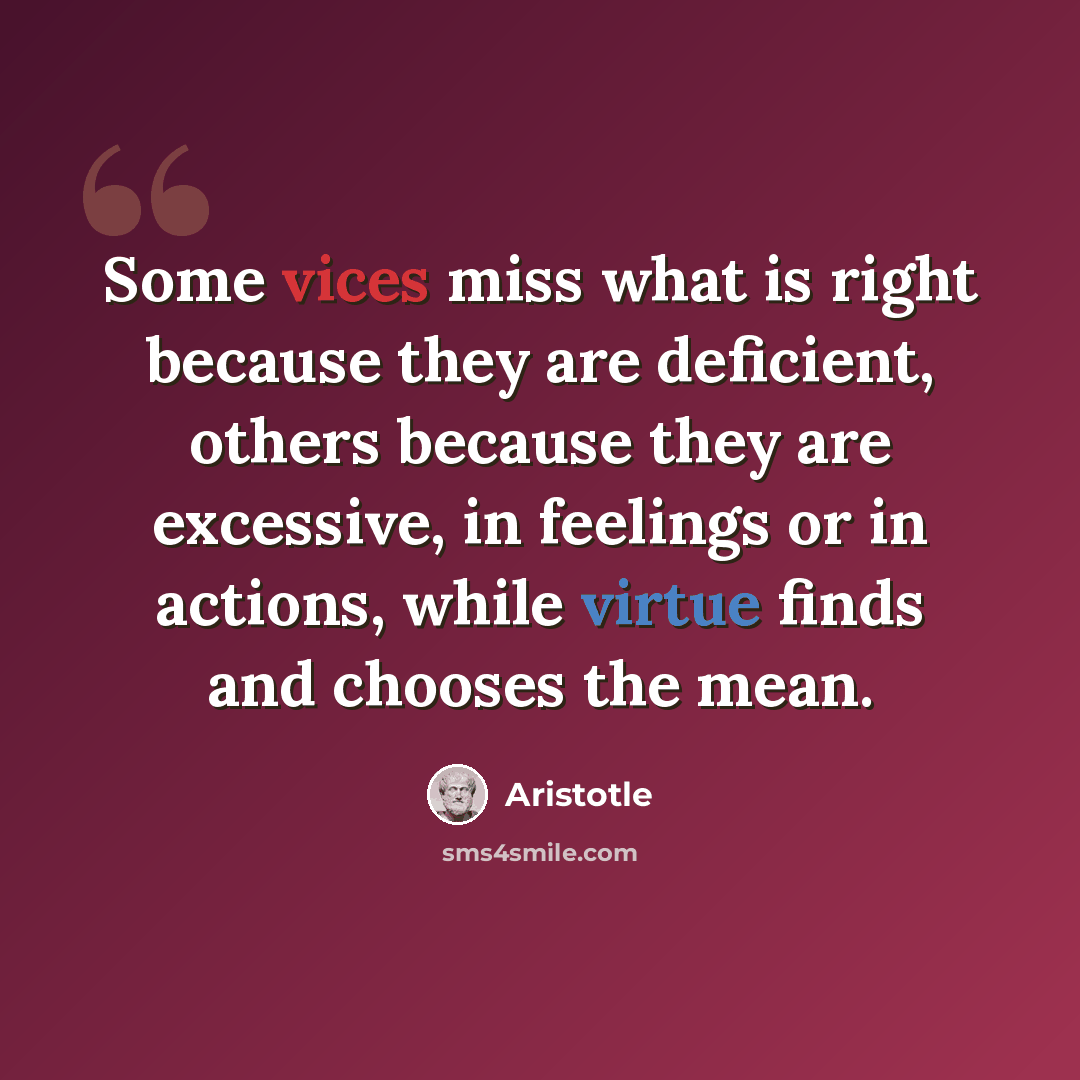
Some vices miss what is right because they are deficient, others because they are excessive, in feelings or in actions, while virtue… — Aristotle Copy Share Image
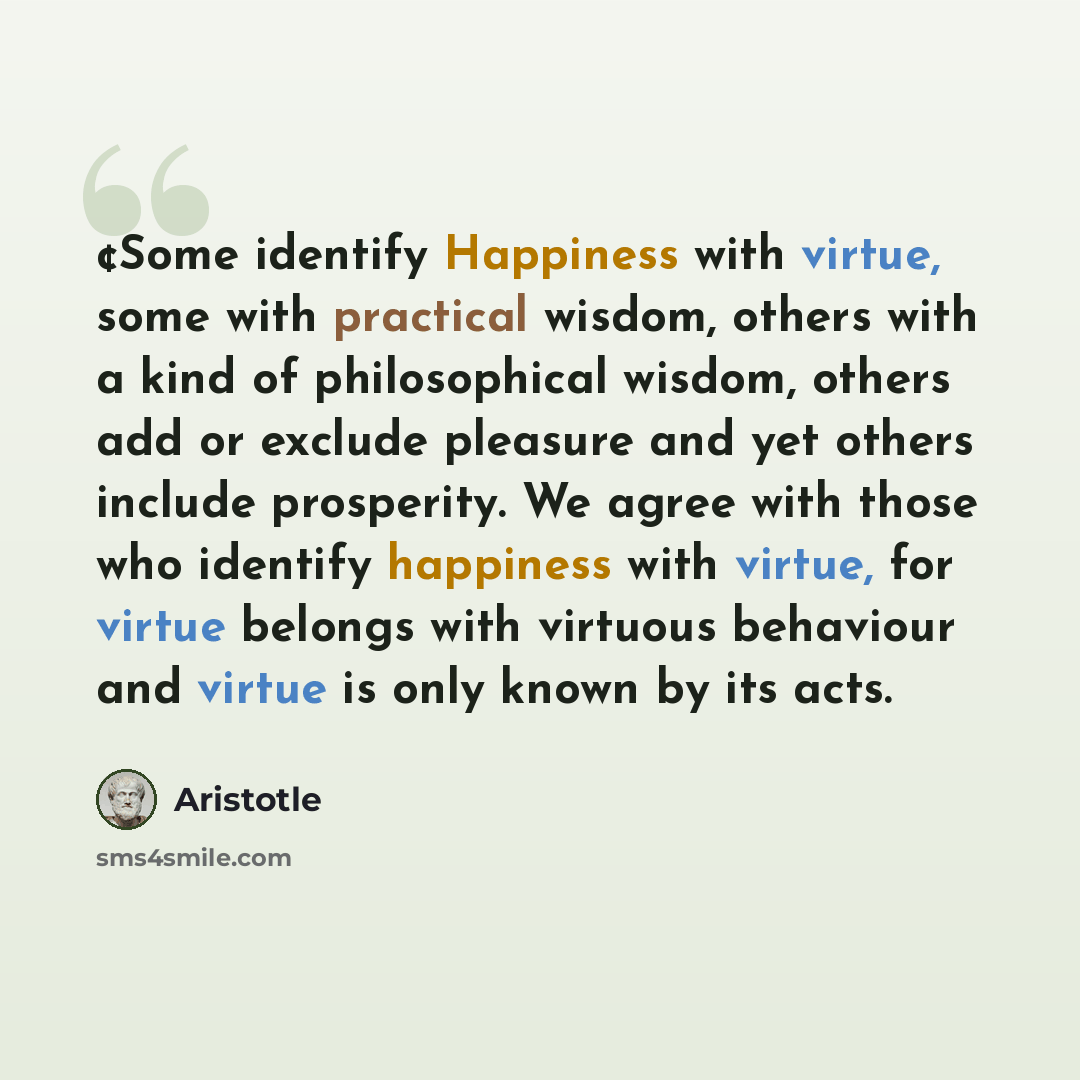
¢Some identify Happiness with virtue, some with practical wisdom, others with a kind of philosophical wisdom, others add or exclude pleasure and… — Aristotle Copy Share Image
One citizen differs from another, but the salvation of the community is the common business of them all. This community is the… — Aristotle Copy Share Image
Excellence or virtue is a settled disposition of the mind that determines our choice of actions and emotions and consists essentially in… — Aristotle Copy Share Image
But the virtues we get by first exercising them, as also happens in the case of the arts as well. For the… — Aristotle Copy Share Image
Our virtues are voluntary (and in fact we are in a sense ourselves partly the cause of our moral dispositions, and it… — Aristotle Copy Share Image
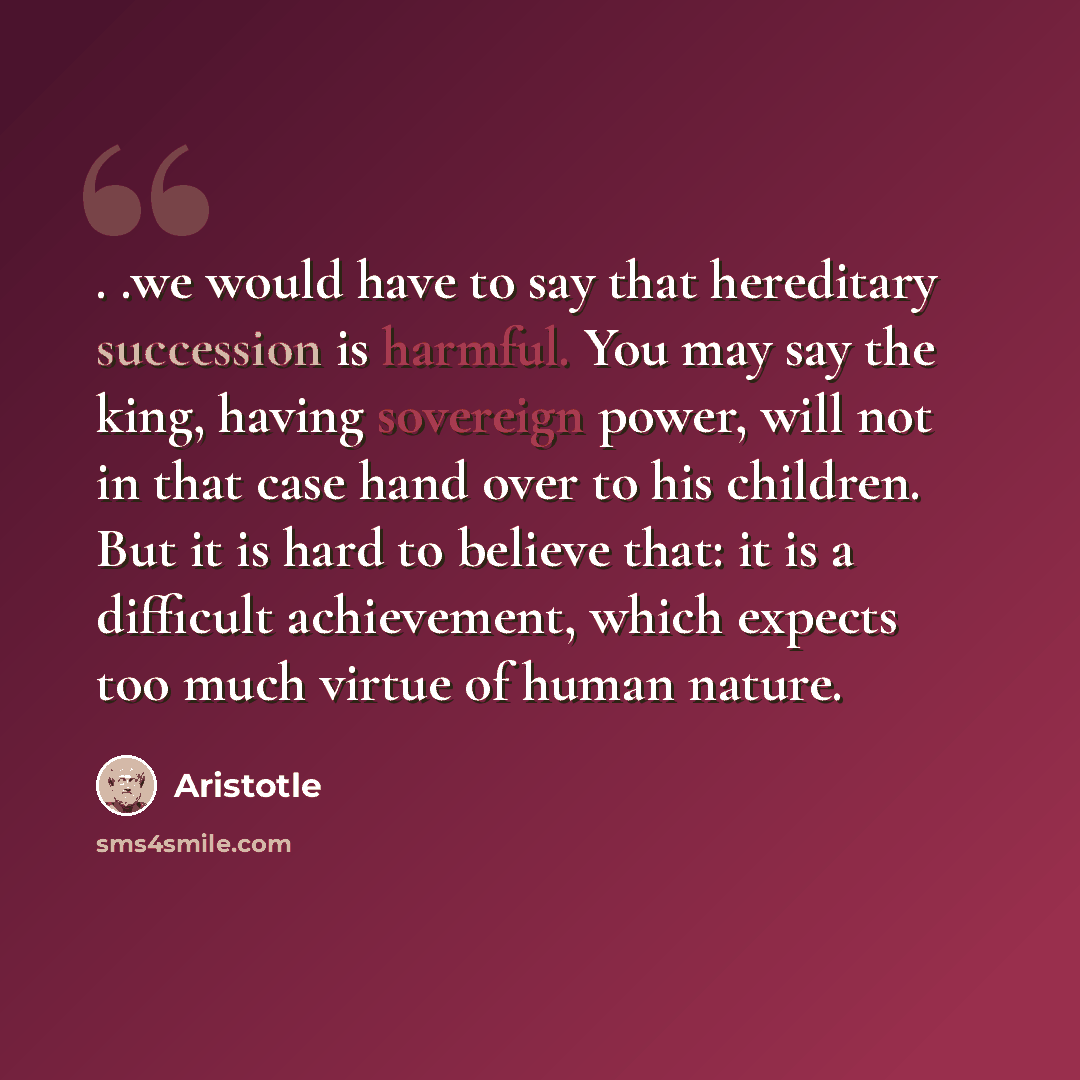
. .we would have to say that hereditary succession is harmful. You may say the king, having sovereign power, will not in… — Aristotle Copy Share Image
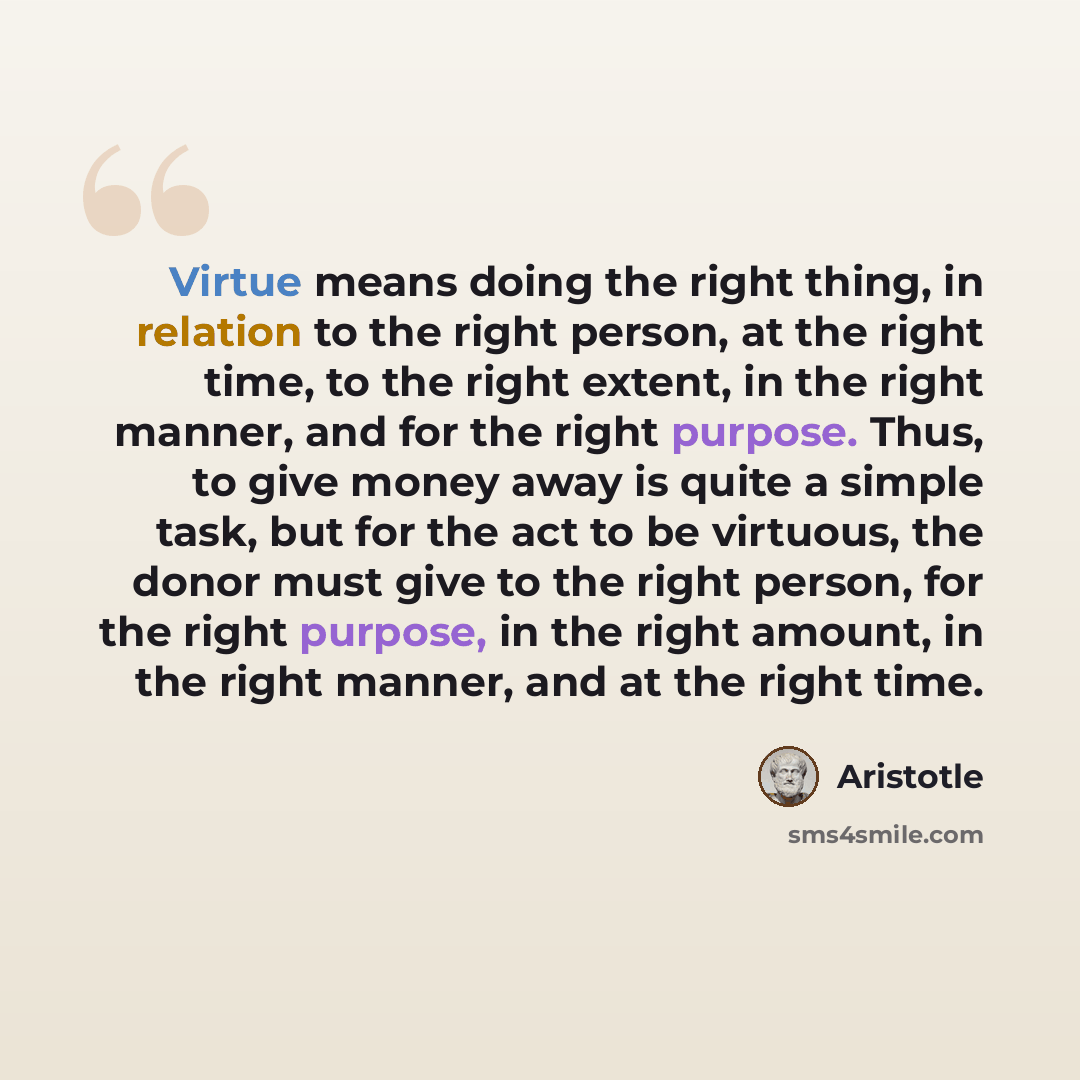
Virtue means doing the right thing, in relation to the right person, at the right time, to the right extent, in the… — Aristotle Copy Share Image
[Prudence] is the virtue of that part of the intellect [the calculative] to which it belongs; and . . . our choice… — Aristotle Copy Share Image
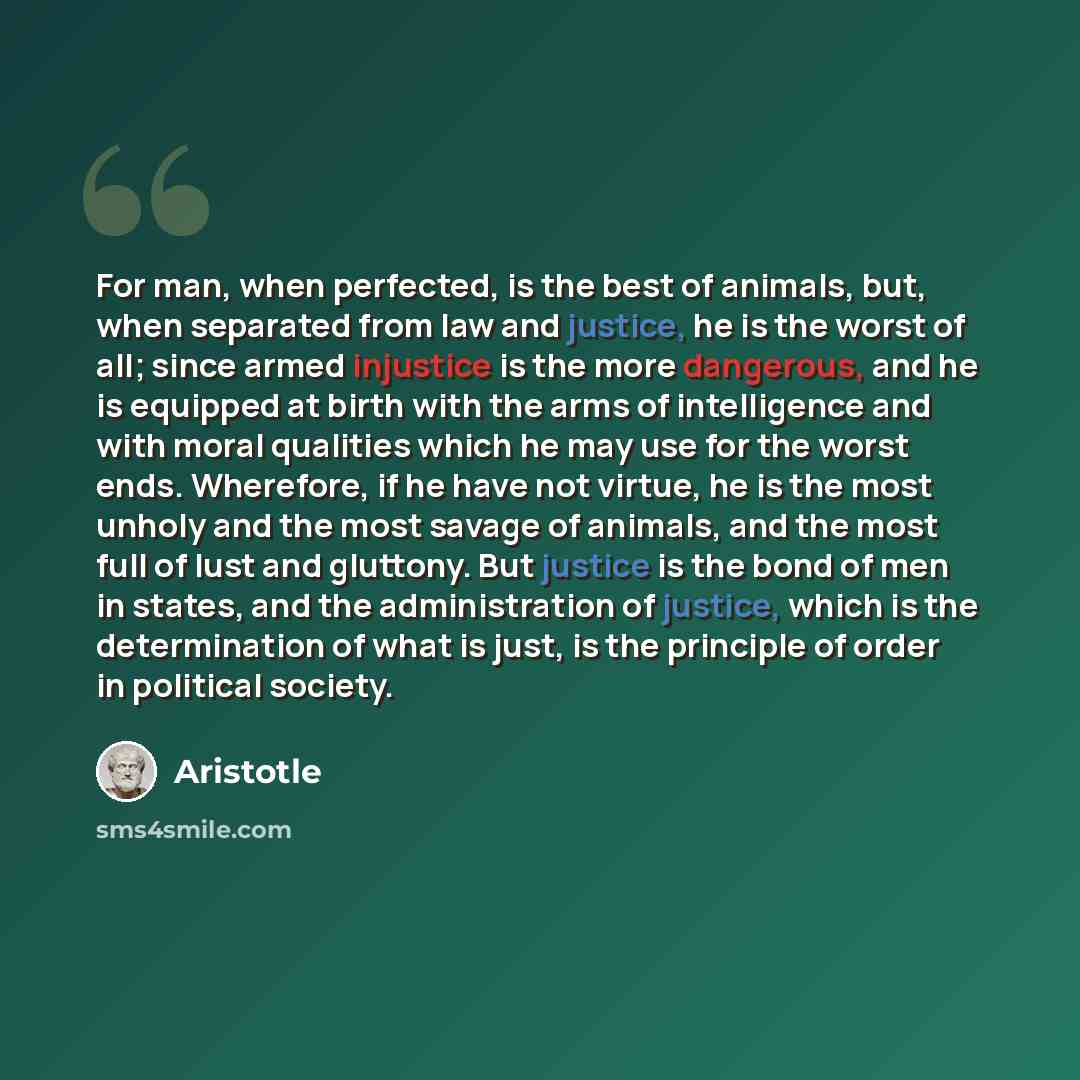
For man, when perfected, is the best of animals, but, when separated from law and justice, he is the worst of all;… — Aristotle Copy Share Image
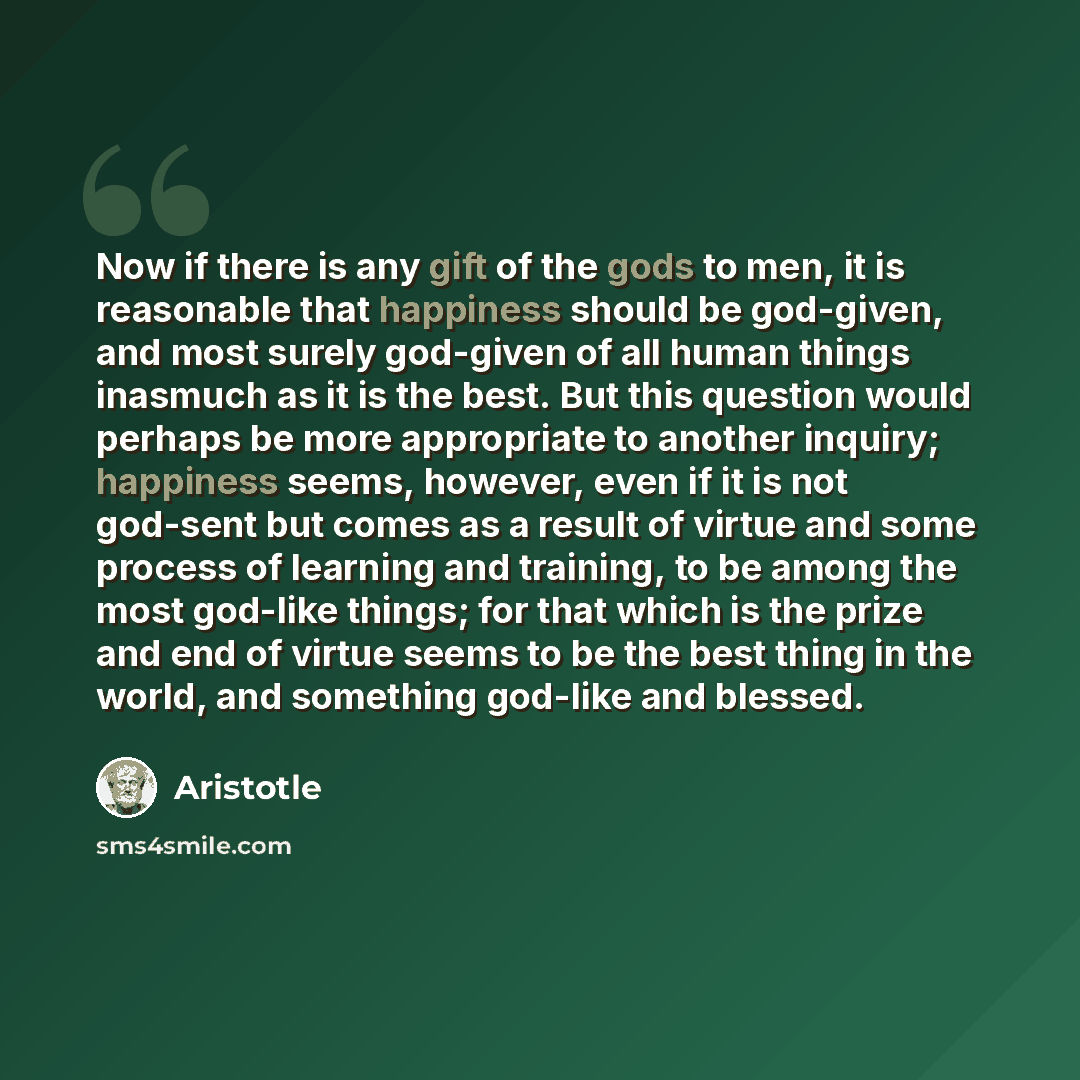
Now if there is any gift of the gods to men, it is reasonable that happiness should be god-given, and most surely… — Aristotle Copy Share Image
Inasmuch as every family is a part of a state, and these relationships are the parts of a family, and the virtue… — Aristotle Copy Share Image
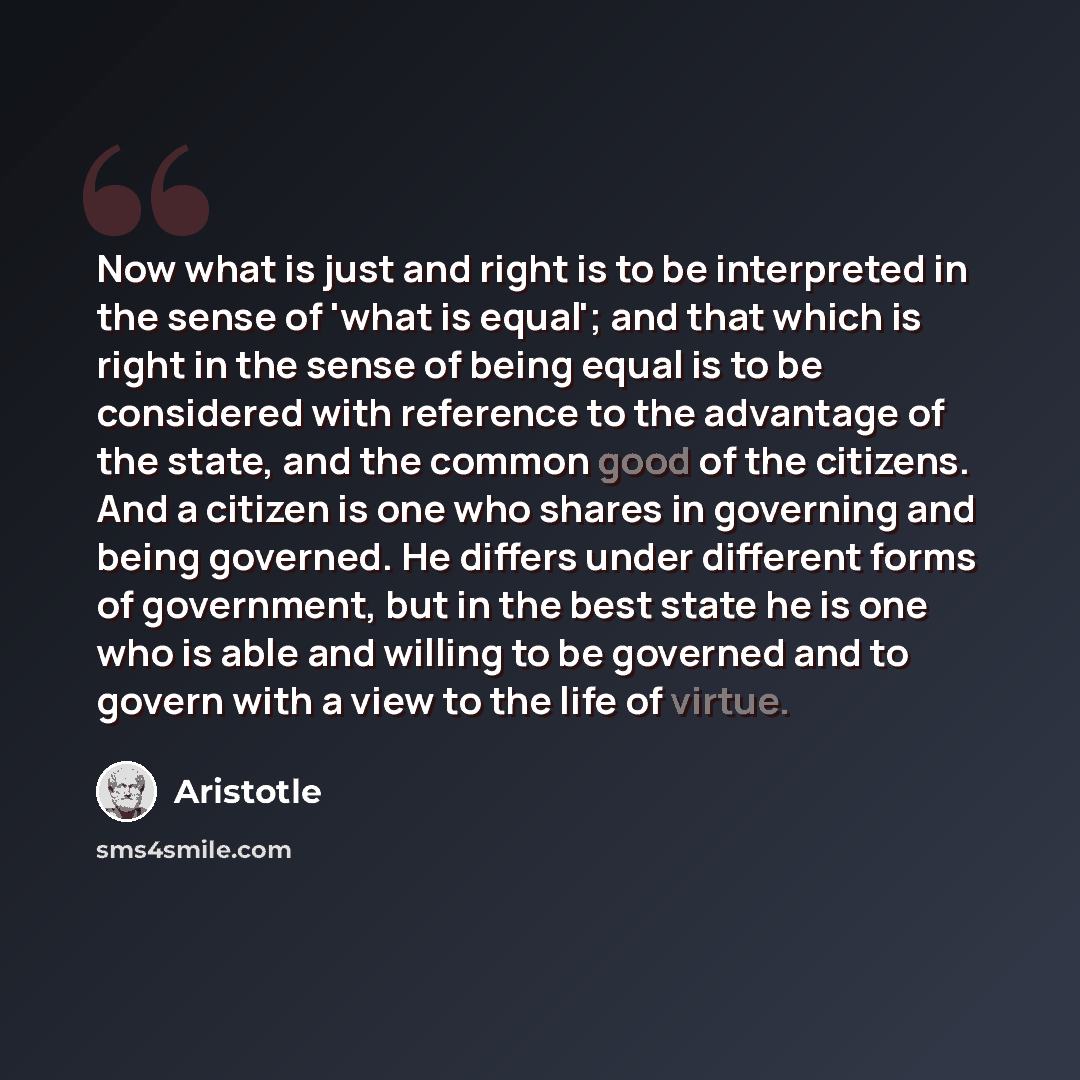
Now what is just and right is to be interpreted in the sense of 'what is equal'; and that which is right… — Aristotle Copy Share Image
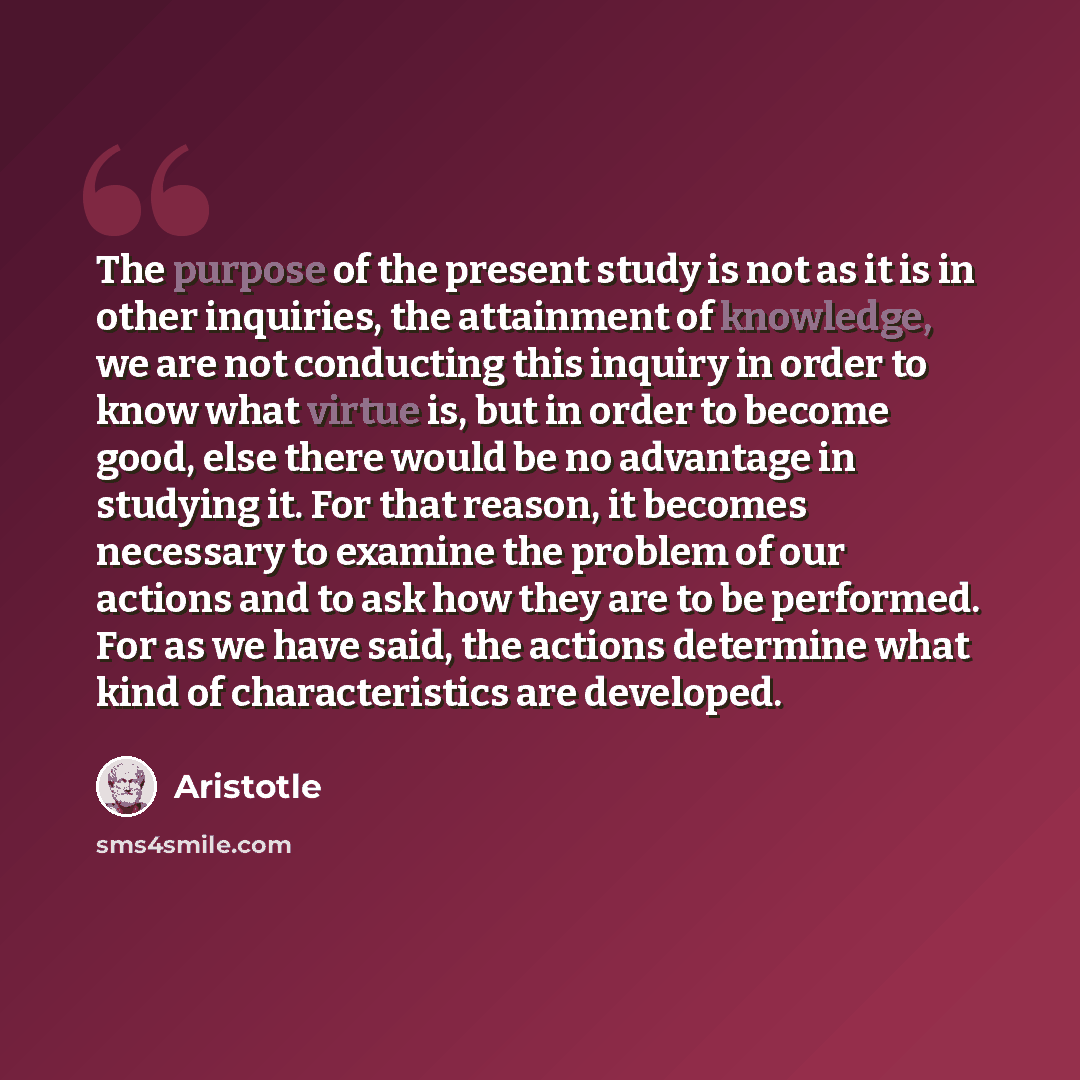
The purpose of the present study is not as it is in other inquiries, the attainment of knowledge, we are not conducting… — Aristotle Copy Share Image
All are agreed that the various moral qualities are in a sense bestowed by nature: we are just, and capable of temperance,… — Aristotle Copy Share Image
If the state cannot be entirely composed of good men, and yet each citizen is expected to do his own business well,… — Aristotle Copy Share Image
Some persons hold that, while it is proper for the lawgiver to encourage and exhort men to virtue on moral grounds, in… — Aristotle Copy Share Image
Moral qualities are so constituted as to be destroyed by excess and by deficiency . . . — Aristotle Copy Share Image
Virtue makes us aim at the right end, and practical wisdom makes us take the right means. — Aristotle Copy Share Image
Virtue is more clearly shown in the performance of fine ACTIONS than in the non-performance of base ones. — Aristotle Copy Share Image
The knowledge of the soul admittedly contributes greatly to the advance of truth in general, and, above all, to our understanding of Nature, for… — Aristotle Copy Share
Young men have strong passions and tend to gratify them indiscriminately. Of the bodily desires, it is the sexual by which they are most… — Aristotle Copy Share
The body is at its best between the ages of thirty and thirty-five; the mind is at its best about the age of forty-nine. — Aristotle Copy Share
The ensouled is distinguished from the unsouled by its being alive. Now since being alive is spoken of in many ways, even if only… — Aristotle Copy Share
Although it may be difficult in theory to know what is just and equal, the practical difficulty of inducing those to forbear who can,… — Aristotle Copy Share
The true forms of government, therefore, are those in which the one, or the few, or the many, govern with a view to the… — Aristotle Copy Share
All persons ought to endeavor to follow what is right, and not what is established. — Aristotle Copy Share
Give a man a fish, you feed him for a day. Give a man a poisoned fish, you feed him for the rest of… — Aristotle Copy Share
Obstinate people can be divided into the opinionated, the ignorant, and the boorish. — Aristotle Copy Share
Happiness does not consist in pastimes and amusements but in virtuous activities. — Aristotle Copy Share
To learn is a natural pleasure, not confined to philosophers, but common to all men. — Aristotle Copy Share

![“Rightness in our choice of an end is secured by [Moral] Virtue.” quote by Aristotle](https://sms4smile.com/q/img-quotes/498/aristotle-78_character_rightness-in-our-choice-of-an-end-is-sec_2740950.png)
![“Actions which produce [virtue] are those which increase it, and also, if differently performed, destroy it.” quote by Aristotle](https://sms4smile.com/q/img-quotes/b6e/aristotle-78_character_actions-which-produce-virtue-are-those-w_1425556.png)
![“[Prudence] is the virtue of that part of the intellect [the calculative] to which it belongs; and . . . our choice of actions will not be right without Prudence any more than without Moral Virtue, since, while Moral Virtue enables us to achieve the end, Prudence makes us adopt the right means to…” quote by Aristotle](https://sms4smile.com/q/img-quotes/be1/aristotle-78_achieve_prudence-is-the-virtue-of-that-part-of-t_431676.jpg)