Ever since the Greek tragedies, artists have, from time to time, asked themselves how they might influence ongoing political events. — John Berger Copy Share Image
Every painted image of something is also about the absence of the real thing. All painting is about the presence of absence. — John Berger Copy Share Image
“We who draw do so not only to make something visible to others, but also to accompany something invisible to its incalculable… — John Berger Copy Share Image
For the artist, drawing is discovery. And that is not just a slick phrase; it is quite literally true. — John Berger Copy Share Image
Drawing is a way of coming upon the connection between things, just like metaphor in poetry reconnects what has become separated. — John Berger Copy Share Image
Until 1954, I'd only ever thought of being a painter, but I earned my money when and where I could. You could… — John Berger Copy Share Image
We who draw do so not only to make something observed visible to others, but also to accompany something invisible to its… — John Berger Copy Share Image
“Today we see the art of the past as nobody saw it before. We actually perceive it in a different way.” — John Berger Copy Share Image
It is comparatively easy to achieve a certain unity in a picture by allowing one colour to dominate, or by muting all… — John Berger Copy Share Image
“Drawing is a form of probing. And the first generic impulse to draw derives from the human need to search, to plot… — John Berger Copy Share Image
When a painter is working he is aware of the means which are available to him - these include his materials, the… — John Berger Copy Share Image
At times failure is very necessary for the artist. It reminds him that failure is not the ultimate disaster. And this reminder… — John Berger Copy Share Image
When I was about seven, one or two people encouraged me, and art became an enormous and important refuge. By adolescence, I… — John Berger Copy Share Image
“The real question is: to whom does the meaning of the art of the past properly belong ? To those who can… — John Berger Copy Share Image
[O]ften art has judged the judges, pleaded revenge to the innocent and shown to the future what the past suffered, so that… — John Berger Copy Share Image
The impulse to paint comes neither from observation nor from the soul (which is probably blind) but from an encounter: the encounter… — John Berger Copy Share Image
“Having seen this reproduction, one can go to the National Gallery to look at the original and discover what the reproduction lacks.… — John Berger Copy Share Image
The collaboration which sometimes follows is seldom based on good will: usually on desire, rage, fear, pity or longing. The modern illusion… — John Berger Copy Share Image
The extreme proposition on which Giacometti based all his mature work was that no reality... could ever be shared. This is why… — John Berger Copy Share Image
Malevich, Lissitsky, Kandinsky, Tatlin, Pevsner, Rodchenko… all believed in the social role of art… Their works were like hinged doors, connecting activity… — John Berger Copy Share Image
“When I'm drawing - and here drawing is very different from writing or reasoning - I have the impression at certain moments… — John Berger Copy Share Image
I can't tell you what art does and how it does it, but I know that often art has judged the judges,… — John Berger Copy Share Image
When he painted a road, the roadmakers were there in his imagination, when he painted the turned earth of a ploughed field,… — John Berger Copy Share Image
“[...] For the first time ever, images of art have become ephemeral, ubiquitous, insubstantial, available, valueless, free. They surround us in the… — John Berger Copy Share Image
“I can't tell you what art does and how it does it, but I know that art has often judged the judges,… — John Berger Copy Share Image
What any true painting touches is an absence - an absence of which without the painting, we might be unaware. And that… — John Berger Copy Share Image
Painting is something that you need to do, if not every day, then certainly most days. It is almost like being a… — John Berger Copy Share Image
In the average European oil painting of the nude the principal protagonist is never painted. He is the spectator in front of… — John Berger Copy Share Image
“Thus painting itself had to be able to demonstrate the desirability of what money could buy. And the visual desirability of what… — John Berger Copy Share Image
A drawing is essentially a private work, related only to the artist's own needs; a 'finished' statue or canvas is essentially a… — John Berger Copy Share Image
I use charcoal a lot. Partly because it has such a fantastic range but also because it is very easy to erase.… — John Berger Copy Share Image
In drawing after drawing, pastel after pastel, painting after painting, the contours of Degas's dancing figures become, at a certain point, darkly… — John Berger Copy Share Image
“There is a symbiotic desire to get closer and closer, to enter the self of what is being drawn, and, simultaneously, there… — John Berger Copy Share Image
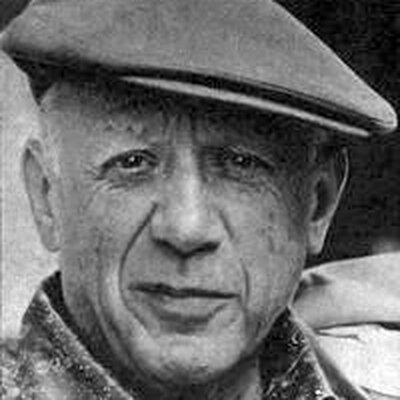
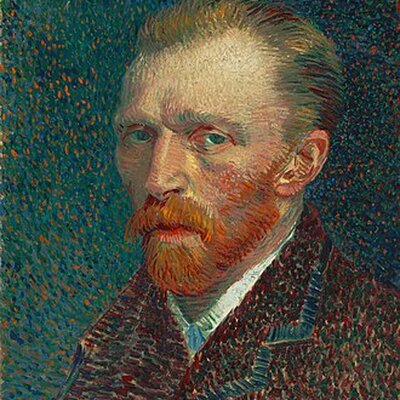
There's the artist's intimacy and truthfulness to himself, but an equal intimacy to the Other [the one drawn]. Picasso drawings are like… — John Berger Copy Share Image
A drawing is an autobiographical record of one's discovery of an event - either seen, remembered or imagined. A 'finished' work is… — John Berger Copy Share Image
Oil painting did to appearances what capital did to social relations. It reduced everything to the equality of objects. Everything became exchangeable… — John Berger Copy Share Image
“Oil painting, before anything else, was a celebration of private property. As an art-form it derived from the principle that you are… — John Berger Copy Share Image
Art is the provocation for talking about enigma and the search for sense in human life. One can do that by telling… — John Berger Copy Share Image
When we read a story, we inhabit it. The covers of the book are like a roof and four walls. — John Berger Copy Share
The impulse to paint comes neither from observation nor from the soul (which is probably blind) but from an encounter: the encounter between painter… — John Berger Copy Share
Oil painting did to appearances what capital did to social relations. It reduced everything to the equality of objects. Everything became exchangeable because everything… — John Berger Copy Share
Landscapes can be deceptive. Sometimes a landscape seems to be less a setting for the life of its inhabitants than a curtain behind which… — John Berger Copy Share
We live in a dominant culture of ceaseless Departure and Progress that has so far lasted two or three centuries. — John Berger Copy Share
My heart born naked was swaddled in lullabies. Later alone it wore poems for clothes. Like a shirt I carried on my back the… — John Berger Copy Share
There's the artist's intimacy and truthfulness to himself, but an equal intimacy to the Other [the one drawn]. Picasso drawings are like that... the… — John Berger Copy Share
Traditional Chinese art looked at the Earth from a Confucian mountain top; Japanese art looked closely around screens; Italian Renaissance art surveyed conquered nature… — John Berger Copy Share
In drawing after drawing, pastel after pastel, painting after painting, the contours of Degas's dancing figures become, at a certain point, darkly insistent, tangled… — John Berger Copy Share
We never look at just one thing; we are always looking at the relation between things and ourselves. — John Berger Copy Share
We can become anything. That is why injustice is impossible here. There may be the accident of birth, there is no accident of death.… — John Berger Copy Share
Capitalism survives by forcing the majority, whom it exploits, to define their own interests as narrowly as possible. This was once achieved by extensive… — John Berger Copy Share
“Today we see the art of the past as nobody saw it before. We actually perceive it in a different way.” — John Berger Copy Share

![“[O]ften art has judged the judges, pleaded revenge to the innocent and shown to the future what the past suffered, so that it has never been forgotten. . . .” quote by John Berger](https://sms4smile.com/q/img-quotes/469/john-berger-1590_art_o-ften-art-has-judged-the-judges-pleaded_2542460.png)
![“[...] For the first time ever, images of art have become ephemeral, ubiquitous, insubstantial, available, valueless, free. They surround us in the same way as a language surrounds us. They have entered the mainstream of life over which they no longer, in themselves, have power. Yet very few people…” quote by John Berger](https://sms4smile.com/q/img-quotes/be8/john-berger-1590_art_for-the-first-time-ever-images-of-art-ha_2591874.jpg)
![“There's the artist's intimacy and truthfulness to himself, but an equal intimacy to the Other [the one drawn]. Picasso drawings are like that... the Rembrandts are like that. The artist who most often did that was Van Gogh.” quote by John Berger](https://sms4smile.com/q/img-quotes/0d1/john-berger-1590_art_there-s-the-artist-s-intimacy-and-truthf_155171.png)