Conscience Quote by Socrates
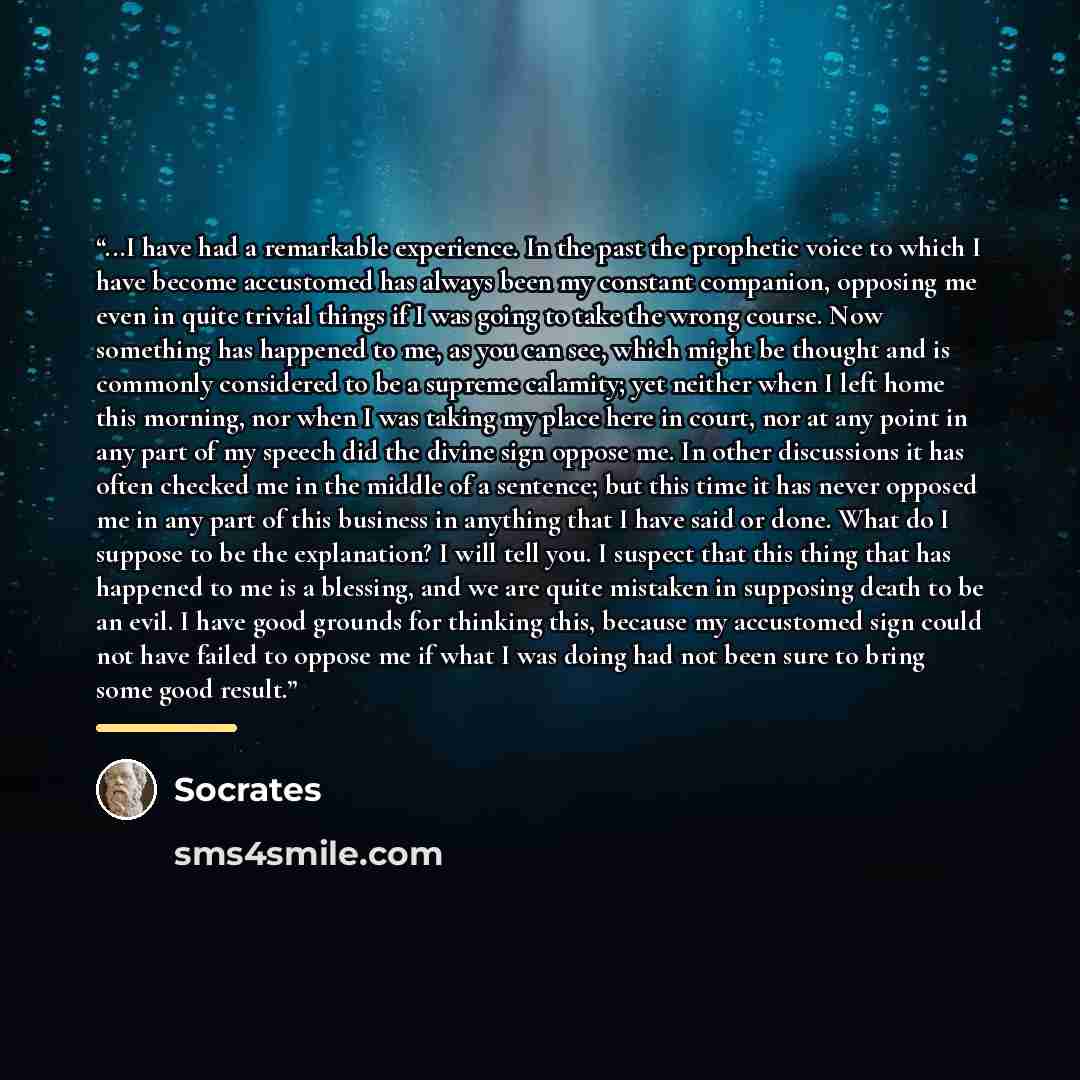
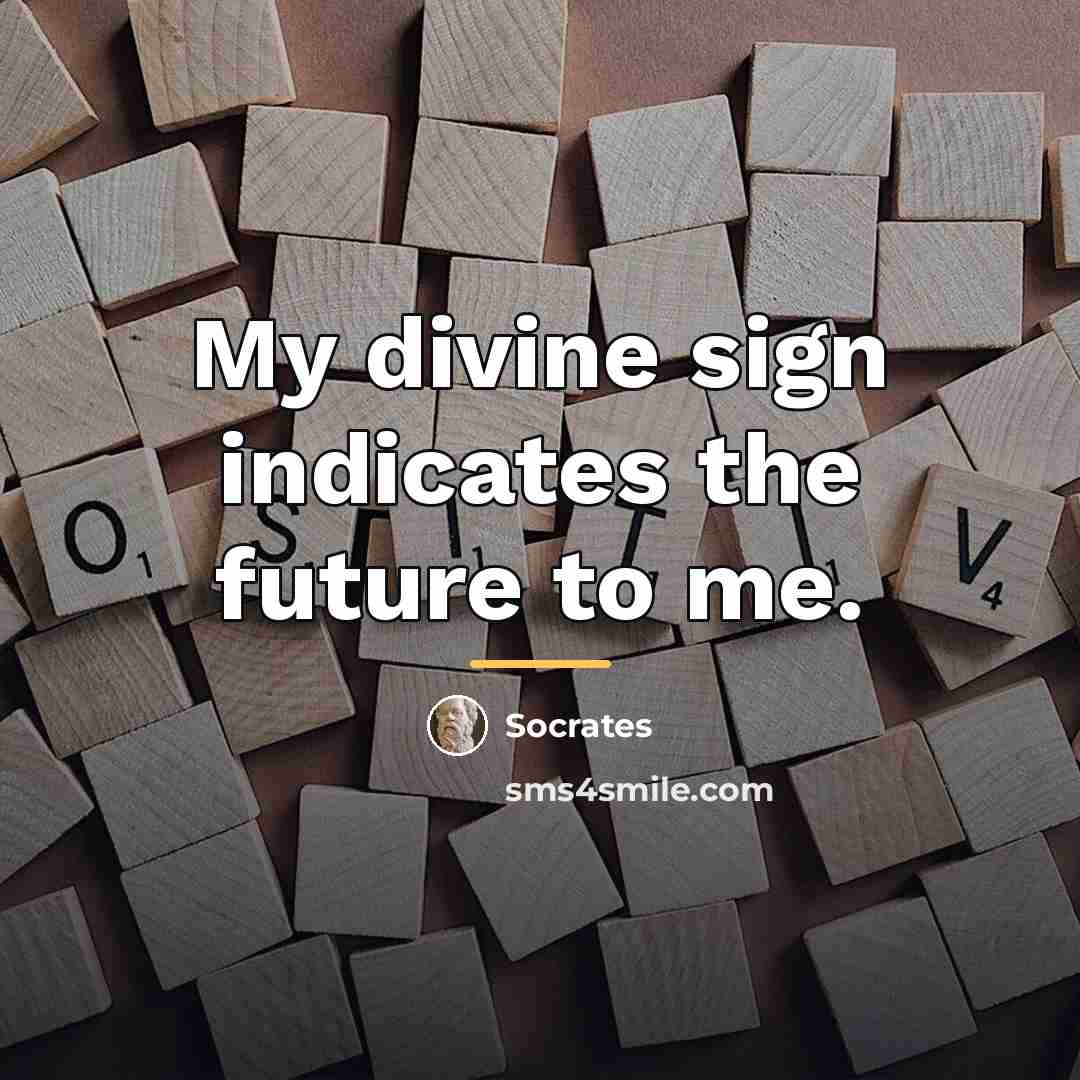
““...I have had a remarkable experience. In the past the prophetic voice to which I have become accustomed has always been my constant companion, opposing me even in quite trivial things if I was going to take the wrong course. Now something has happened to me, as you can see, which might be thought and is commonly considered to be a supreme calamity; yet neither when I left home this morning, nor when I was taking my place here in court, nor at any point in any part of my speech did the divine sign oppose me. In other discussions it has often checked me in the middle of a sentence; but this time it has never opposed me in any part of this business in anything that I have said or done. What do I suppose to be the explanation? I will tell you. I suspect that this thing that has happened to me is a blessing, and we are quite mistaken in supposing death to be an evil. I have good grounds for thinking this, because my accustomed sign could not have failed to oppose me if what I was doing had not been sure to bring some good result.””
About This Quote
Source Dialogue: Plato’s Apology, 399 BC
Socrates reflects that a divine inner voice once opposed him, but now it remains silent, leading him to view death not as evil but as a potential blessing, suggesting trust in the unknown.
In simple terms: He sees death as possibly beneficial, not harmful.
Key Takeaway
Embrace uncertainty.
Themes
philosophy
death
divine guidance
Mood
contemplative
serene
Type
philosophical
inspirational
When to use this quote
- making life decisions
- facing mortality
- spiritual contemplation
Key Concepts
Stoicism
existentialism
ethical reasoning
Questions to Reflect On
- What would you consider a sign of good or bad outcomes?
- How do you find meaning when guidance is absent?
A Different Perspective
It assumes a divine sign, which may not be universally accepted.