Beauty Quote by Samuel Taylor Coleridge
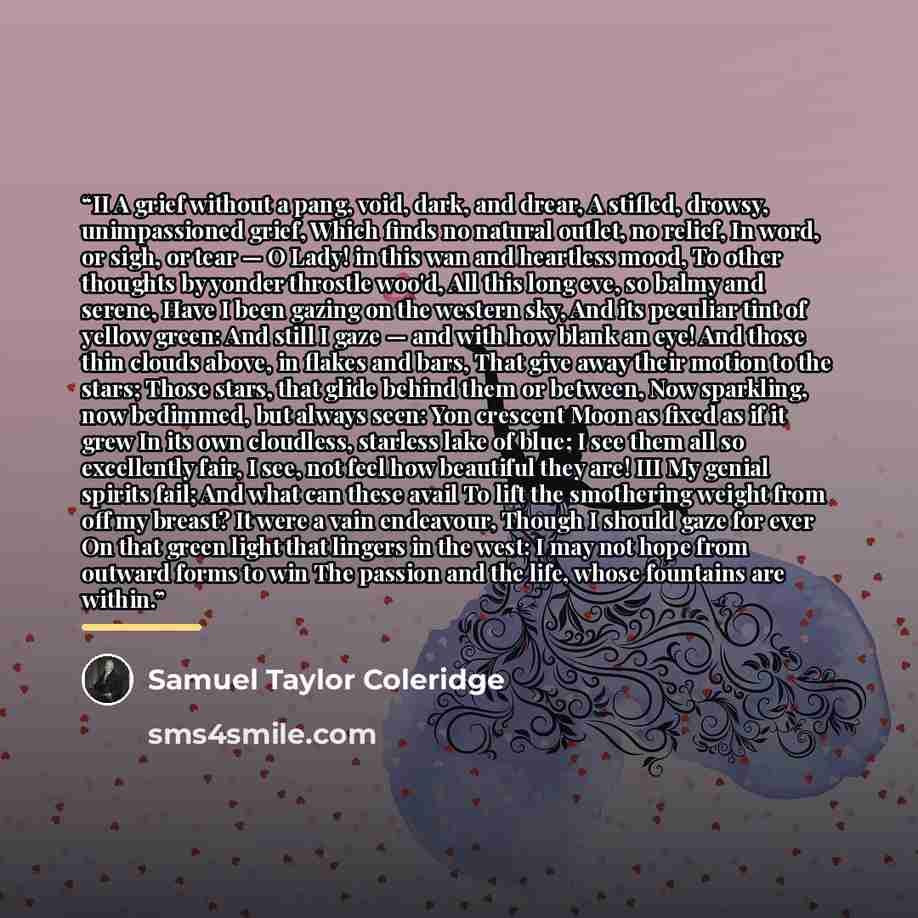
““II A grief without a pang, void, dark, and drear, A stifled, drowsy, unimpassioned grief, Which finds no natural outlet, no relief, In word, or sigh, or tear — O Lady! in this wan and heartless mood, To other thoughts by yonder throstle woo'd, All this long eve, so balmy and serene, Have I been gazing on the western sky, And its peculiar tint of yellow green: And still I gaze — and with how blank an eye! And those thin clouds above, in flakes and bars, That give away their motion to the stars; Those stars, that glide behind them or between, Now sparkling, now bedimmed, but always seen: Yon crescent Moon as fixed as if it grew In its own cloudless, starless lake of blue; I see them all so excellently fair, I see, not feel how beautiful they are! III My genial spirits fail; And what can these avail To lift the smothering weight from off my breast? It were a vain endeavour, Though I should gaze for ever On that green light that lingers in the west: I may not hope from outward forms to win The passion and the life, whose fountains are within.””
About This Quote
Source Poem: “Dejection: An Ode” (excerpt), 1802
The speaker describes a bleak, listless grief lacking expression, then seeks solace in observing nature’s beauty, yet doubts its power to heal.
In simple terms: He feels numb grief, looks at sky for comfort, but doubts it helps.
Key Takeaway
Find meaning in nature while acknowledging emotional limits.
Themes
grief
nature
loneliness
hope
despair
Mood
melancholic
contemplative
somber
Type
poetic
philosophical
When to use this quote
- personal loss
- nighttime contemplation
- artistic inspiration
- mental health coping
Key Concepts
existential melancholy
search for solace
creative reflection
Questions to Reflect On
- Can aesthetic appreciation replace emotional work?
- What role does nature play in processing grief?
A Different Perspective
Nature’s beauty may not fully alleviate deep sorrow.