Hamlet Quote by Ronald Carter
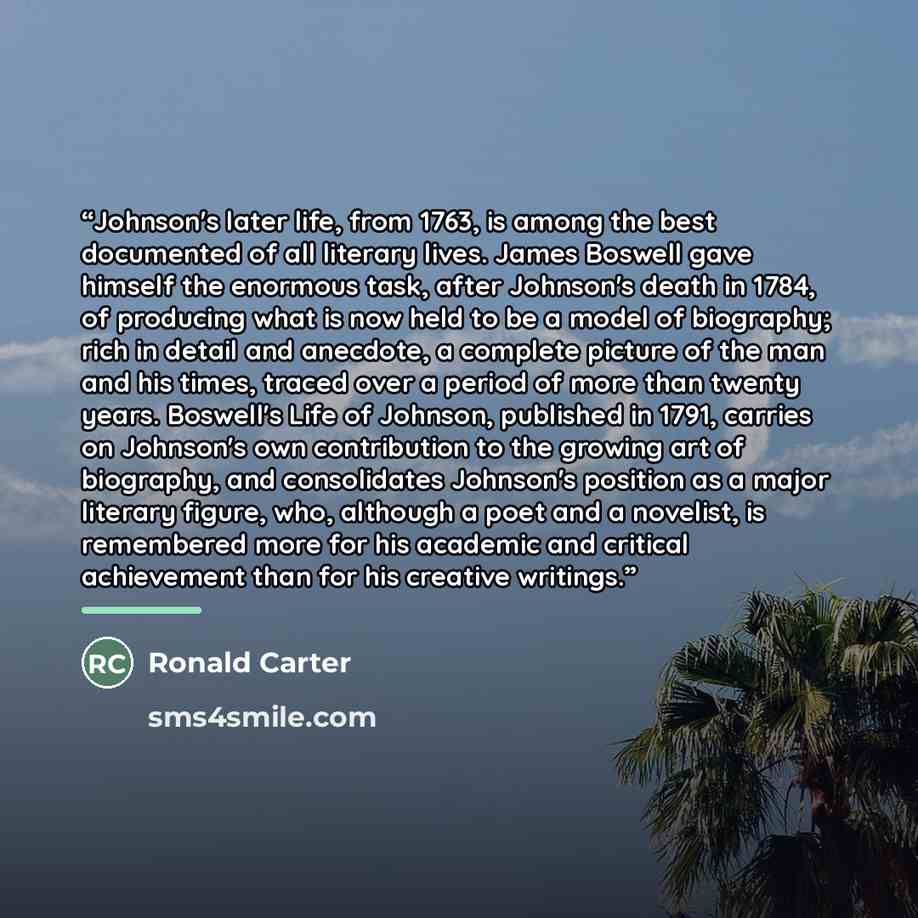
““The character and the play of Hamlet are central to any discussion of Shakespeare's work. Hamlet has been described as melancholic and neurotic, as having an Oedipus complex, as being a failure and indecisive, as well as being a hero, and a perfect Renaissance prince. These judgements serve perhaps only to show how many interpretations of one character may be put forward. 'To be or not to be' is the centre of Hamlet's questioning. Reasons not to go on living outnumber reasons for living. But he goes on living, until he completes his revenge for his father's murder, and becomes 'most royal', the true 'Prince of Denmark' (which is the play's subtitle), in many ways the perfection of Renaissance man. Hamlet's progress is a 'struggle of becoming' - of coming to terms with life, and learning to accept it, with all its drawbacks and challenges. He discusses the problems he faces directly with the audience, in a series of seven soliloquies - of which 'To be or not to be' is the fourth and central one. These seven steps, from the zero-point of a desire not to live, to complete awareness and acceptance (as he says, 'the readiness is all'), give a structure to the play, making the progress all the more tragic, as Hamlet reaches his aim, the perfection of his life, only to die.””
About This Quote
Source Play: Hamlet, 1603
Hamlet’s journey illustrates the struggle of confronting life’s paradoxes and moving from indecision to acceptance, culminating in tragic fulfillment.
In simple terms: Hamlet wrestles with life and death, ultimately accepting his fate.
Key Takeaway
Embrace life’s contradictions and act despite uncertainty.
Themes
identity
existence
tragedy
heroism
Renaissance
Mood
reflective
melancholic
dramatic
Type
literary
analytical
philosophical
When to use this quote
- theatre performance
- personal crisis
- ethical decision making
- leadership challenges
Key Concepts
philosophy
psychology
literary analysis
Questions to Reflect On
- How do you confront inner conflict?
- What does acceptance look like in your life?
A Different Perspective
Hamlet’s indecision can paralyze action, leading to missed opportunities.