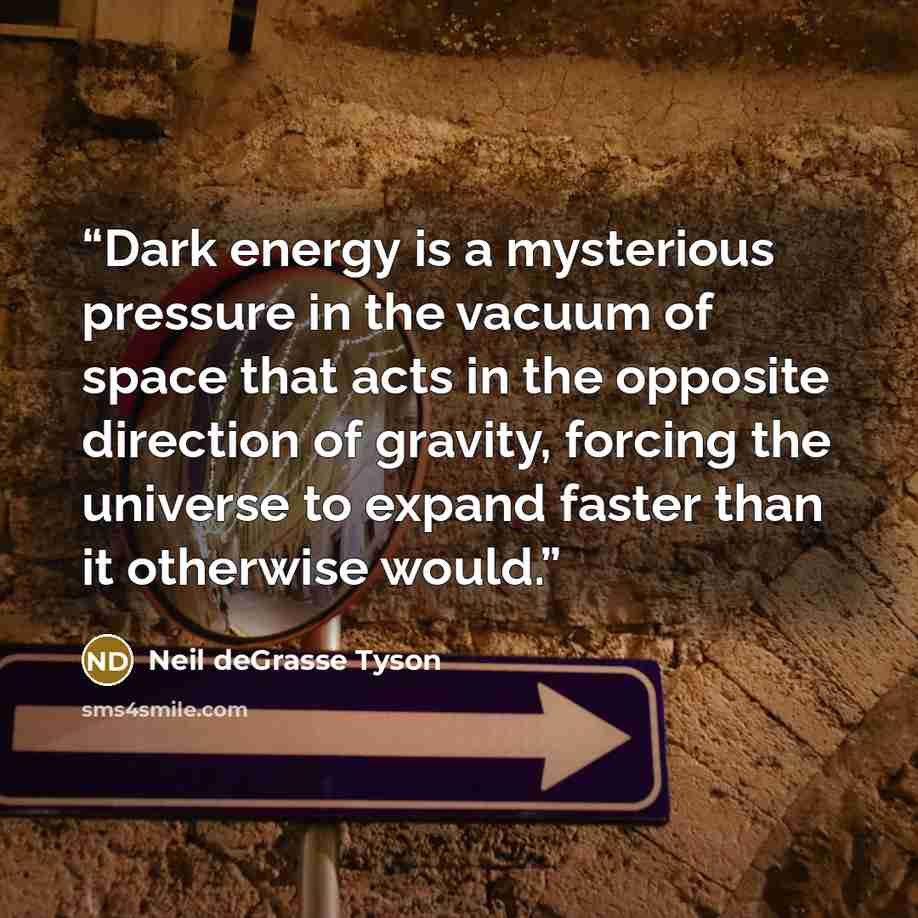
Dark energy Quote by Robert M. Hazen

““we proposed eighteen great ideas of science that we felt framed virtually all discoveries of the natural world and all advances in technology. We could not have foreseen many of the remarkable developments of the past two decades—nanotechnology archaea, LEDs, cloning, dark energy, ancient microbial fossils and deep microbial life, evidence for oceans of water on Mars and lakes of methane on Titan, ribozymes, carbon nanotubes, extrasolar planets, and so much more. But all of these unanticipated findings fit into the existing framework of science. The core concepts of science have not changed, and we are unable to point to any fundamentally new scientific principle that has emerged during the 1990s or 2000s. Accordingly, while every chapter has been significantly updated, we have added only a single new chapter on the explosion of advances in biotechnology. We conclude that the experience of the past two decades underscores the value of the great ideas approach to achieving scientific literacy.””
About This Quote
Source Book: The Story of Science, Robert M. Hazen, 2014
Science’s core ideas remain stable despite many unexpected discoveries, showing that a solid conceptual framework can accommodate new phenomena.
In simple terms: Core scientific ideas stay constant while discoveries expand them.
Key Takeaway
Focus on foundational concepts.
Themes
science
continuity
innovation
framework
Mood
analytical
thoughtful
Type
educational
philosophical
When to use this quote
- education
- research planning
- policy making
- public communication
Key Concepts
philosophy of science
paradigm stability
Questions to Reflect On
- What foundational concepts guide your field?
- How can we balance stability with openness to new principles?
A Different Perspective
May underplay the need for paradigm shifts when truly novel ideas emerge.
![“[Evolution is] one of the best documented, most compelling and exciting concepts in all of science.” quote by Stephen Jay Gould](https://sms4smile.com/quotes/img-quotes/23c/stephen-jay-gould-885_atheism_evolution-is-one-of-the-best-documented_614732.jpg)