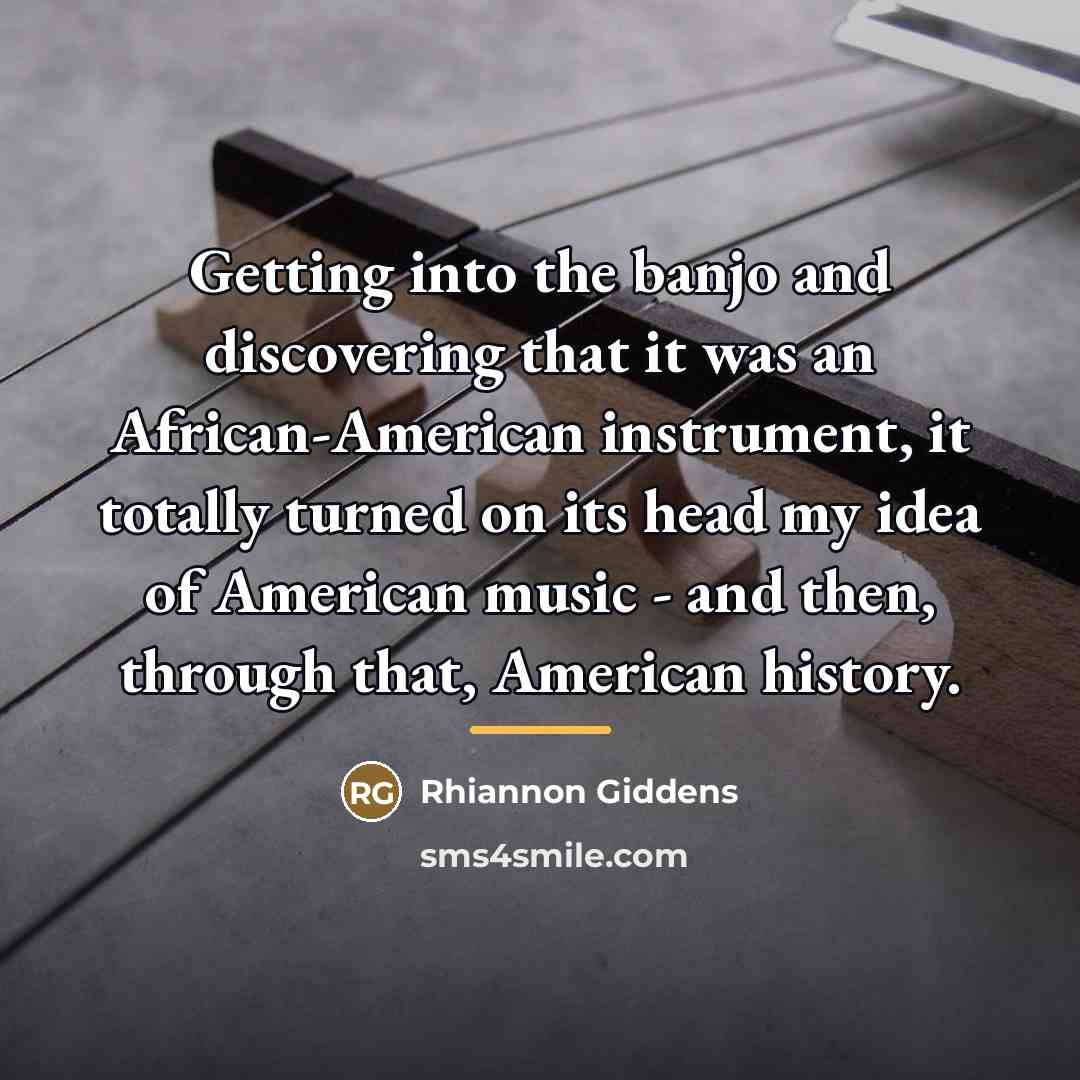
Quote by Philip F. Gura

““By the 1860s more and more banjo makers followed in Ashborn's footsteps, for, as we shall see, most often inventive banjo design, that which might indeed lead to true innovation, originated with those makers who wholeheartedly embraced the possibilities of mechanized production. Most violin makers, for example, as well as guitar makers such as Martin, continued to build instruments by traditional methods, patiently training apprentices in the various steps necessary to produce an entire instrument by themselves. But by the 1860s the banjo had become anything but traditional, with a score of patents filed in which its design was changed, often quite radically, as various banjo makers capitalized on the nation's growing infatuation with the instrument. Its basic form - a five-string neck and a circular sounding chamber - established, the banjo began to appear in a bewildering number of variations as makers sought to adapt the instrument to the new kinds of music people wished to play on it. In 1840 the banjo had been a symbol of the American South in general and the slave plantation in particular. But after its initial popularization on the minstrel stage led to its wholesale embrace by Victorian America, it came to represent the aspirations of a burgeoning mechanic class who brought to its design and manufacture the same invention through which they had transformed other areas of American industry. It truly was becoming America's instrument.””
About This Quote
Source Book: Banjo: The History, Construction & Playing of America's Instrument, Philip F. Gura, 2015
Industrialization transformed banjo making, shifting from craft to mechanized production and spurring diverse designs that mirrored social changes.
In simple terms: Mechanized production changed banjo design and reflected social shifts.
Key Takeaway
Embrace technology while honoring tradition.
Themes
innovation
industrialization
music history
social change
Mood
reflective
analytical
Type
historical
educational
When to use this quote
- instrument manufacturing
- music education
- heritage preservation
- design entrepreneurship
Key Concepts
mechanization
patent culture
craftsmanship
cultural symbolism
Questions to Reflect On
- How does technology affect cultural heritage?
- Can tradition survive mass production?
A Different Perspective
Mechanization can dilute artisanal quality and cultural authenticity.