Character building Quote by Peter Kreeft
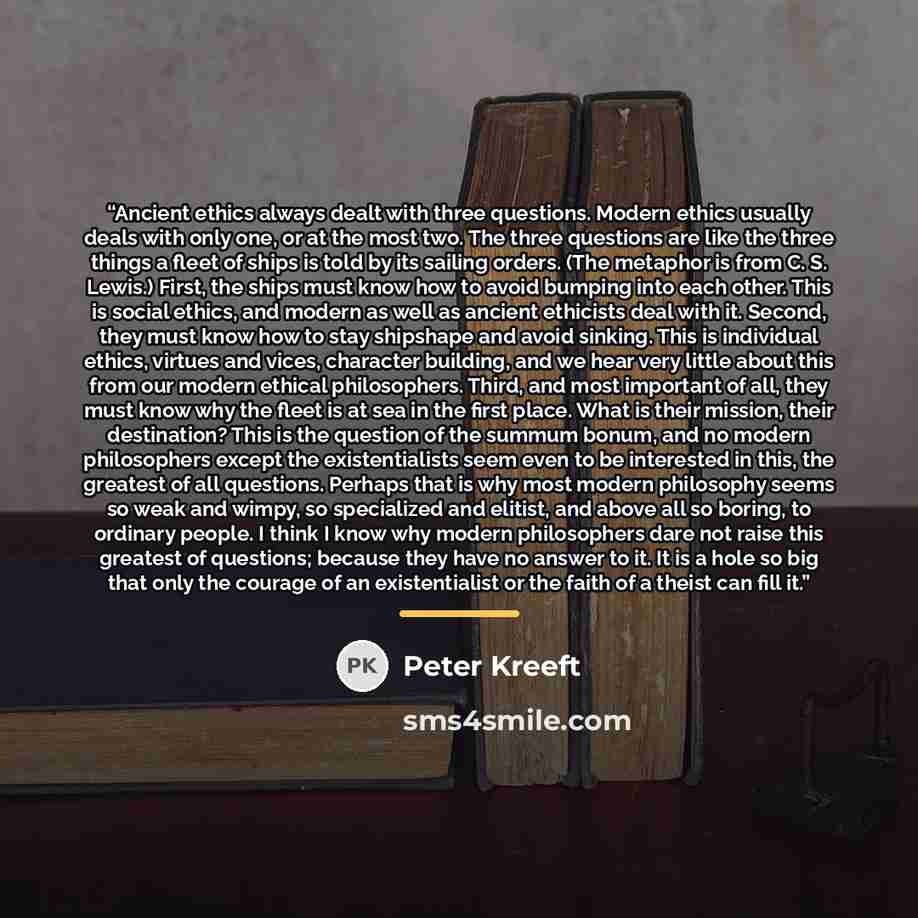
““Ancient ethics always dealt with three questions. Modern ethics usually deals with only one, or at the most two. The three questions are like the three things a fleet of ships is told by its sailing orders. (The metaphor is from C. S. Lewis.) First, the ships must know how to avoid bumping into each other. This is social ethics, and modern as well as ancient ethicists deal with it. Second, they must know how to stay shipshape and avoid sinking. This is individual ethics, virtues and vices, character building, and we hear very little about this from our modern ethical philosophers. Third, and most important of all, they must know why the fleet is at sea in the first place. What is their mission, their destination? This is the question of the summum bonum, and no modern philosophers except the existentialists seem even to be interested in this, the greatest of all questions. Perhaps that is why most modern philosophy seems so weak and wimpy, so specialized and elitist, and above all so boring, to ordinary people. I think I know why modern philosophers dare not raise this greatest of questions; because they have no answer to it. It is a hole so big that only the courage of an existentialist or the faith of a theist can fill it.””
About This Quote
Source Book: The Philosophy of Love by Peter Kreeft, 1995
Ancient ethics covered social, personal, and ultimate purpose; modern ethics often neglects personal virtue and ultimate meaning, focusing on limited issues.
In simple terms: Ancient ethics asked three big questions; modern ethics often asks fewer.
Key Takeaway
Remember to consider society, self, and purpose together.
Themes
ethics
philosophy
purpose
virtue
existentialism
Mood
thoughtful
critical
inquisitive
Type
philosophical
reflective
inspirational
When to use this quote
- personal decision making
- community building
- career planning
- spiritual reflection
- public policy
Key Concepts
social ethics
individual virtue
summum bonum
existential courage
Questions to Reflect On
- How can we integrate personal virtue into everyday decisions?
- What is the ultimate purpose of our collective actions?
A Different Perspective
Modern ethics may prioritize practicality over deep purpose, limiting its relevance.