Fiction Quote by Orson Scott Card
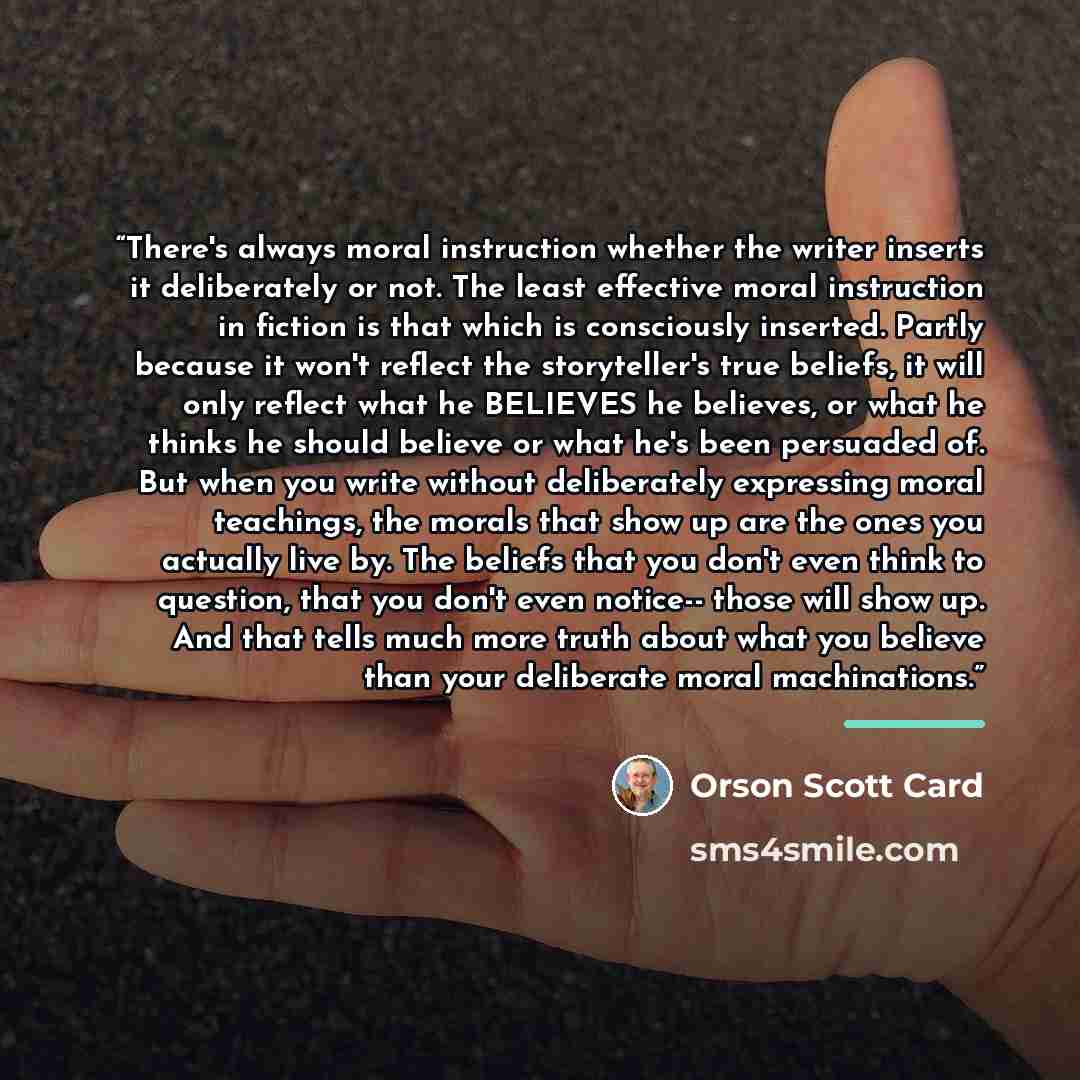
““There's always moral instruction whether the writer inserts it deliberately or not. The least effective moral instruction in fiction is that which is consciously inserted. Partly because it won't reflect the storyteller's true beliefs, it will only reflect what he BELIEVES he believes, or what he thinks he should believe or what he's been persuaded of. But when you write without deliberately expressing moral teachings, the morals that show up are the ones you actually live by. The beliefs that you don't even think to question, that you don't even notice-- those will show up. And that tells much more truth about what you believe than your deliberate moral machinations.””
About This Quote
Source Essay: Writing Advice, 2002
Unconscious morals in fiction reveal an author's true beliefs more than forced lessons.
In simple terms: Subtle morals reveal true beliefs.
Key Takeaway
Write authentically.
Themes
authorship
morality
truth
Mood
thoughtful
analytical
Type
literary
philosophical
When to use this quote
- novel writing
- teaching
- self-reflection
Key Concepts
literary theory
psychology
Questions to Reflect On
- What beliefs do you hold unconsciously?
- How can you let characters reveal your values?
A Different Perspective
Deliberate moralizing can feel preachy.