Change the world Quote by Norman Doidge
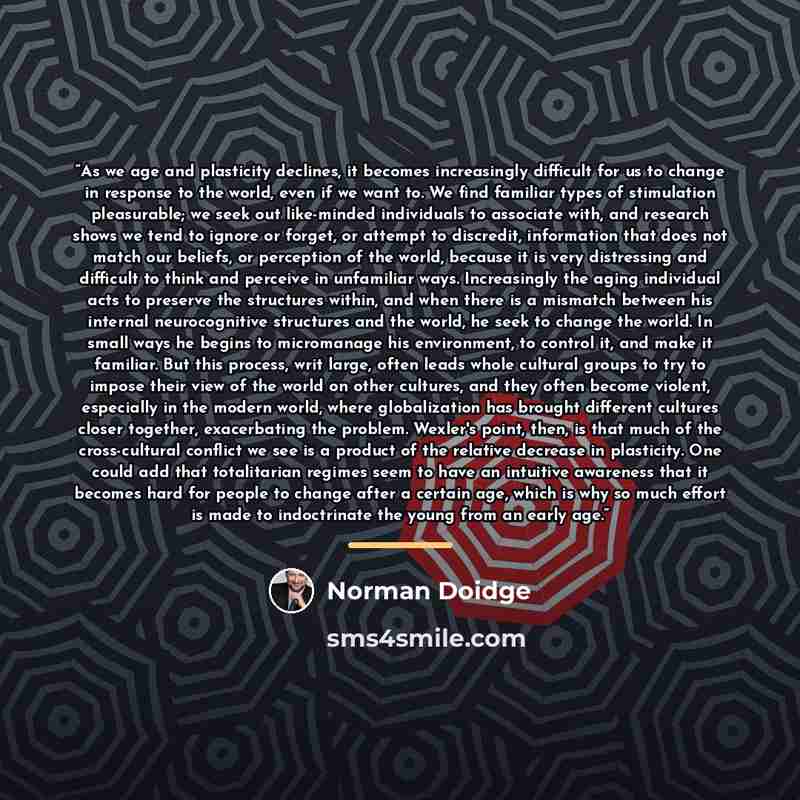
““As we age and plasticity declines, it becomes increasingly difficult for us to change in response to the world, even if we want to. We find familiar types of stimulation pleasurable; we seek out like-minded individuals to associate with, and research shows we tend to ignore or forget, or attempt to discredit, information that does not match our beliefs, or perception of the world, because it is very distressing and difficult to think and perceive in unfamiliar ways. Increasingly the aging individual acts to preserve the structures within, and when there is a mismatch between his internal neurocognitive structures and the world, he seek to change the world. In small ways he begins to micromanage his environment, to control it, and make it familiar. But this process, writ large, often leads whole cultural groups to try to impose their view of the world on other cultures, and they often become violent, especially in the modern world, where globalization has brought different cultures closer together, exacerbating the problem. Wexler's point, then, is that much of the cross-cultural conflict we see is a product of the relative decrease in plasticity. One could add that totalitarian regimes seem to have an intuitive awareness that it becomes hard for people to change after a certain age, which is why so much effort is made to indoctrinate the young from an early age.””
About This Quote
Source Book: The Brain That Changes Itself by Norman Doidge, 2007
Aging reduces neural flexibility, making people cling to familiar ideas and resist new perspectives, often leading to cultural conflict and authoritarian control.
In simple terms: Aging brains resist change, causing cultural clashes and authoritarianism.
Key Takeaway
Recognize and nurture openness throughout life.
Themes
neuroplasticity
aging
cultural conflict
authoritarianism
psychology
Mood
reflective
concerned
Type
analytical
critical
When to use this quote
- education reform
- intergenerational dialogue
- media literacy
- community building
Key Concepts
cognitive decline
social conformity
group identity
globalization
Questions to Reflect On
- How can societies foster lifelong learning?
- What policies support cognitive flexibility?
A Different Perspective
Older minds may retain some adaptability with targeted interventions.