Present tense Quote by Michael L. Brown
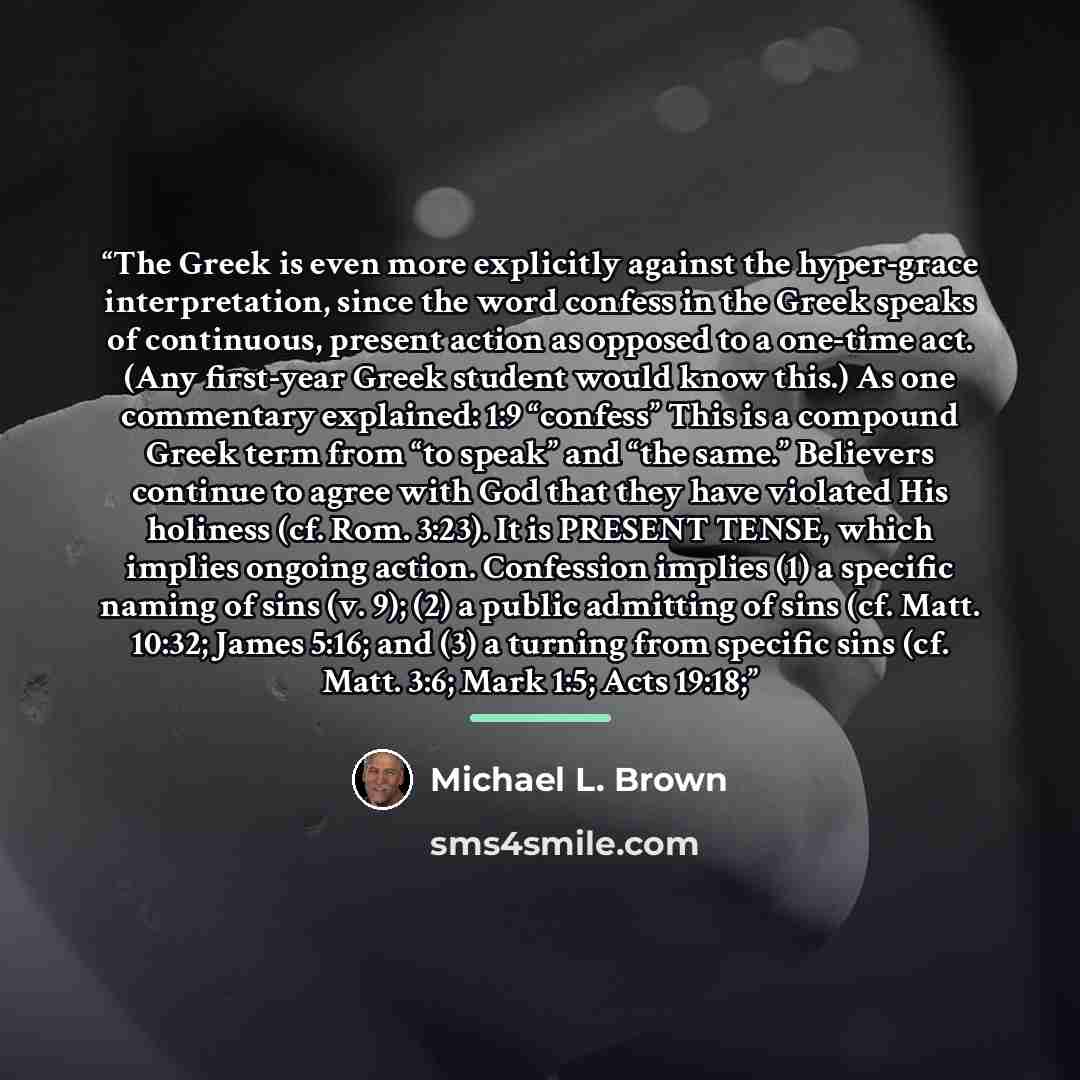
““The Greek is even more explicitly against the hyper-grace interpretation, since the word confess in the Greek speaks of continuous, present action as opposed to a one-time act. (Any first-year Greek student would know this.) As one commentary explained: 1:9 “confess” This is a compound Greek term from “to speak” and “the same.” Believers continue to agree with God that they have violated His holiness (cf. Rom. 3:23). It is PRESENT TENSE, which implies ongoing action. Confession implies (1) a specific naming of sins (v. 9); (2) a public admitting of sins (cf. Matt. 10:32; James 5:16; and (3) a turning from specific sins (cf. Matt. 3:6; Mark 1:5; Acts 19:18;””
About This Quote
Greek grammar shows “confess” is continuous, meaning confession is an ongoing process of naming, admitting, and turning from sin, not a one‑time act.
In simple terms: Confession is a continual, active process.
Key Takeaway
Practice ongoing self‑examination.
Themes
spirituality
humility
growth
Mood
thoughtful
hopeful
Type
theological
inspirational
When to use this quote
- personal repentance
- counseling
- church teaching
Key Concepts
theology
language
ethics
Questions to Reflect On
- How do you ensure confession leads to transformation?
- What habits support genuine repentance?
A Different Perspective
Continuous confession can become ritual without true change.





![“[each] confess those sins by which he remembers that he has mortally offended his Lord and God; whilst the other sins, which do not occur to him after diligent thought, are understood to be included as a whole in that same confes sion." 6 The last-quoted phrase is of great dogmatic importance…” quote by Joseph Pohle](https://sms4smile.com/quotes/img-quotes/c71/joseph-pohle-3769_quote_each-confess-those-sins-by-which-he-reme_1093453.jpg)