Judaism Quote by Merrill F. Unger

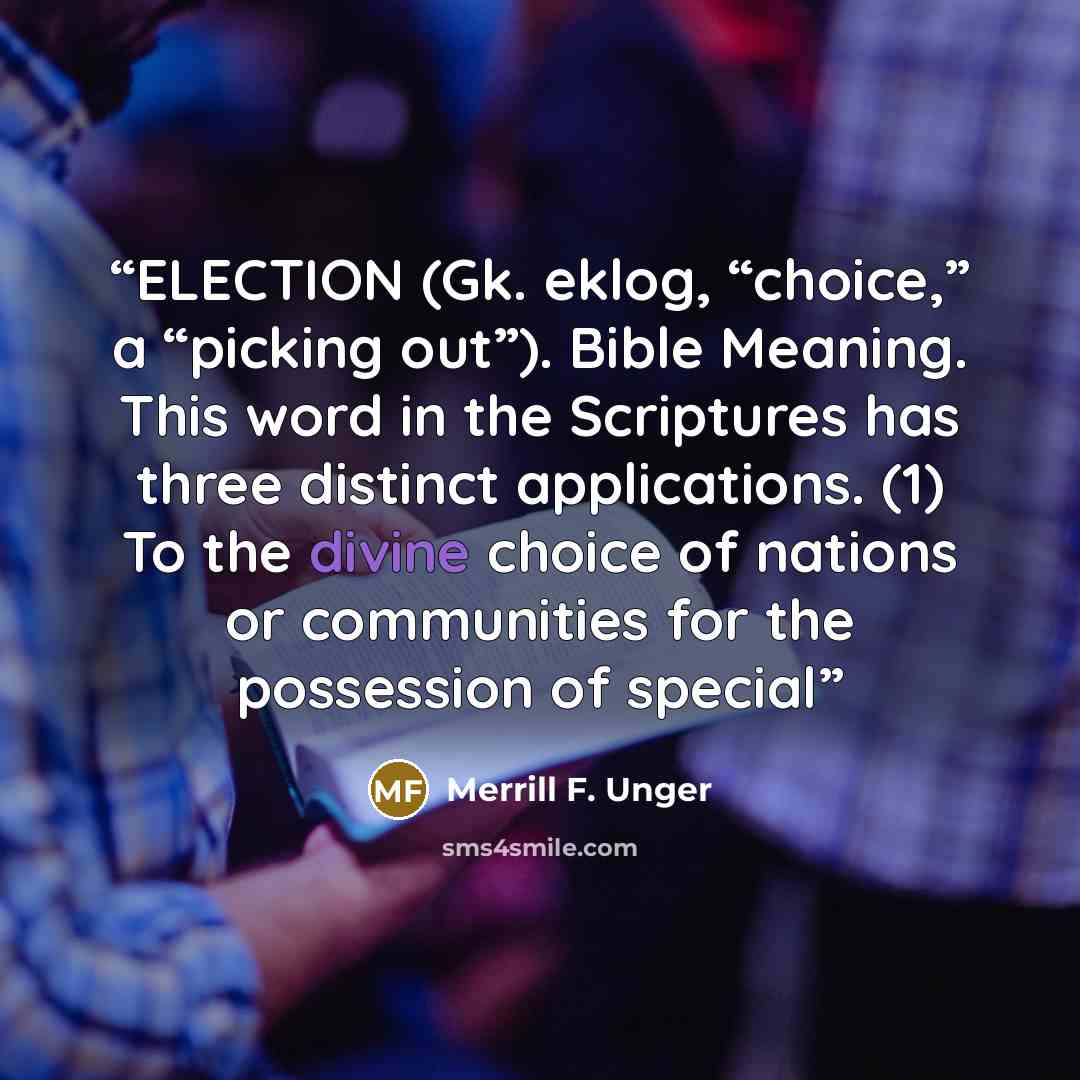
““privileges with reference to the performance of special services. Thus the Jews were “a chosen nation,” “the elect.” Thus also in the NT, bodies of Christian people, or churches, are called “the elect.” (2) To the divine choice of individuals to a particular office or work. Thus Cyrus was elected of God to bring about the rebuilding of the Temple, and thus the twelve were chosen to be apostles and Paul to be the apostle to the Gentiles. (3) To the divine choice of individuals to be the children of God, and therefore heirs of heaven. It is with regard to election in this third sense that theological controversies have been frequent and at times most fierce. Calvinists hold that the election of individuals to salvation is absolute, unconditional, by virtue of an eternal divine decree. Arminians regard election as conditional upon repentance and faith; the decree of God is that all who truly repent of their sins and believe on the Lord Jesus Christ shall be saved. But every responsible person determines for himself whether or not he will repent and believe. Sufficient grace is bestowed upon everyone to enable him to make the right decision.””
About This Quote
Explains theological concepts of election, contrasting unconditional divine selection with conditional human response, highlighting doctrinal debates.
In simple terms: Describes different views on divine election and human responsibility.
Key Takeaway
Understand varied theological perspectives on salvation.
Themes
theology
election
divine sovereignty
human agency
Mood
reflective
introspective
Type
philosophical
educational
When to use this quote
- church history
- personal belief
- interfaith dialogue
- ethical decision‑making
- spiritual counseling
Key Concepts
predestination
free will
grace
faith
repentance
Questions to Reflect On
- How does your belief shape your view on election?
- Can divine choice and human responsibility coexist?
A Different Perspective
Complex language may confuse non‑theological audiences.