Biology Quote by Max Tegmark
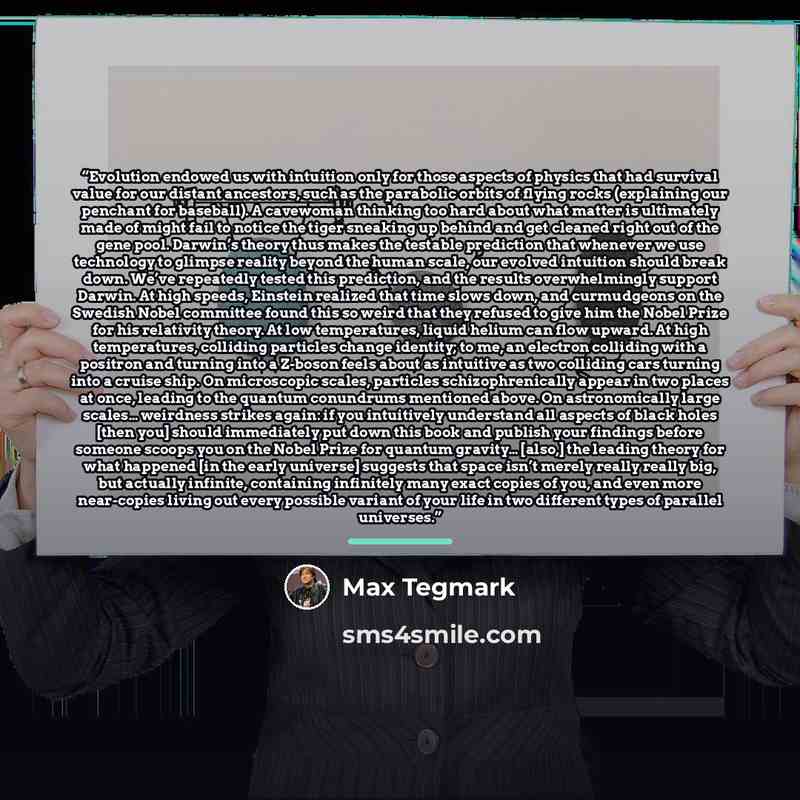
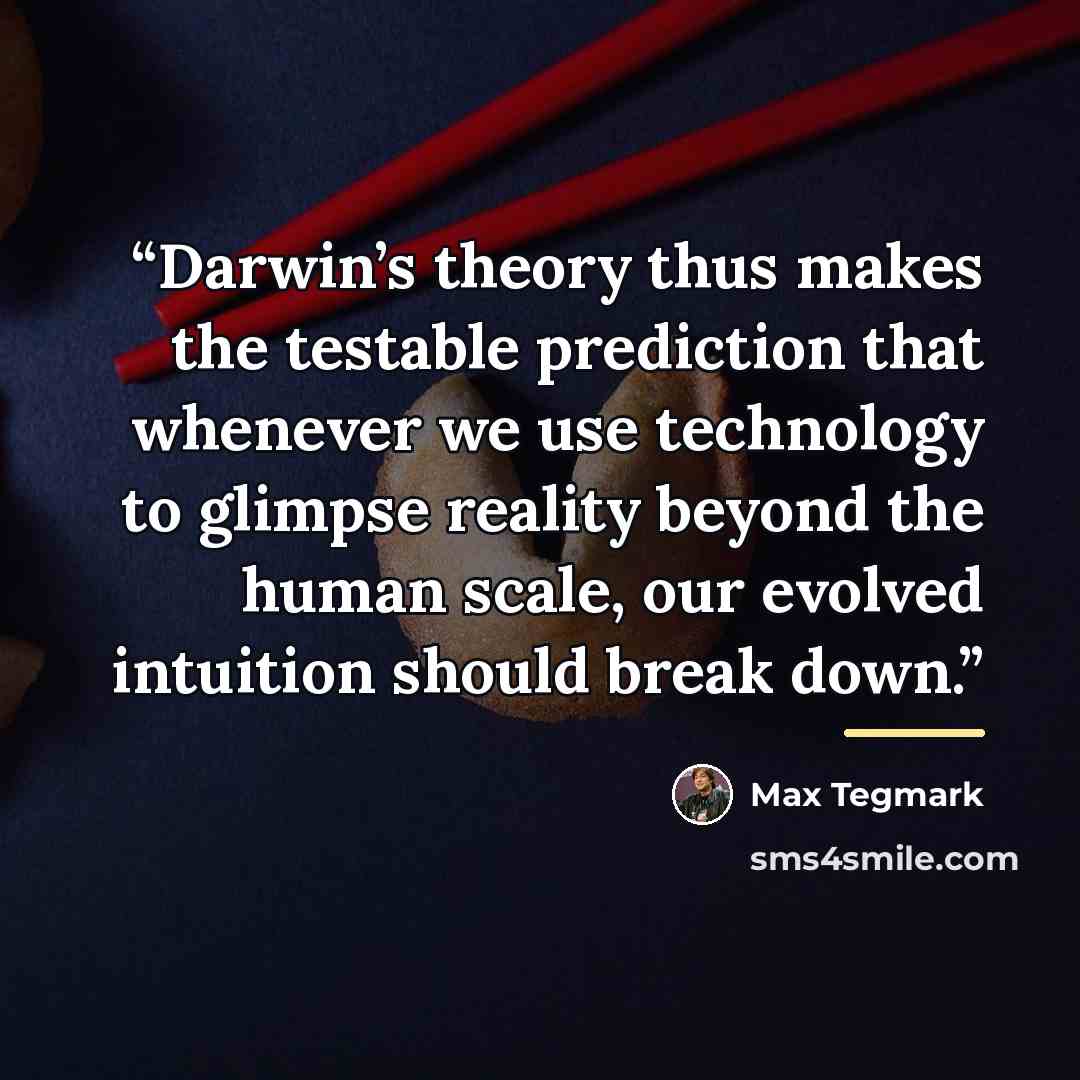
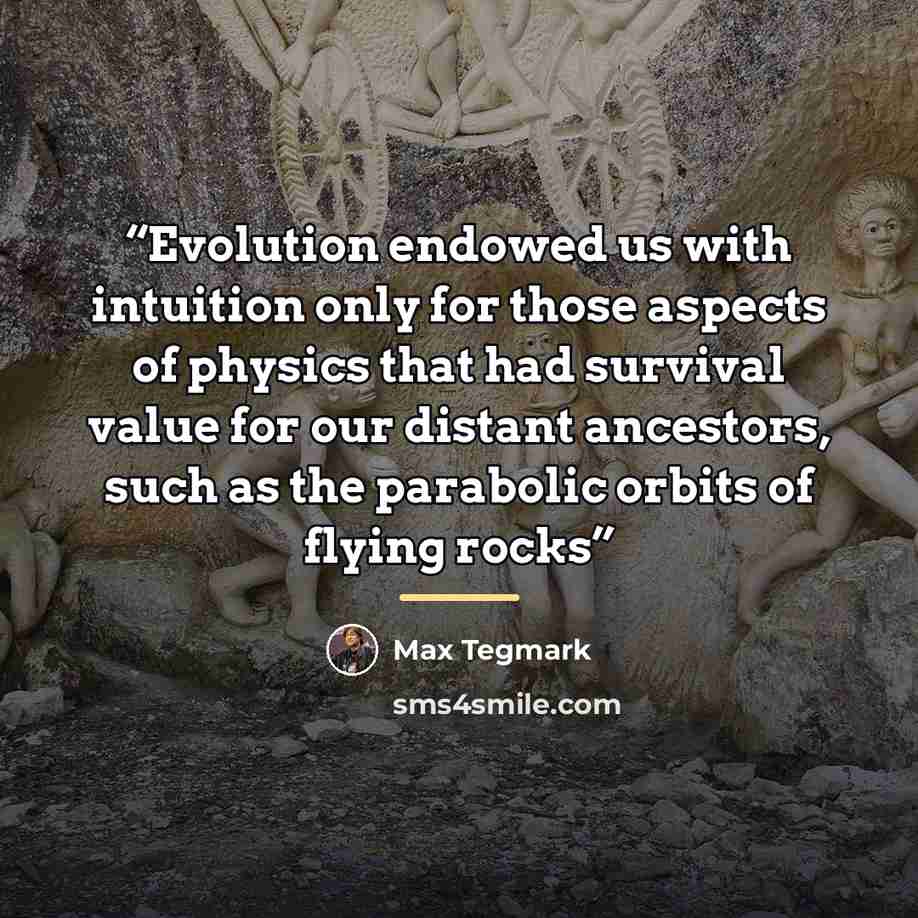
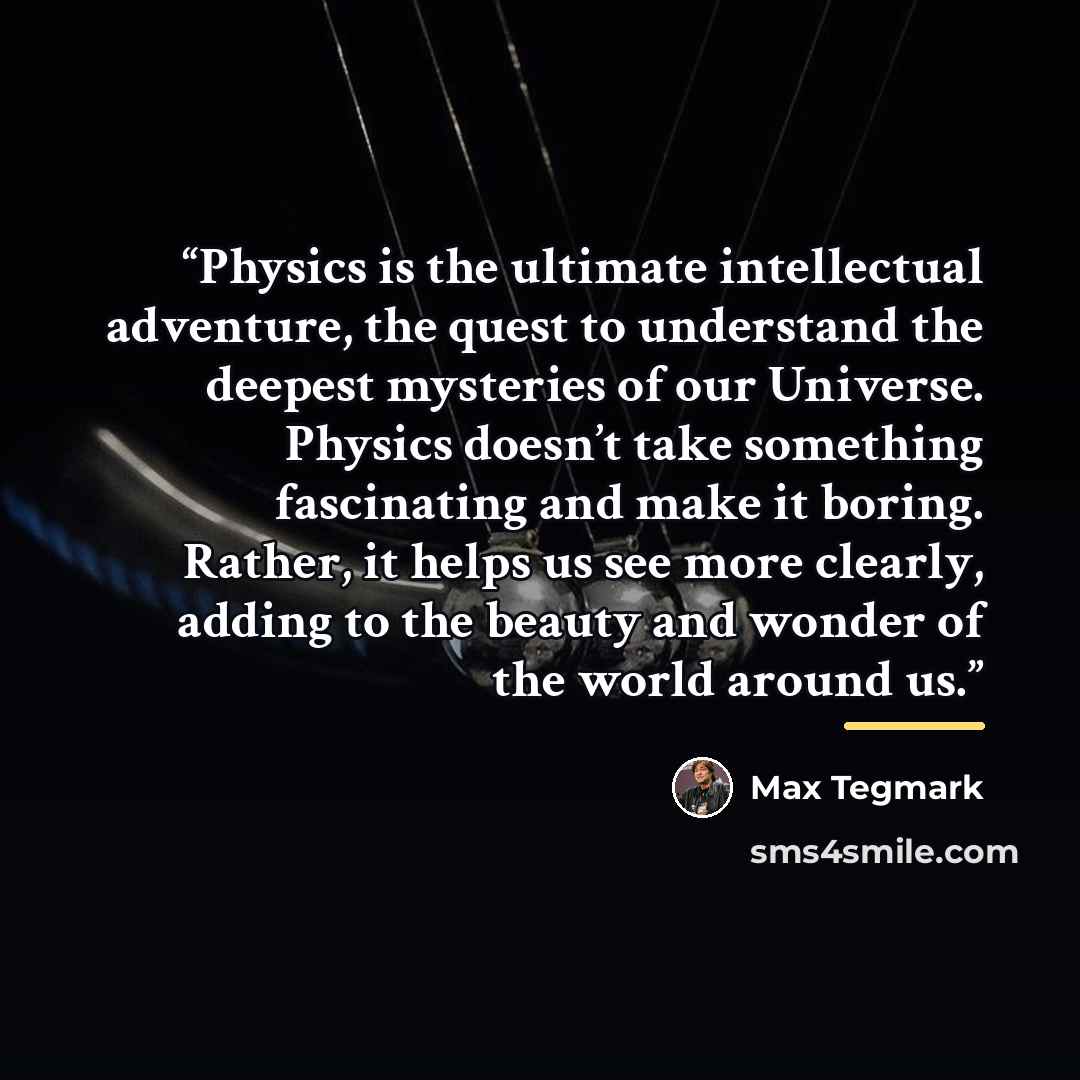
““Evolution endowed us with intuition only for those aspects of physics that had survival value for our distant ancestors, such as the parabolic orbits of flying rocks (explaining our penchant for baseball). A cavewoman thinking too hard about what matter is ultimately made of might fail to notice the tiger sneaking up behind and get cleaned right out of the gene pool. Darwin’s theory thus makes the testable prediction that whenever we use technology to glimpse reality beyond the human scale, our evolved intuition should break down. We’ve repeatedly tested this prediction, and the results overwhelmingly support Darwin. At high speeds, Einstein realized that time slows down, and curmudgeons on the Swedish Nobel committee found this so weird that they refused to give him the Nobel Prize for his relativity theory. At low temperatures, liquid helium can flow upward. At high temperatures, colliding particles change identity; to me, an electron colliding with a positron and turning into a Z-boson feels about as intuitive as two colliding cars turning into a cruise ship. On microscopic scales, particles schizophrenically appear in two places at once, leading to the quantum conundrums mentioned above. On astronomically large scales… weirdness strikes again: if you intuitively understand all aspects of black holes [then you] should immediately put down this book and publish your findings before someone scoops you on the Nobel Prize for quantum gravity… [also,] the leading theory for what happened [in the early universe] suggests that space isn’t merely really really big, but actually infinite, containing infinitely many exact copies of you, and even more near-copies living out every possible variant of your life in two different types of parallel universes.””
About This Quote
Source Speech: Public lecture on physics intuition, 2015
Human intuition, shaped by evolution for survival‑relevant phenomena, fails when confronting extreme physical regimes, leading to counterintuitive scientific discoveries.
In simple terms: Our built‑in instincts work for everyday physics but break down at extreme scales.
Key Takeaway
Recognize intuition limits; rely on empirical testing and theory.
Themes
science
intuition
physics
limits of perception
evolutionary psychology
Mood
curious
skeptical
inquisitive
Type
philosophical
scientific
educational
When to use this quote
- Everyday decision making
- engineering design
- educational curricula
- science communication
- risk assessment
Key Concepts
Darwinian prediction
relativity
quantum mechanics
cosmology
multiverse
Questions to Reflect On
- How do you decide when to trust gut feeling versus scientific evidence?
- What strategies help bridge intuitive gaps in complex problems?
A Different Perspective
Intuition can mislead in novel contexts, so overreliance may hinder innovation.