Divine providence Quote by Marcus Aurelius
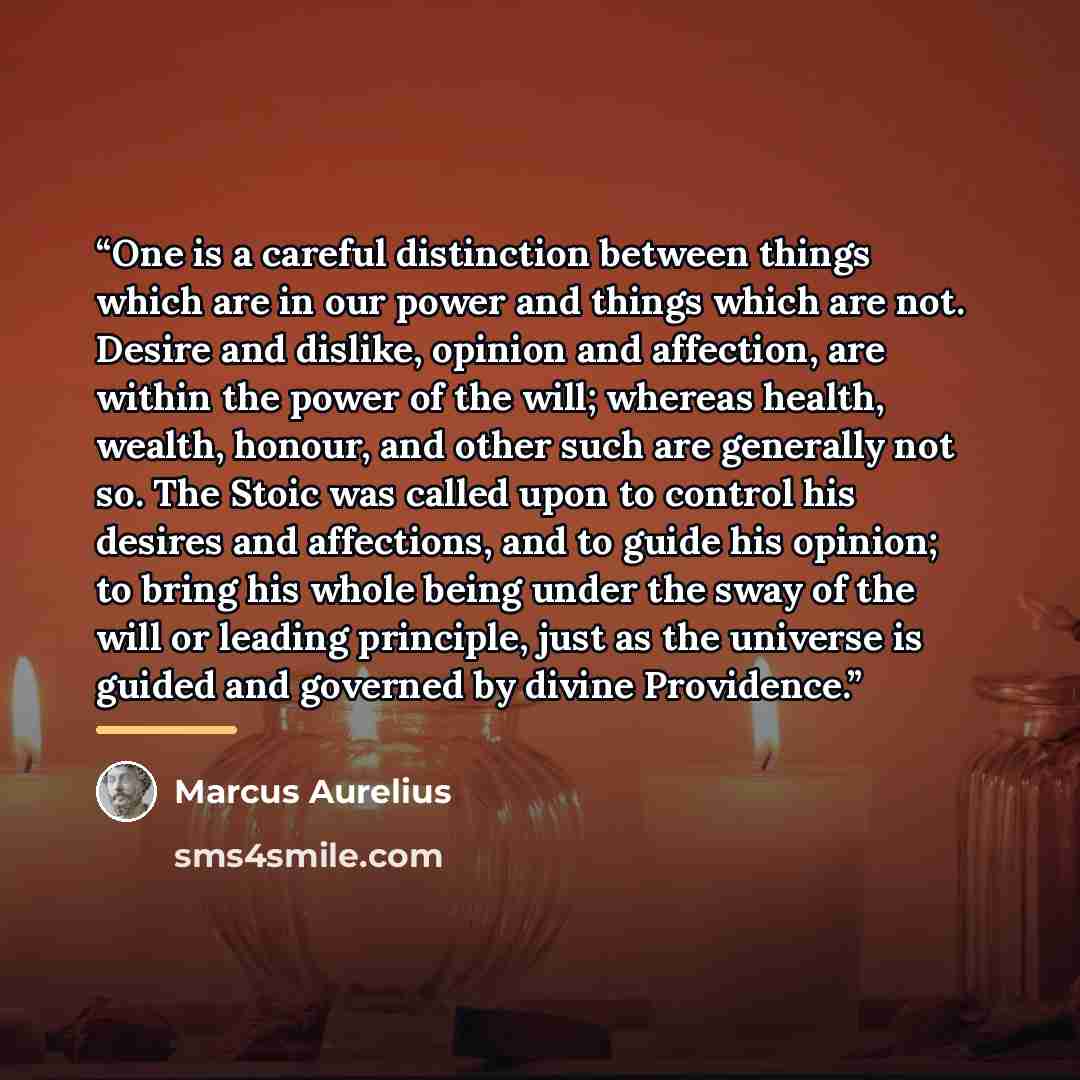
““One is a careful distinction between things which are in our power and things which are not. Desire and dislike, opinion and affection, are within the power of the will; whereas health, wealth, honour, and other such are generally not so. The Stoic was called upon to control his desires and affections, and to guide his opinion; to bring his whole being under the sway of the will or leading principle, just as the universe is guided and governed by divine Providence.””
About This Quote
Source Meditations, Book 2, 2nd century AD (philosophical text)
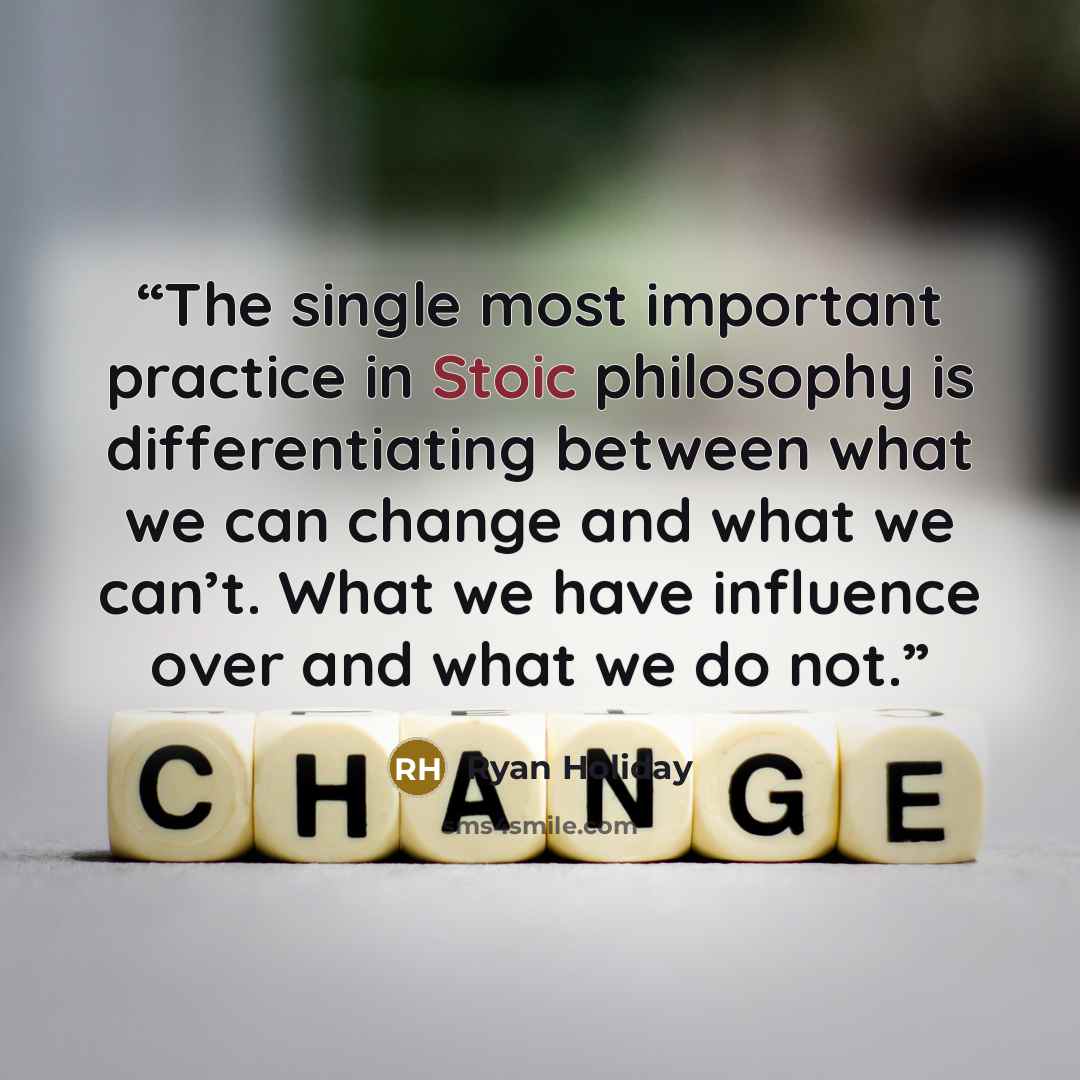
Distinguishes between what we can control—our thoughts, desires, opinions—and what we cannot—external circumstances like health or wealth
In simple terms: Focus on controlling internal states, not external outcomes
Key Takeaway
Cultivate inner control over thoughts and emotions
Themes
Stoicism
self‑mastery
philosophy
Mood
reflective
calm
Type
philosophical
motivational
When to use this quote
- personal decision‑making
- coping with loss
- ethical leadership
Key Concepts
willpower
determinism
divine providence
Questions to Reflect On
- How can you apply this distinction in daily stress?
- What internal attitudes can you strengthen?
A Different Perspective
External factors still influence outcomes; control is limited to perception









![“By the divine providence [animals] are intended for man's use... Hence it is not wrong for man to make use of them, either by killing or in any other way whatsoever.” quote by Thomas Aquinas](https://sms4smile.com/quotes/img-quotes/f48/thomas-aquinas-837_animal_by-the-divine-providence-animals-are-int_112669.jpg)
![“They [the Founding Fathers] were intent upon establishing a Christian commonwealth in accordance with the principle of self-government. They were an inspired body of men. It has been said that God sifted the nations that He might send choice grain into the wilderness ... Who can fail to see it in…” quote by Calvin Coolidge](https://sms4smile.com/quotes/img-quotes/141/calvin-coolidge-764_body_they-the-founding-fathers-were-intent-up_337118.jpg)