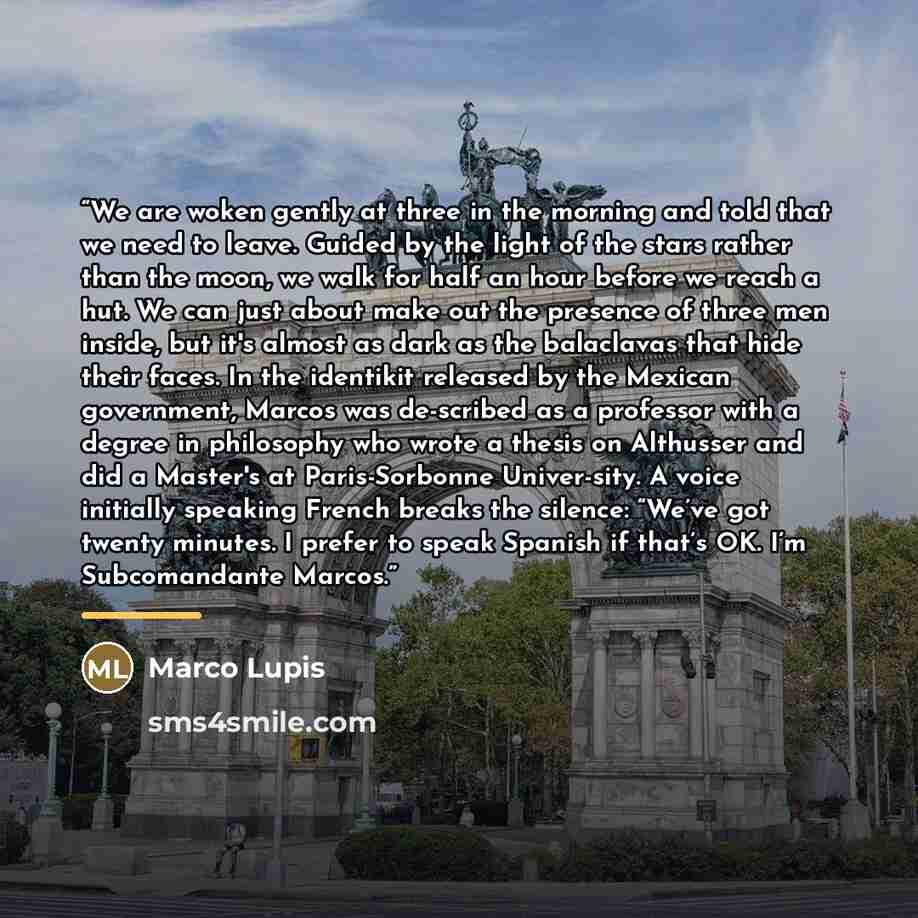
End of the day Quote by Marco Lupis
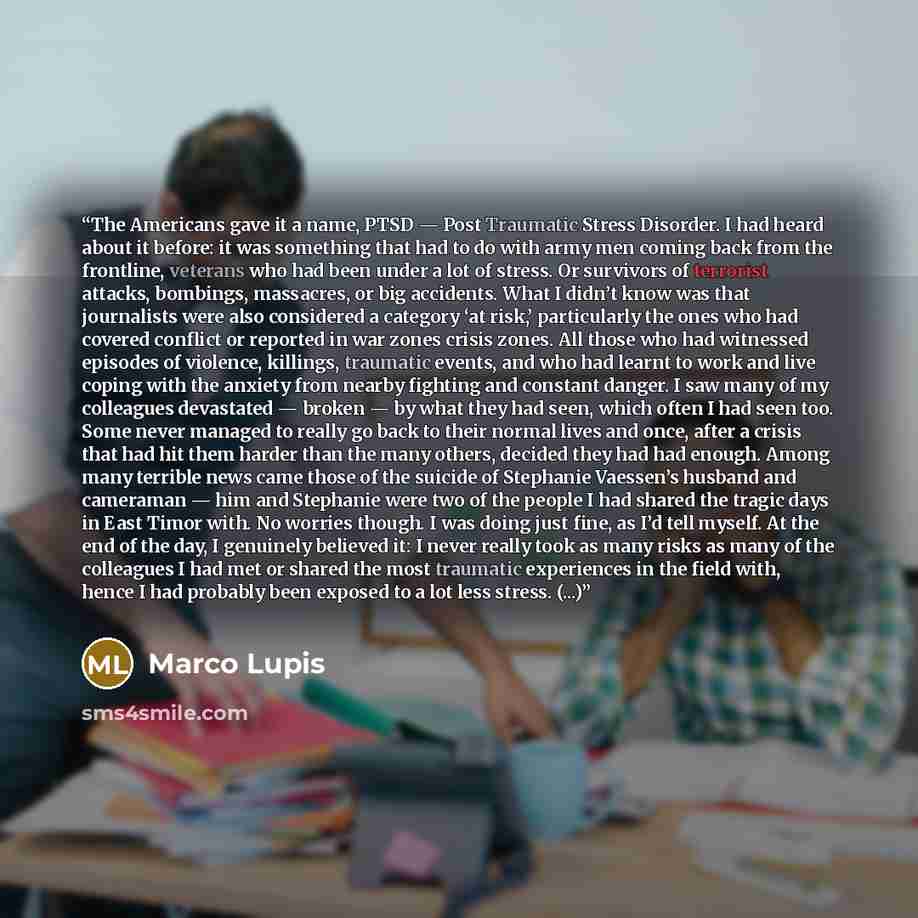
““The Americans gave it a name, PTSD — Post Traumatic Stress Disorder. I had heard about it before: it was something that had to do with army men coming back from the frontline, veterans who had been under a lot of stress. Or survivors of terrorist attacks, bombings, massacres, or big accidents. What I didn’t know was that journalists were also considered a category ‘at risk,’ particularly the ones who had covered conflict or reported in war zones crisis zones. All those who had witnessed episodes of violence, killings, traumatic events, and who had learnt to work and live coping with the anxiety from nearby fighting and constant danger. I saw many of my colleagues devastated — broken — by what they had seen, which often I had seen too. Some never managed to really go back to their normal lives and once, after a crisis that had hit them harder than the many others, decided they had had enough. Among many terrible news came those of the suicide of Stephanie Vaessen’s husband and cameraman — him and Stephanie were two of the people I had shared the tragic days in East Timor with. No worries though. I was doing just fine, as I’d tell myself. At the end of the day, I genuinely believed it: I never really took as many risks as many of the colleagues I had met or shared the most traumatic experiences in the field with, hence I had probably been exposed to a lot less stress. (...)””
About This Quote
Source Interview: Personal account on journalist trauma, 2020
Journalists covering conflict face severe stress, often overlooked, leading to mental health crises.
In simple terms: War reporters suffer trauma like soldiers.
Key Takeaway
Recognize and support mental health for journalists.
Themes
trauma
mental health
journalism
war reporting
Mood
somber
empathetic
Type
cautionary
inspirational
When to use this quote
- newsroom
- field reporting
- support services
- peer counseling
Key Concepts
post‑traumatic stress
vicarious trauma
Questions to Reflect On
- What resources can media outlets provide?
- How can society better acknowledge journalist trauma?
A Different Perspective
Stigma may prevent seeking help.
![“The "herrenvolk" [master race] are all around you, threading their way on their bicycles between the piles of rubble or rushing off with jugs and buckets to meet the water cart. It is queer to think that these are the people who once ruled Europe, from the Channel to the Caspian Sea and might have…” quote by George Orwell](https://sms4smile.com/quotes/img-quotes/9a4/george-orwell-57_1945_the-herrenvolk-master-race-are-all-aroun_2324178.jpg)