Chinese Quote by Kukai
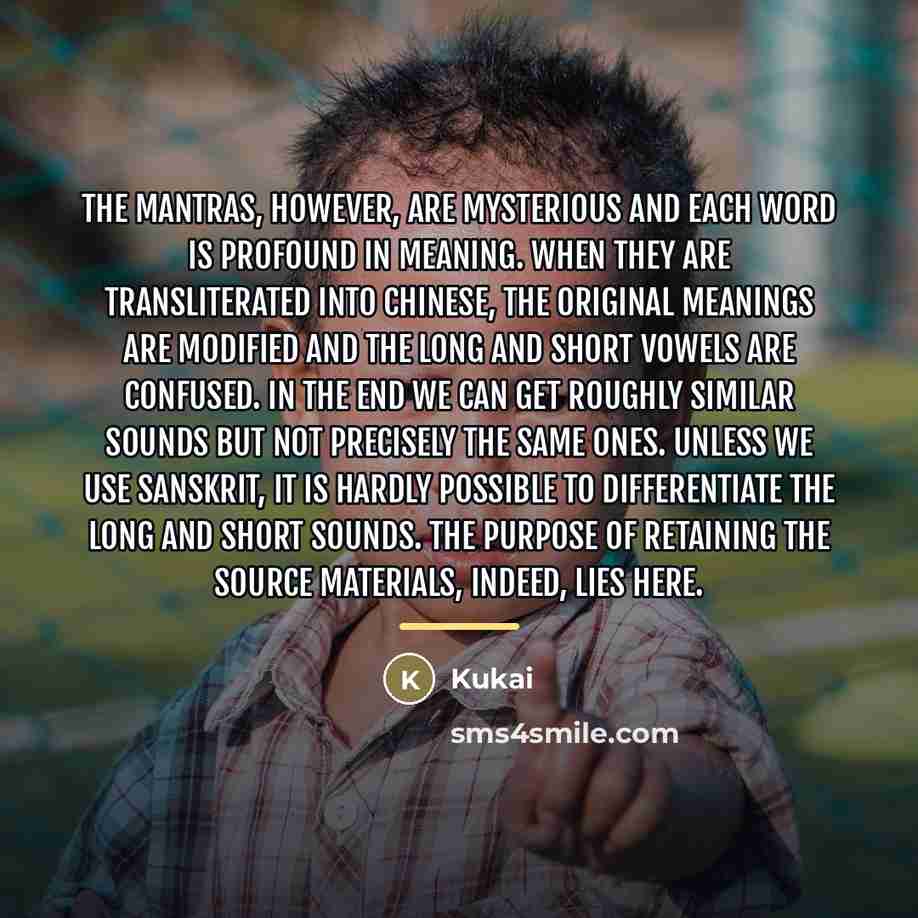
“The mantras, however, are mysterious and each word is profound in meaning. When they are transliterated into Chinese, the original meanings are modified and the long and short vowels are confused. In the end we can get roughly similar sounds but not precisely the same ones. Unless we use Sanskrit, it is hardly possible to differentiate the long and short sounds. The purpose of retaining the source materials, indeed, lies here.”
About This Quote
Transliteration alters mantra sounds; Sanskrit preserves original phonetics.
In simple terms: Sanskrit keeps true mantra sounds.
Key Takeaway
Prefer original language for precision.
Themes
language
translation
phonetics
Mood
scholarly
reflective
Type
Chinese:1
Confused:0
Differentiate:0
Ends:0
Long:0
Lying:0
Mantras:1
Materials:0
Mysterious:0
Originals:0
Profound:0
Purpose:0
Retaining:0
Sanskrit:1
Sound:0
Source:0
Use:0
Vowels:0
Transliterated:0
Mantras Mysterious:0
Transliterated Chinese:0
Sanskrit Hardly:0
When to use this quote
- chanting
- academic study
- religious rituals
Key Concepts
cultural preservation
spiritual practice
linguistics
Questions to Reflect On
- Why preserve original sounds?
- How does translation affect meaning?
A Different Perspective
Sanskrit may be inaccessible to many.

![“We can translate word and letter into color - [Arthur] Rimbaud stated that in his color vowels, words quote "words" can be read in silent color.” quote by William S. Burroughs](https://sms4smile.com/quotes/img-quotes/378/william-s-burroughs-528_arthur_we-can-translate-word-and-letter-into-co_885219.jpg)