Journalism Quote by John W. Davis
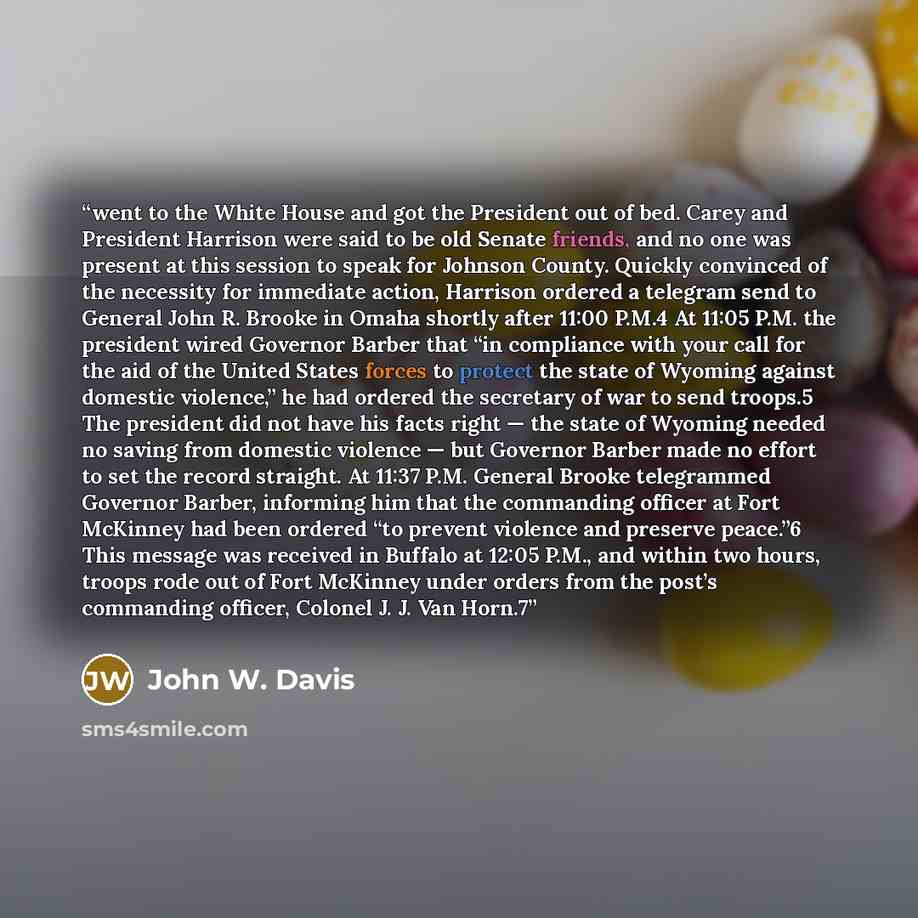
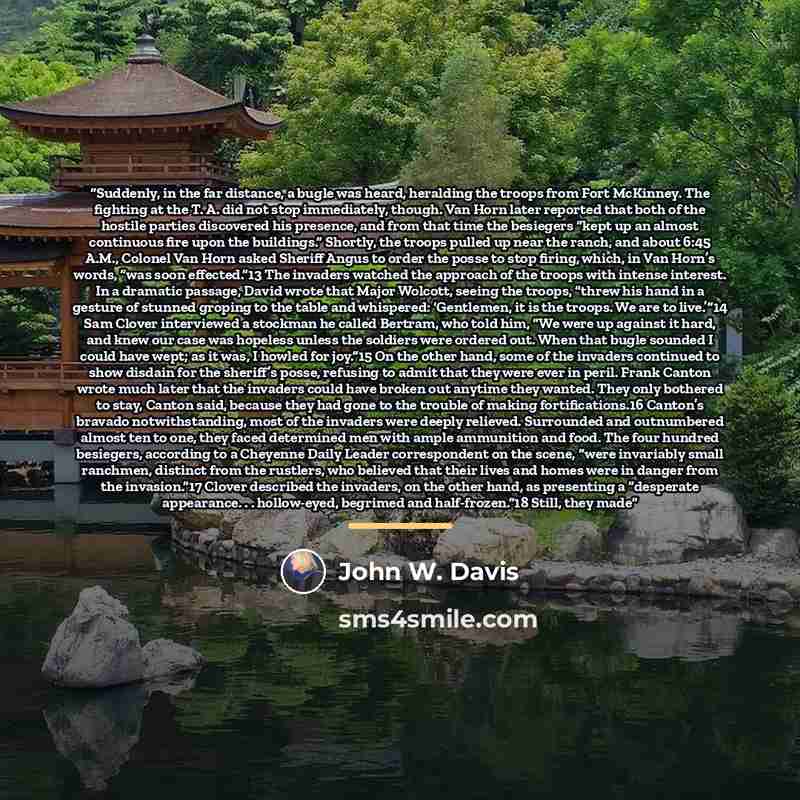
““The shortage of information did not keep the Cheyenne Sun from taking some strong editorial positions. Indeed, the Sun’s impartiality, never more than a thin veneer, seemed to disappear entirely. It ran a front-page article about a Mr. Johnson, who had experience as a small cattleman “up north.” Johnson reported, according to the article, that the officers conducting the roundups (usually foremen of big cattle companies) gave him every possible help, but that he was bedeviled by rustlers. The Sun declared that Mr. Johnson’s experience was the same as for hundreds of others and that “for the good of the state the rustlers must be driven out.”29 The Sun then devoted its entire editorial page to a series of articles that unblushingly favored the positions of big cattlemen. One article stated that it was imperative for the big cattlemen to take a stand, to combat the huge problems with cattle stealing, to smash down once and for all the kingdom of thieves in northern Wyoming — where twenty-two big cattlemen had been put on a death list (no proof of this fantastic charge was provided) and all the cattlemen had been ordered away from their property.30 Other articles repeated the charges that cattle were being shot down on the range by rustlers, that it was impossible to obtain convictions, and that the rustlers were so boldly threatening that the big cattlemen must protect themselves.31””
About This Quote
Source Historical Article: Wyoming Frontier Press, 1880s
The newspaper, despite limited facts, openly supported powerful cattle interests, presenting biased narratives to influence public opinion and policy.
In simple terms: A biased paper pushed cattlemen’s agenda without solid evidence.
Key Takeaway
Critically evaluate sources before accepting their claims.
Themes
media bias
power
public opinion
frontier politics
propaganda
Mood
skeptical
analytical
inquisitive
Type
historical
political
media
When to use this quote
- researching historical documents
- checking multiple sources
- identifying bias in news
- understanding stakeholder influence
Key Concepts
journalism ethics
interest groups
information control
Questions to Reflect On
- What motives might have driven the newspaper’s stance?
- How can we differentiate genuine reporting from propaganda?
A Different Perspective
The article may reflect genuine concerns of the era, complicating a purely negative view.

![“True, we [lawyers] build no bridges. We raise no towers. We construct no engines. We paint no pictures—unless as amateurs for our own principal amusement. There is little of all that we do which the eye of man can see. But we smooth out difficulties; we relieve stress; we correct mistakes; we take…” quote by John W. Davis](https://sms4smile.com/quotes/img-quotes/4ef/john-w-davis-32194_amusement_true-we-lawyers-build-no-bridges-we-rais_2415091.jpg)